Glass Furnace Refractory Guide:
AZS, Silica & Zone Selection
Jason Gong
Founder & Sales Director · Product Inquiry Contact
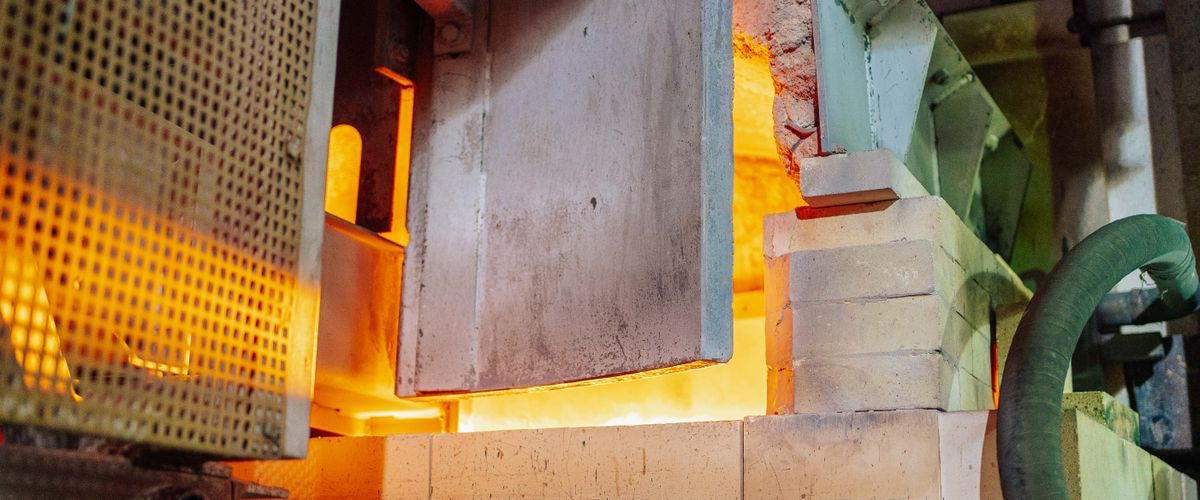
Refractory bricks for glass furnaces must match the zone — not the furnace. Silica bricks handle the crown and superstructure. AZS (zirconia-corundum) bricks are required wherever molten glass makes direct contact. High-alumina grades work the regenerator. Using the wrong brick in the wrong zone either contaminates the glass melt or corrodes in weeks. This guide maps which brick goes where, and why.
When you are ready for the commercial page, move from this guide to the glass furnace landing page for task-led routing, then use the refractory products catalog and quote form to brief the actual zone mix.
Glass furnace refractory is the only application where the wrong brick contaminates the product.
In a cement kiln, a wrong brick grade ends the campaign early. In a glass furnace, a wrong brick grade ends the campaign early and ruins every tonne of glass produced until the failure is identified. The melt is transparent. The contamination is not.
This creates a refractory selection problem that does not exist in steel or cement. Every material in contact with the glass atmosphere must be chemically compatible with that glass composition — not just thermally capable. A refractory material that ablates Al₂O₃ into the crown atmosphere will generate alumina inclusions in float glass. Those inclusions are visible. They cost the campaign more than the brick price.
Three constraints make glass furnace refractory selection unique:
- Chemical compatibility with the melt. Materials above and in contact with molten glass must not introduce inclusions. Silica and AZS are the two families that pass this test in most glass chemistries. High-alumina and magnesia bricks do not pass it in crown positions.
- No thermal cycling tolerance. Float glass furnaces run continuously for 8–15 years per campaign — typically. Thermal cycling is minimal compared to cement kilns. This means the bricks can be specified for steady-state performance rather than thermal shock, which shifts the selection criteria.
- Glass melt corrosion is the dominant failure mode below the melt line. Molten soda-lime glass is chemically aggressive. At 1,400–1,600°C it dissolves most refractory materials measurably over months. The ZrO₂ content of AZS bricks is the only mechanism that resists this at an acceptable rate.
None of these constraints appear in a standard refractory data sheet. They come from knowing which zone you are specifying for — which is where this guide starts.
temperature
campaign life
grade at throat
in crown bricks
Seven zones. Each one wants to destroy a different brick.
A glass melting furnace — particularly a float glass or container glass tank — divides into seven distinct refractory zones. Each has a different temperature, chemical environment, and failure mechanism. Treating them as one specification is how campaigns end in year six instead of year twelve.
1. Crown and arch
The hottest zone in the furnace atmosphere — temperatures at the crown face can reach 1,600°C in float glass furnaces. The crown sees flame impingement, batch carry-over, and glass vapour condensation. Silica brick is the universal standard. Its partial crystalline transformation at operating temperature makes it dimensionally stable and its SiO₂ ablation is compatible with most glass compositions.
2. Superstructure breast walls (above glass line)
Below the crown but above the glass melt level. Temperatures typically 1,350–1,500°C. Silica brick or AZS-33 depending on glass type and the aggressiveness of the atmosphere. Soda-lime glass plants typically use silica breast walls; borosilicate and specialty glass furnaces may require AZS in the upper breast wall where volatile chemistry is more aggressive.
3. Tank walls (glass-contact, below melt line)
Direct contact with molten glass at 1,250–1,400°C. This is where AZS is mandatory. The glass melt corrodes refractory material at measurable rates — the ZrO₂ content of AZS slows that corrosion to a rate the campaign can absorb. AZS-36 is the standard specification here. AZS-41 is used where pull rate is high or glass is particularly aggressive chemically.
4. Throat and canal
The most severely eroded position in the furnace. Molten glass flows through the throat continuously, concentrating chemical attack and mechanical erosion at a single point. AZS-41 is the required grade — nothing lower survives at an acceptable rate. (Glass furnace engineers call this the "throat problem." There is a reason that name has stuck for decades.)
5. Regenerator checkers — upper section
Silica bricks in the high-temperature upper section (above roughly 1,000°C). The regenerator alternates between hot exhaust gas and cold combustion air — thermal cycling is significant. Upper checker bricks must combine silica's high-temperature stability with resistance to SOx and alkali compounds from the flue gases.
6. Regenerator checkers — middle and lower sections
High-alumina bricks (typically 60–75% Al₂O₃) take over below the temperature threshold where silica is no longer optimal. In the lower chamber where temperatures drop below 800°C, magnesia bricks or dense high-alumina grades handle sulfate attack and condensation chemistry that would destroy silica.
7. Working end and forehearth
Lower temperature zone (900–1,150°C) where glass is conditioned before forming. Dense high-alumina bricks or fused-cast corundum depending on glass quality requirements. Glass contact still occurs here, so material selection must account for contamination risk even at lower temperatures.
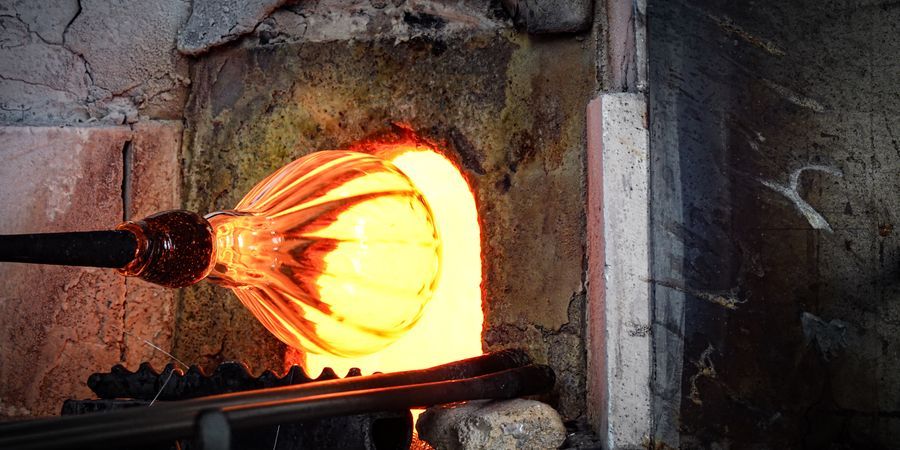
Eight refractory brick types — what each one does and where it goes
Glass furnaces use more different refractory materials in a single structure than almost any other industrial furnace. Here is the complete map.
1. AZS fused-cast bricks (Al₂O₃-ZrO₂-SiO₂)
The most important material in a glass furnace. Produced by melting alumina and zircon sand at approximately 1,700°C and casting the melt into moulds — a fundamentally different process from sintered refractories. The result is a dense, low-porosity material with exceptional resistance to glass melt corrosion. Three grades: AZS-33, AZS-36, AZS-41. Used in all glass-contact positions below the melt line.
2. Silica bricks (SiO₂ ≥ 94%)
The crown and breast wall standard for most glass types. At operating temperature, silica undergoes a crystalline transformation to cristobalite and tridymite, becoming dimensionally stable and thermally creep-resistant above 600°C. Its acid chemistry matches the glass atmosphere. Chemical incompatibility below the melt line makes it unsuitable for tank wall positions.
3. High-alumina bricks (Al₂O₃ 48–90%)
The workhorse of the regenerator system. High-alumina bricks in 60–75% Al₂O₃ grades handle the middle regenerator checker sections. They resist sulfate attack, tolerate the thermal cycling of regenerator operation, and cost significantly less than AZS. They must not be used in crown positions or in direct glass contact.
4. Fused-cast corundum (α-Al₂O₃, 94–99% Al₂O₃)
Used in forehearth and working end applications where glass quality demands minimum contamination. Higher alumina purity than standard high-alumina, lower corrosion rate in glass contact, but still limited to working-end temperatures rather than main melt pool positions.
5. Mullite bricks (3Al₂O₃·2SiO₂)
Found in regenerator rider arch structures and intermediate temperature zones. Mullite's combination of thermal stability, creep resistance, and moderate thermal shock resistance makes it useful where structural loads are present at 1,000–1,400°C.
6. Magnesia bricks (MgO 85–95%)
Lower regenerator checker bricks in some designs, particularly in furnaces with high-sulfur fuel or aggressive flue gas chemistry. Magnesia's resistance to basic slag and sulfate compounds provides advantages in the lower regenerator environment where condensation chemistry dominates.
7. Insulation bricks (JM series)
Insulation bricks form the backup lining layer throughout the furnace. They reduce heat loss through the shell, protect the structural steel, and contribute to thermal efficiency. Typically JM-23 to JM-28 grades in the backup position, with service temperature ratings matched to the zone's hot-face temperature plus margin.
8. Dense fireclay and clay bricks
Secondary structural applications — regenerator base, flue walls, and non-critical structural elements. Lower cost than high-alumina grades. Not suitable for any glass-contact or high-temperature crown position.
Glass Furnace Zone-Material Selection Matrix
The table below is the first place to start any glass furnace refractory specification. Zones are listed by position; brick type is the standard industry choice; service life estimates are field estimates (L4) based on float glass furnace operating conditions at standard pull rates. Container glass and specialty glass may differ.
| Zone | Temperature | Standard Brick | Key Reason | Typical Life |
|---|---|---|---|---|
| Crown / arch | 1,500–1,600°C | Silica (SiO₂ ≥ 94%) | Chemical compatibility with glass atmosphere; creep-resistant at temp | 8–12 years |
| Breast walls (above melt) | 1,350–1,500°C | Silica / AZS-33 | Silica for standard glass; AZS-33 for aggressive atmospheres | 8–12 years |
| Tank walls (glass contact) | 1,250–1,400°C | AZS-36 | ZrO₂ resists glass melt corrosion where SiO₂ cannot | 8–15 years |
| Throat / canal | 1,300–1,450°C | AZS-41 | Highest corrosion zone; lower grades unacceptable erosion rate | 5–10 years |
| Regenerator — upper | 1,000–1,400°C | Silica checker bricks | High-temp stability; SOx resistance in flue gas | 5–8 years |
| Regenerator — lower/mid | 400–1,000°C | High-alumina 60–75% | Sulfate condensation resistance; thermal cycling tolerance | 5–10 years |
| Working end / forehearth | 900–1,150°C | High-alumina / Fused corundum | Glass conditioning zone; contamination risk must remain low | 6–10 years |
Need zone-matched grades for your furnace? Send us your furnace drawing or zone dimensions and we will match the correct Firebrics grade to each position — with service life estimates from comparable glass types. No commitment required at the inquiry stage.
AZS bricks: the grade numbers matter more than you think
AZS is not one material. It is three materials with meaningfully different performance envelopes, and using the wrong one costs the same as using the right one — until the campaign inspection.
All three grades are produced by the same fused-cast process: zircon sand and alumina are melted together at approximately 1,700°C, cast into moulds, and slowly cooled to minimise crystalline stress. The chemistry that matters is the ZrO₂ content.
AZS-33 — moderate corrosion resistance
33% ZrO₂ content (per manufacturer specification). Used for breast walls, upper side walls in the superstructure, and positions where glass contact is indirect or intermittent. Measurably lower corrosion resistance than AZS-36 in direct glass melt contact. The cost difference over AZS-36 is real; the performance difference in glass-contact positions is also real.
AZS-36 — standard glass-contact grade
36% ZrO₂. The industry standard for tank walls, pool bottom edges, and general glass-contact positions in float glass and container glass furnaces. Corrosion rates in standard soda-lime glass are generally accepted as the baseline against which the campaign life expectation is set.
AZS-41 — high-erosion position specialist
41% ZrO₂. Required for throat areas, tank wall corners, and inlet zones where the glass melt is most aggressive — either because of flow concentration or because of locally elevated temperature. In most furnace designs, AZS-41 is used in less than 15% of the glass-contact area by volume, but in the positions that would otherwise determine the campaign end date.
| Property | AZS-33 | AZS-36 | AZS-41 |
|---|---|---|---|
| ZrO₂ content | ~33% | ~36% | ~41% |
| Corrosion resistance | Moderate | High | Very high |
| Exudation tendency | Low | Low–Moderate | Moderate |
| Typical application | Breast walls, superstructure | Tank walls, pool sides | Throat, corners, high-flow zones |
| Relative cost | Base | +15–25% | +35–50% |
"Most glass plants over-specify AZS-41 in positions that don't need it. The throat and pool corners — yes, AZS-41 is the right call. But breast walls, lower superstructure, and non-contact structural positions don't justify the cost premium. AZS-33 or high-alumina performs equivalently in those zones at typically 30–40% lower material cost. The problem is that AZS-41 is treated as a safety blanket rather than a precision tool. A blanket that costs 50% more per tonne buys a lot of nothing in positions where glass contact doesn't occur."
Silica bricks and the crown — the choice that confuses engineers from other industries
Engineers coming to glass furnaces from cement or steel are often puzzled by the silica crown. Silica's melting point is around 1,700°C — lower than high-alumina, lower than AZS, lower than many alternatives they know. Why is it the standard for the hottest position in the furnace?
The answer is the crystalline transformation. Raw silica (quartz) has poor thermal shock resistance and creep behaviour. But above 600°C, silica progressively converts to cristobalite and tridymite — more stable crystalline forms with excellent high-temperature strength and very low creep rates at operating temperature. A silica brick that has been in service for six months is not the same material as the brick that was installed. It has become something significantly better.
The chemical reason is equally important. Silica brick ablation contributes SiO₂ to the furnace atmosphere. SiO₂ is already 70–75% of most float glass compositions. A trace of SiO₂ entering the melt from the crown is not an inclusion — it is glass. Any other refractory material in the crown position would contribute foreign oxides. Al₂O₃ from high-alumina bricks would create alumina-rich inclusions visible in the final product. (In glass quality, "visible" is the word that ends the conversation quickly.)
The one limitation silica imposes: it must not be thermally shocked below 600°C during heat-up or cool-down. Below that threshold, the crystalline transformation is incomplete and the brick is fragile. A heat-up schedule that crashes through 573°C — the quartz inversion temperature — destroys silica crowns.
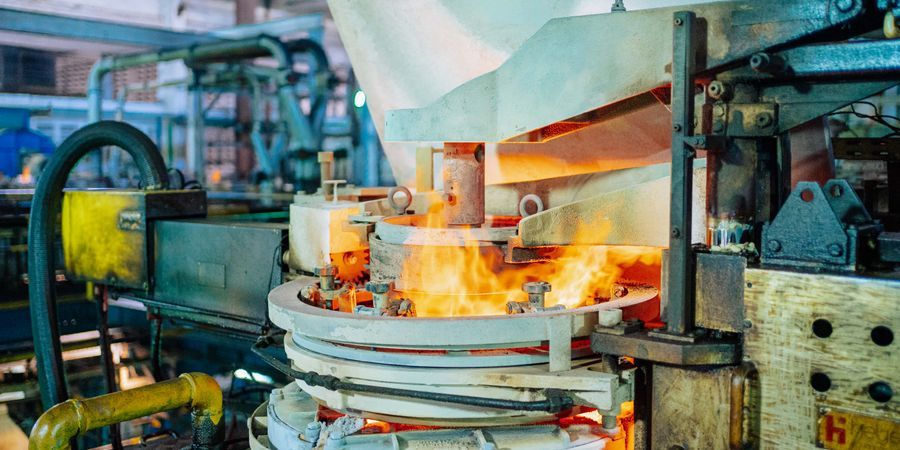
How to choose by glass type — four furnace categories with different demands
The zone matrix above applies broadly, but glass type modifies the specification at key positions. Here is the practical guide by furnace category.
Float glass furnaces
The longest campaigns, the strictest quality requirements, and the highest furnace temperatures. Float glass at 1,570–1,610°C (per industry operating practice) demands the full AZS-36/AZS-41 specification at glass-contact positions. Crown silica quality requirements are highest here — float glass optical quality is unforgiving of any crown ablation chemistry inconsistency. Campaign lengths of 12–15 years are achievable with correct specification.
Container glass furnaces
More thermal cycling than float (colour changes, product changes, capacity adjustments). AZS-36 tank walls are standard. The additional thermal cycling means regenerator checker bricks face more stress than float glass — high-alumina checker grades must account for the cycling frequency. Campaigns typically 8–12 years.
Fiberglass furnaces
Aggressive glass chemistry — boron-containing glass compositions attack refractory materials differently from soda-lime glass. AZS performance in borosilicate glass contact is lower than in soda-lime. Some fiberglass furnace operators specify AZS-41 in positions where AZS-36 would suffice for container glass. Silica crown chemistry must also be verified against the specific boron content. Specialist advice is warranted before specification.
Specialty and borosilicate glass
The most demanding refractory environment. Glass compositions may require AZS-41 throughout the glass-contact zone rather than just at the throat. Crown materials may need to shift from standard silica to fused silica or AZS-33 in some borosilicate applications where conventional silica's ablation chemistry is incompatible. Each case should be evaluated against the specific glass composition.
If you are unsure which category your furnace falls into, or if you are transitioning from one glass type to another — see our glass furnace application page for case-specific guidance, or contact us directly with the glass composition and we will provide a written grade recommendation.
Installation and heat-up — four rules for glass furnaces specifically
Glass furnace installation follows the same general discipline as any industrial refractory — correct grades, tight joints, no shortcuts. But glass furnaces have specific requirements at two points that warrant explicit attention.
Silica crown heat-up must pass through 573°C slowly
The quartz inversion at 573°C involves a rapid volume change. Pass through this range at no more than 10–15°C per hour. Above and below this band, heating rate can be faster — but not through it. Rushed silica crown heat-ups are the single most common installation failure mode in glass furnace relining work. The crown that fails in month three was almost always destroyed during heat-up.
AZS joints must use compatible mortar — not standard alumina mortar
AZS bricks require ZrO₂-containing joint mortar matched to the brick grade. Using standard high-alumina mortar with AZS bricks creates a joint that corrodes faster than the brick — the joint becomes the path for glass penetration. This is a supplier-specified requirement, not a field judgment call.
Verify silica crown dry joints — no mortar in crown keystone
Silica crowns are typically laid with dry radial joints in the arch — the arch geometry itself provides compression. Applying mortar to silica crown radial joints restricts the thermal expansion that the dry joint is designed to accommodate. The crown cracks instead of the joint. Axial joints use mortar; radial joints in the arch do not.
Commission water-cooling on tank wall steel before glass loading
Tank wall steel cooling systems (water-cooled jackets or fingers) should be commissioned and confirmed operating before glass is loaded. AZS tank wall bricks rely on a stable cold-face temperature to maintain glass resistance. A cooling failure after glass loading is a tank wall failure in progress. The systems are cheap to test; the alternative is expensive to fix. (We have never had a customer complain that they tested the cooling too thoroughly.)
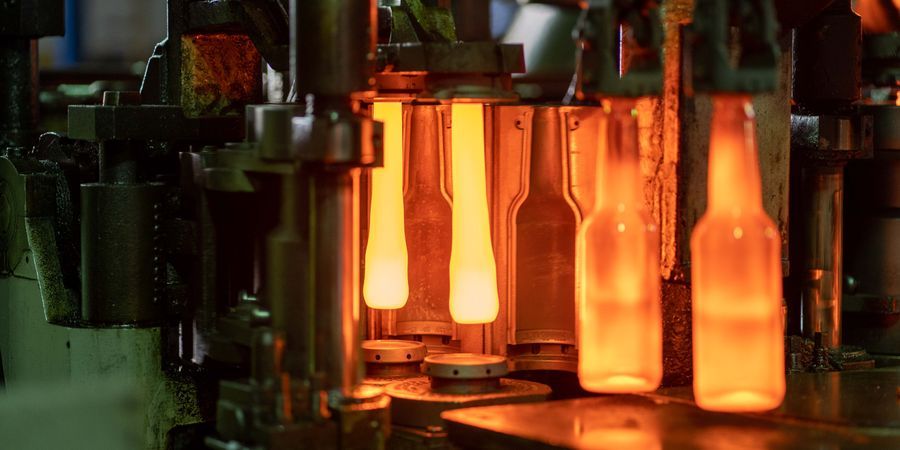
Glass furnace linings fail early for five predictable reasons.
None of them are surprises — they are the same mechanisms, in the same positions, for the same underlying causes. The only variable is how quickly the campaign catches them.
- AZS grade under-specified for pull rate or glass chemistry. Higher pull rates increase glass flow velocity across tank walls — erosion accelerates accordingly. AZS-36 that performs well at 450 tonnes/day may fail early at 600 tonnes/day if the ZrO₂ content was not recalculated for the higher throughput. Grade selection must account for operating parameters, not just nominal furnace type.
- Silica crown damaged during heat-up. As described above — the 573°C inversion. Crown damage at heat-up is typically not visible until later in the campaign when the damaged zone propagates. A crown that "seemed fine" at commissioning but fails in year four was often a heat-up problem.
- AZS exudation at joints creating glass inclusions. AZS bricks can exude a glassy phase at high temperature if joints are wide or if thermal gradients are incorrect. The exudate enters the glass melt as an inclusion-forming contaminant. Correct joint width and mortar chemistry prevent this — field shortcuts do not.
- Regenerator clogging from incorrect checker grade. Using grades without sufficient SOx resistance in the lower checker position results in sulfate crust formation that progressively blocks regenerator passages. Reduced air preheating then raises fuel consumption and tank temperature — a cascade that compresses the campaign. The checker brick grade is a fuel cost variable, not just a refractory one.
- Wrong insulation brick grade in backup position. Insulation bricks in the backup layer must be rated for the expected cold-face temperature of the zone — not the hot-face temperature. An insulation brick rated for 1,000°C behind an AZS tank wall running 1,400°C hot-face will fail if the cold-face temperature exceeds its service rating. Shell temperature monitoring is the early warning system; correct insulation specification prevents the alarm from sounding.
Straight answers
Questions from glass plant engineers and procurement teams, answered without padding.
What refractory bricks are used in the crown of a glass furnace?
What is AZS brick and why is it used in glass furnaces?
How long does a glass furnace refractory lining last?
What is the difference between AZS-33, AZS-36, and AZS-41 grades?
Why is silica brick used above the glass melt level but not below?
How do I know when to replace the refractory lining in a glass furnace?
Can high-alumina bricks be used in glass furnace applications?
Specify the right grade before the campaign starts.
Tell us your furnace type, glass composition, pull rate, and zone dimensions. We match the correct Firebrics grade to each zone and provide a written quote with service life estimates from comparable applications. See our glass furnace application page for case examples.
We will not suggest AZS-41 for every position just because it is the most expensive option. We have glass furnace application data. We use it.