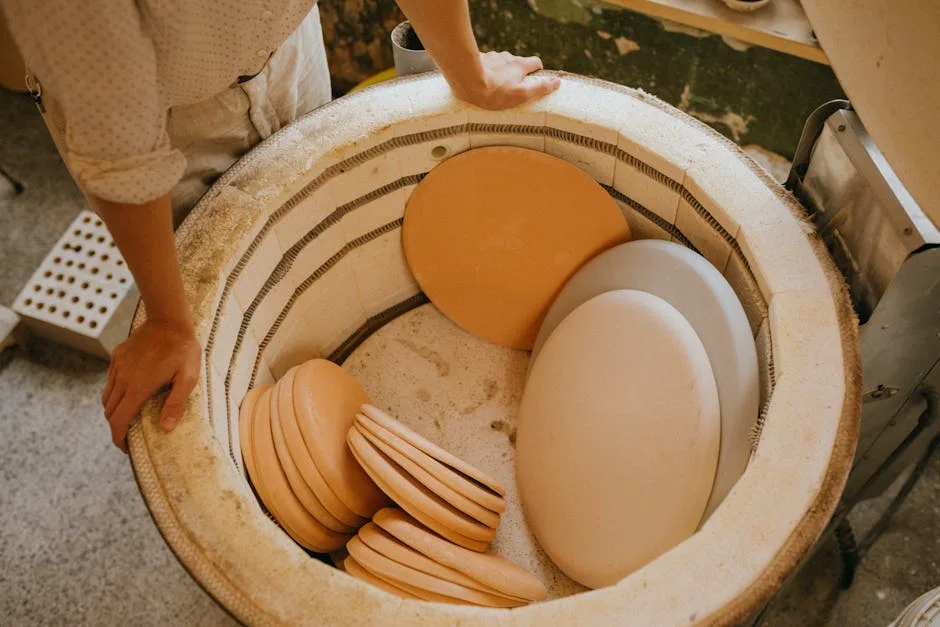
Ceramic kilns need refractory bricks that balance thermal uniformity, fast heat-up, low shell loss, and repeatable firing quality. Tunnel kilns, shuttle kilns, and roller hearth systems all behave differently, so refractory bricks for ceramic kilns should be chosen around the firing cycle and insulation target, not just the maximum firing temperature.
Firebrics uses this page as the commercial landing page for ceramic kiln intent. It connects each kiln scenario to the right insulating and dense lining role, then routes you to the relevant product family rather than leaving core kiln keywords on standalone blog articles.
Most ceramic kiln projects start here: review insulating fire brick grades for backup efficiency, then compare the rest of the refractory products catalog for hot-face and accessory layers.
Key Application Zones
Side walls, crown, and hot face lining for continuous tunnel kilns — lightweight JM28/JM30 bricks provide fast heat-up and low energy storage for efficient thermal cycling.
Batch kilns require refractories with low heat storage capacity for rapid temperature swings — lightweight insulating bricks minimize cool-down time between cycles.
Kiln car tops and saggar support beams demand high alumina or silicon carbide bricks with excellent creep resistance under load at peak firing temperatures.
Thin wall construction with maximum insulation for tile and sanitaryware firing — our lightweight modules and castable panels enable high-speed continuous firing lines.
Recommended Products
Insulation Bricks
JM23 to JM30 insulating firebricks with low thermal conductivity (0.28–0.62 W/m·K) and bulk density 0.6–1.0 g/cm³ — the core product for ceramic kiln hot-face linings.
View ProductHigh Alumina Bricks
Dense high alumina bricks for kiln car tops, hotface contact zones, and structural arch supports — excellent creep resistance at 1400–1600°C.
View ProductInsulation Mortar
Air-setting and heat-setting insulating mortars matched to JM-series bricks — low thermal conductivity, excellent bond strength, and minimal shrinkage on drying.
View ProductConventional Castable
Al₂O₃ 35–70% castable refractory for complex shapes, rapid repair, and cost-effective lining of boilers, furnaces, and kilns. Cast, gunned, or vibration-cast in place.
View ProductCeramic Kiln Energy Optimization
Tell us your kiln type, dimensions, firing temperature, and product type. We'll design a complete lightweight lining system with expected energy savings versus your current configuration.