Steel Refractory Bricks by Vessel:
EAF, BOF, Ladle & Tundish Selection
Jason Gong
Founder & Sales Director · Product Inquiry Contact
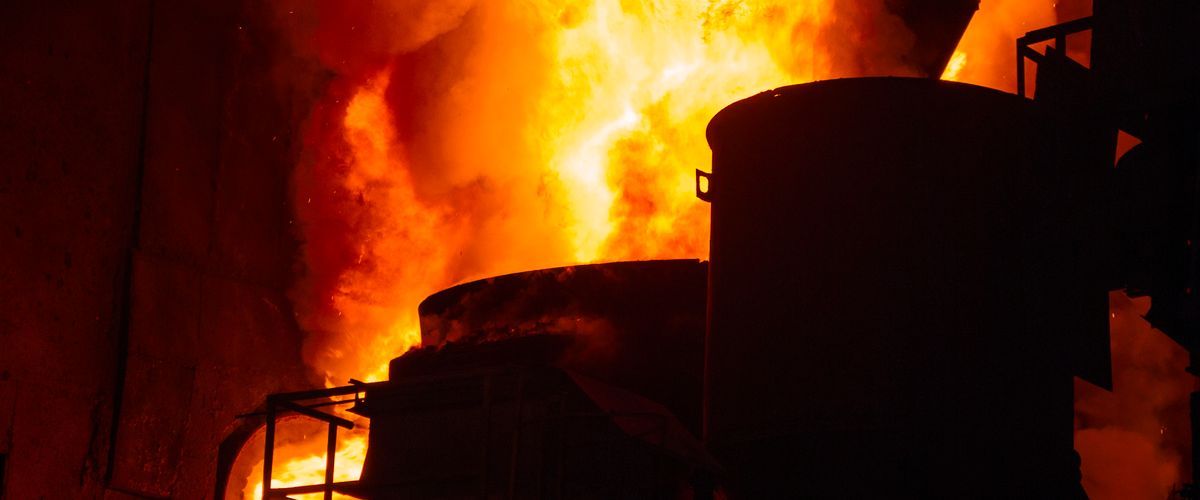
Refractory bricks for the steel industry protect blast furnaces, EAF and BOF converters, steel ladles, tundishes, and reheating furnaces from temperatures of 1,500–1,800°C and highly corrosive basic slag chemistry. The steel industry consumes approximately 70% of all refractory bricks produced globally — roughly 10–15 kg of refractory material per tonne of crude steel. The correct grade varies by zone: there is no single brick that fits a blast furnace hearth and a steel ladle slag line equally well.
Need the main commercial landing page? Move from this guide to the steel industry page for zone-led commercial routing, then compare relevant high alumina fire brick and other refractory product families.
Evidence note. Industry-share, consumption-per-tonne, heat-count, temperature and carbon-content figures are often-cited planning ranges whose definition changes by region, vessel and reporting year. Verify the current dataset, grade, slag chemistry and operating practice before using a number in a purchase specification.
The industry that consumes 70% of everything we make
Every tonne of steel produced needs refractory bricks. Not as a nice-to-have. As a physical requirement — without a refractory lining, the steel shell of a blast furnace fails in minutes at operating temperature. The lining is not optional infrastructure. It is the reason the process exists at all.
The global refractory market runs at roughly $25 billion annually. Steel takes approximately 70% of that — more than cement, glass, ceramic, and non-ferrous metal industries combined. Modern steel plants use 10–15 kg of refractory material per tonne of crude steel, down from 20–30 kg in the 1980s as material quality and operating practice have improved. That improvement came from better specification, not magic.
What makes steel different from every other refractory application is the combination of three simultaneous stresses: extremely high temperatures (1,500–1,800°C depending on the vessel), highly basic slag chemistry that dissolves the wrong brick grades chemically, and severe mechanical stress from scrap charging, oxygen blowing, and molten metal movement. No other industry stacks all three together as aggressively. The lining that works in a ceramic kiln or a glass furnace does not simply transfer to a steel converter.
demand — steel industry
tonne of steel
arc zone temperature
exports to
In steel applications, a common cause of premature lining failure is not temperature overload — most buyers get the temperature range roughly right. It is chemical mismatch between the refractory, slag, metal, and furnace atmosphere. More on that when we get to the zones.
The steel plant is not one application. It's twelve.
A steel plant has multiple high-temperature vessels operating simultaneously, each with its own temperature range, slag chemistry, and mechanical environment. Specifying a single refractory grade for all of them is not a procurement strategy — it's a scheduling problem in disguise. Each zone needs its own answer.
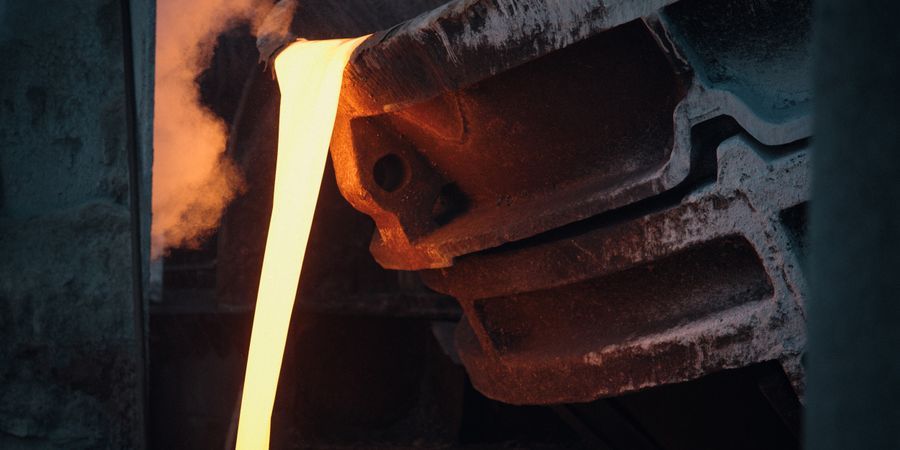
Blast furnace
The blast furnace is a shaft — tall, continuous, and zoned from top to bottom. Each zone sees different conditions. Specify accordingly.
- Upper stack: fireclay or high alumina bricks (45–60% Al₂O₃). Temperatures of 400–800°C, abrasion from descending burden, alkali vapour attack.
- Lower stack and bosh: high alumina bricks (70–80% Al₂O₃) plus silicon carbide composites. Temperatures climb to 1,000–1,200°C; the slag forming zone begins.
- Belly and tuyere zone: SiC and carbon composite bricks. Molten iron and slag are present. Thermal load from tuyere air blast. This zone is where inferior material selection announces itself loudest.
- Hearth: carbon bricks and microporous carbon, with a cooling system. Molten iron sits here continuously at 1,500–1,550°C. The hearth is the most critical zone in the blast furnace — it limits campaign life. Carbon bricks with high thermal conductivity work with the water-cooling system to maintain a "skull" of frozen iron, protecting the brick behind it.
Blast furnace campaign life targets 10–15 years. The hearth carbon brick quality determines whether you hit it or plan an unscheduled reline at year seven.
Electric arc furnace (EAF)
EAF steelmaking feeds scrap and DRI (direct reduced iron) and melts it with high-power electric arcs — temperatures in the arc zone reach 1,750–1,800°C. The hot spots are severe and localised.
- Hot zones (arc impact and slag line): high-carbon magnesia-carbon bricks (MgO-C), 14–20% carbon content. Nothing else survives the arc radiation and basic slag combination at this temperature.
- Slag door and tap hole: MgO-C bricks with higher carbon and antioxidant addition. Frequent thermal cycling and physical impact from tapping.
- Upper walls and roof delta: high alumina bricks or burned magnesia bricks in cooled-panel systems.
- Bottom: MgO-C or dry-vibrating magnesia mass, depending on design.
EAF lining life in hot zones: 300–600 heats with good-quality MgO-C bricks and proper slag management. Poor material selection or slag chemistry mismanagement cuts that to 80–150 heats. The difference pays for a lot of bricks.
Basic oxygen furnace (BOF)
BOF converters blow pure oxygen through molten iron at velocities that would impress most people and terrify the lining. Temperatures exceed 1,700°C. The slag is aggressively basic (high CaO, MgO).
- Trunnion zone: highest-strength MgO-C bricks — this area receives maximum mechanical stress from vessel rotation and the weight of molten metal.
- Slag line: high-carbon MgO-C bricks. Direct slag attack at operating temperature.
- Barrel: medium-carbon MgO-C bricks. Good slag resistance, some cost optimisation possible here.
- Bottom: MgO-C bricks or burned dolomite, depending on process chemistry preferences.
- Converter mouth: high-strength burned dolomite or MgO-C — mechanical impact from scrap charging and splash from oxygen blowing.
BOF lining life targets 10,000–20,000 heats in modern operations with gunning maintenance. Zone-by-zone repair (gunning or patching) extends lining life significantly. Get the initial specification wrong and gunning cannot keep pace with the erosion rate.
Steel ladle
The ladle holds molten steel after tapping from the EAF or BOF and carries it through secondary metallurgy and to the continuous caster. Slag chemistry and thermal cycling are the main challenges.
- Slag zone: alumina-magnesia-carbon (Al-MgO-C) bricks — specifically engineered for resistance to the complex slag chemistry of secondary steelmaking. This zone wears fastest and determines lining life.
- Barrel: high alumina bricks (70–80% Al₂O₃). Lower temperature exposure than the slag zone; alumina provides adequate protection at lower cost than MgO-C.
- Bottom: high alumina or MgO-C, depending on impact severity from tapping and stirring.
- Well block and nozzle: zirconia-based or high-alumina speciality bricks — the nozzle opening endures severe erosion and thermal shock every heat.
Ladle lining life: 80–120 heats for the slag zone. The barrel often outlasts the slag line. Most steel plants reline in sections rather than completely. (This is the correct approach. Relining good brick because the slag line is worn is not conservatism — it's inventory management gone wrong.)
Tundish
The tundish sits between the ladle and the continuous caster. It distributes molten steel evenly across multiple strands. Lining requirements are lighter than the ladle but still demanding.
- Working lining: usually magnesite or dolomite spray mass for cost-efficiency and ease of removal, or high alumina bricks for longer campaign life.
- Impact pad: zirconia or high-alumina castable — the entry point for the steel stream. Severe erosion, every heat.
- Permanent lining: insulating firebrick or insulating castable — holds heat, protects the steel shell.
Reheating furnace
Steel slabs, billets, and blooms are reheated in continuous or batch furnaces before rolling. Temperatures: 1,200–1,350°C. Atmosphere is oxidising. The slag chemistry challenge is minimal compared to primary steelmaking vessels, which is why high alumina bricks handle this application well.
- Roofs and upper walls: high alumina bricks, 65–75% Al₂O₃. Good thermal shock resistance for the cycling.
- Skid supports: dense high alumina, 75–85% Al₂O₃. Maximum Cold Crushing Strength is the key property here — these bricks carry the mechanical load of the steel being heated.
- Side walls and floor: high alumina bricks, 60–70% Al₂O₃, selected for abrasion resistance.
Six brick grades that run a steel plant
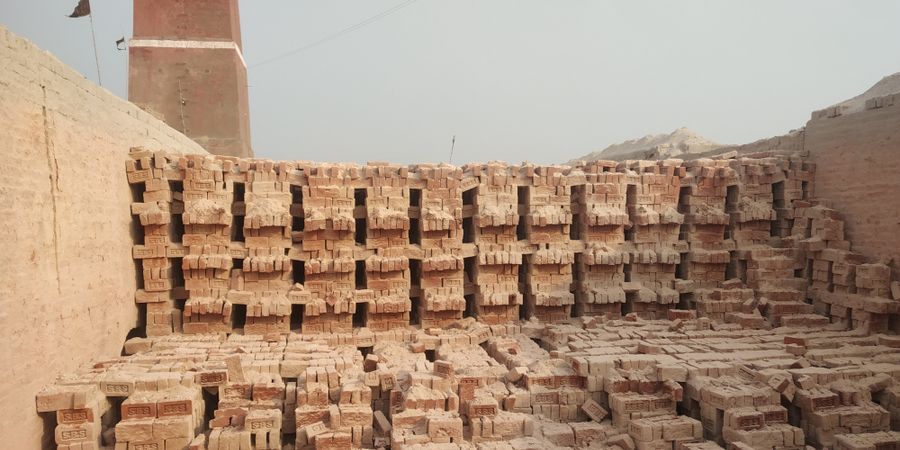
Every vessel above uses a combination of these six material categories. The table below maps each grade to its primary steelmaking application, temperature range, and key selection reason.
| Material Grade | Temperature Range | Classification | Primary Steel Application | Key Selection Reason |
|---|---|---|---|---|
| Magnesia-Carbon (MgO-C) | >1,700°C | Basic | EAF hot zone, BOF converter, ladle slag line | Only grade that resists basic slag + arc radiation simultaneously |
| Alumina-Magnesia-Carbon (Al-MgO-C) | 1,600–1,700°C | Basic / Neutral | Steel ladle slag zone | Engineered for complex secondary steelmaking slag chemistry |
| High Alumina (60–85% Al₂O₃) | 1,500–1,700°C | Neutral | Blast furnace stack, ladle barrel, reheating furnace | Versatile neutral grade, good thermal and mechanical performance |
| Carbon / Microporous Carbon | >1,500°C | Neutral | Blast furnace hearth | High thermal conductivity works with cooling system to protect hearth |
| Silicon Carbide (SiC) | 1,400–1,700°C | Neutral | Blast furnace tuyere zone and lower stack | Excellent abrasion resistance, thermal conductivity, and alkali resistance |
| Dolomite / Burned Dolomite | >1,700°C | Basic | BOF bottom, converter mouth | High MgO+CaO content resists basic slag; lower cost than MgO-C in some zones |
Zirconia-based bricks and castables also appear at specific points — tundish impact pads, ladle nozzle well blocks, and submerged entry nozzles — where erosion resistance is the dominant requirement. They are not the workhorse material; they are the specialist called in where nothing else survives the conditions.
MgO-C vs high alumina: the comparison that saves campaigns
This is the comparison that comes up in almost every procurement conversation we have with steel plants. High alumina bricks are significantly cheaper per tonne. The question is whether they're cheaper per campaign — and the answer depends entirely on which zone you're discussing.
| Property | MgO-C Brick (14–20% C) | High Alumina Brick (75% Al₂O₃) |
|---|---|---|
| Basic slag resistance | Excellent — MgO resists CaO-rich slag | Moderate — alumina dissolves in highly basic slag |
| Temperature ceiling | >1,750°C in practice | 1,650–1,700°C safe operating limit |
| Thermal shock resistance | Good — graphite network absorbs thermal stress | Good — well-fired grades handle cycling well |
| Oxidation sensitivity | Graphite oxidises above 600°C — requires antioxidant addition | None — fully oxidised composition |
| Cost per tonne | 3–5× higher than high alumina | Baseline cost |
| Service life (EAF hot zone) | 300–600 heats | 30–80 heats before failure — wrong grade for this zone |
| Cost per heat (EAF hot zone) | Lower — longer service amortises higher material cost | Higher — frequent relining reverses cost advantage |
"Buying refractory bricks for a steel ladle by price per tonne is roughly equivalent to buying tyres for a racing car by the kilogram. The number is real. The logic is not. MgO-C costs 3–5 times more per tonne than high alumina. In the EAF hot zone, it lasts 5–8 times longer. The plant that buys on price per tonne relinesmore frequently, loses more production hours, and pays more per heat of steel produced — and they do this while believing they are saving money."
The correct use of high alumina bricks in a steel plant is in the reheating furnace, the ladle barrel, and the blast furnace stack. Not in the EAF hot zone or the BOF converter walls. The grade is excellent. The application limits are real. Both facts can be true simultaneously.
We once supplied a procurement team that had switched a BOF converter hot-zone specification from MgO-C to a premium high alumina grade to reduce their initial material spend by approximately $14,000. The lining failed at 31 heats. The emergency reline — including lost production during unscheduled downtime — cost approximately $95,000. They switched back to MgO-C. They have not raised the question of substitution again. (We did not say "we told you so." We wrote this blog post instead.)
Five properties that actually determine steel industry service life
A refractory brick's performance in a steel plant comes down to five measurable properties. All five are on the technical datasheet. Read it before specifying.
1. Slag resistance — the number that matters most
Measured as percentage volume expansion or depth of slag penetration in a standard slag resistance test (ISO 8841). In steelmaking, the slag is basic — high in CaO and MgO. Basic refractories (MgO-C, burned magnesia, dolomite) resist it. Acid refractories (silica, fireclay) dissolve in it. Neutral refractories (high alumina) show moderate resistance. Get this wrong and the brick fails chemically at a rate that no installation skill can compensate for.
2. Refractoriness under load (RUL)
The temperature at which the brick deforms under a specified compressive load. For EAF and BOF applications, specify bricks with RUL above 1,600°C. The rated maximum firing temperature is not the same as RUL under the mechanical loads of a steelmaking vessel. A brick that reaches 1,700°C in a lab without load can deform under the hydrostatic pressure of a ladle full of liquid steel at 1,650°C. Check the RUL value on the datasheet — not the headline temperature rating.
3. Thermal shock resistance
Steelmaking involves frequent thermal cycling — a steel ladle goes from cold to 1,650°C and back again with every heat. EAF furnaces experience rapid temperature swings at the tap hole and slag door. Thermal shock resistance (measured in thermal shock cycles to failure) needs to be appropriate for the cycling frequency of the vessel. MgO-C bricks benefit from graphite's thermal conductivity and elasticity; high alumina bricks handle it through spinel formation. Both can be specified correctly — and both fail if the thermal shock resistance is mismatched to the cycling pattern.
4. Cold Crushing Strength (CCS)
Mechanical load is real in steel plant vessels. Ladle bottoms carry the static weight of liquid steel. Blast furnace skid supports carry physical steel weight. BOF bottoms take impact from scrap charging. Specify CCS above 50 MPa for high-load zones. The CCS value is in every technical datasheet. If it isn't, ask for it before ordering.
Before ranking supplier values, check the method, specimen basis, loaded face, conditioning, and units with this guide to comparing cold crushing strength test reports.
5. Apparent porosity and bulk density
Dense bricks with apparent porosity below 18% resist slag penetration. High porosity allows liquid slag to infiltrate the brick body — it then sets on cooling, creates differential stress during the next heat-up, and the brick spalls. In any zone with direct slag contact, low apparent porosity is a requirement. Dense, low-porosity MgO-C bricks typically show apparent porosity of 3–8% — the graphite content essentially seals the pore structure against slag infiltration.
How to specify refractory bricks for a steel plant — the four questions
There is no universal best refractory brick for the steel industry. There is the right brick for a specific zone with specific operating conditions. Answer these four questions before specifying anything.
- Which vessel and which zone? The blast furnace hearth, the EAF hot zone, and the reheating furnace skid are three completely different specifications — same industry, different answers. If you tell us the vessel and the zone, we can tell you the grade within a five-minute conversation. If you tell us "a steel plant," we'll need to ask this question before we can help.
- What is the slag chemistry? Basic slag (high CaO/MgO) in primary steelmaking requires basic or magnesia-carbon bricks. Complex secondary steelmaking slag in the ladle often contains fluorides and complex oxides — Al-MgO-C grades are specifically engineered for this. If your plant has characterised the slag chemistry, use it. If not, tell us the process and we'll advise based on typical composition.
- What is the target campaign length? A 500-heat EAF target and a 150-heat target call for different carbon contents in MgO-C bricks, different antioxidant systems, and different densities. Tell us the target before we quote — optimising for cost at 150 heats is a different exercise than optimising for cost at 500 heats.
- What is the actual cost per heat you're trying to hit? Material cost per tonne is the wrong number. Cost per heat — total material cost divided by heats achieved — is the number that tells you whether a specification is performing. We supply plants who track this rigorously. The ones who buy on price per tonne have interesting production logs and expensive maintenance schedules.
Not sure about the answers? Tell us the vessel type, the process (EAF / BOF / blast furnace / ladle refining), and your current lining life. We'll tell you what we'd specify, why, and what campaign life to expect. The technical advice is not a separate charge.
How to install refractory bricks in steel vessels — the steps that protect the investment
The best-specified brick installed poorly underperforms a decent brick installed well. This is consistently true across every application we supply. Installation quality matters. Here is the version that applies to steel industry vessels.
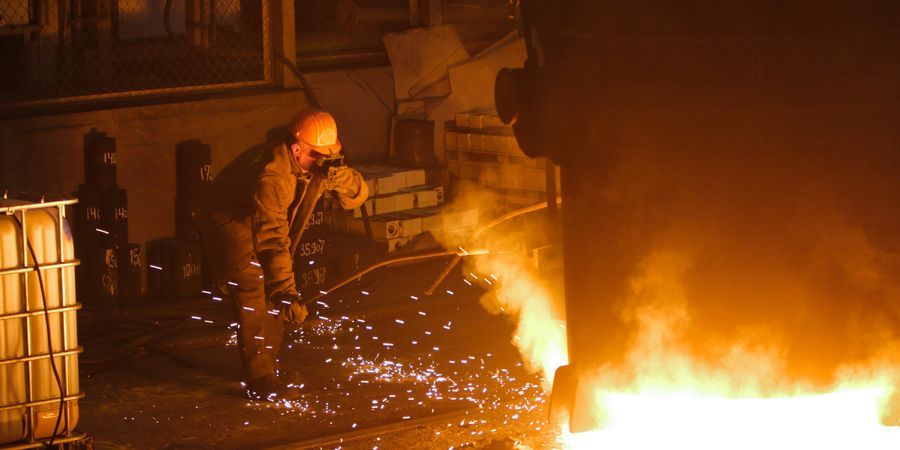
Inspect and prepare the steel shell
Remove all residual old brick, mortar, and skull material from the previous campaign. Check the steel shell for deformation — a warped ladle shell will transmit uneven stress into the new lining at every heat. Any surface irregularity that persists into the new lining creates an uneven load path that generates early joint failure. This step costs time. Skipping it costs a campaign.
Select matched mortar — not generic refractory mortar
MgO-C bricks require MgO-C mortar or a carbon-bonded mortar. High alumina bricks require high alumina mortar. The mortar composition must match the brick to maintain chemical compatibility at operating temperature. At 1,700°C, an incompatible mortar joint does not bond — it reacts. Refractory mortars are not interchangeable; the technical datasheet specifies the correct mortar grade for each brick. It is not a suggestion.
Maintain 1–2 mm joint thickness throughout
In steel ladle and converter linings, joint thickness is a structural parameter. Over-thick joints (4–6 mm) crack under thermal cycling — differential expansion puts maximum stress on the weakest structural points. Cracked joints admit liquid slag within a few heats. Use the dip-coat method for MgO-C bricks — dip one face in a thin mortar slurry, place, and tap to seat. Consistent 1–2 mm joints throughout the lining. The notched trowel method also works. Whatever gets you to 1–2 mm consistently is correct.
Stagger brick courses — no continuous vertical joints
Running bond — each joint covered by the brick above. No vertical joint that runs continuously across more than one course. Continuous vertical joints are structural crack paths. Under thermal cycling, thermal stress finds them and propagates through the lining. This is not decorative preference. It is how load distributes through a curved lining under pressure from liquid steel.
Follow the heat-up schedule — every time, without exceptions
After installation: 25–50°C per hour to 120°C, hold 4–8 hours to remove free moisture. Then 25–50°C per hour to 300°C, hold 4 hours to remove chemically bound moisture. Then continue to operating temperature at 25°C per hour. MgO-C bricks contain resin binders and antioxidant additions that need to cure properly. Rush the schedule and steam pressure destroys the lining from the inside — a brand-new installation, correctly specified and correctly laid, rendered unusable in the first heat-up. (The technical term for what happens next is "an expensive learning experience." The technical term for the sound it makes is not suitable for this publication.)
Why refractory bricks fail in steelmaking — and how to read the pattern
Premature lining failures in steel plants have patterns. Most are predictable. Most are preventable. The failure modes that appear after commissioning were usually set up before the furnace was lit.
- Chemical attack from slag mismatch. Acid or neutral bricks in a basic slag environment dissolve from the hot face inward. The erosion is measurable. The root cause was visible on the specification sheet before the first heat. This accounts for the majority of early-life lining failures we've investigated. Match the brick chemistry to the slag chemistry. It is on the datasheet.
- Graphite oxidation in MgO-C bricks. If oxygen reaches the graphite in MgO-C bricks — through cracks, during preheating, or through inadequate antioxidant systems — the graphite oxidises and the brick structure weakens. Antioxidant additions (silicon, aluminium, boron carbide) protect against this. Specify MgO-C grades with appropriate antioxidant systems for your preheating and operating conditions.
- Thermal shock cracking. Rapid temperature change creates differential expansion in the brick. If the brick's thermal shock resistance is insufficient for the cycling rate of the vessel, cracking occurs. Once a crack reaches the hot face, slag infiltration follows. The correct material for frequently cycling applications has higher thermal shock resistance — this usually means higher carbon content in MgO-C or spinel-bonded grades in high alumina applications.
- Mechanical erosion at high-velocity points. The tuyere zone of a blast furnace, the tap hole, the converter mouth during oxygen blowing — all see material erosion from high-velocity gas or liquid flows. High bulk density, low porosity, and SiC or dense burned magnesia grades are appropriate. Lightweight or moderate-density grades in these positions fail from erosion, not chemical attack — a different failure mode requiring a different solution.
- Installation errors that emerge at operating temperature. Over-thick joints that crack. Uneven seating that creates stress concentrations. Incomplete moisture removal in the first heat-up. These failures look like material failures at operating temperature. They are installation failures visible only in the post-campaign investigation. Installation quality is part of the specification — not an afterthought.
Straight answers
Questions we hear regularly from steel plant procurement teams and refractory engineers. Answered directly.
What refractory bricks are used in the steel industry?
Which refractory bricks are used in a blast furnace?
How long do refractory bricks last in a steel ladle?
What are magnesia-carbon bricks used for in steelmaking?
How much refractory material does a steel plant use per tonne of steel?
Why do refractory bricks fail in BOF converters?
What is the difference between EAF and BOF refractory requirements?
Tell us the vessel and the zone. We'll tell you what grade we'd use and why.
Compare MgO-C, high alumina, alumina-magnesia-carbon, and insulating refractory bricks by furnace zone, slag chemistry, thermal load, and wear pattern. Custom OEM sizes and shapes are available.
We'll review your application, tell you which grade we'd specify, and explain what campaign life to expect. We'll probably also have an opinion about why the current lining is underperforming. That part is also free.
Further Reading