Cement Kiln Refractory Bricks by Zone:
Grade, Chemistry & Campaign Evidence
Jason Gong
Founder & Sales Director · Product Inquiry Contact
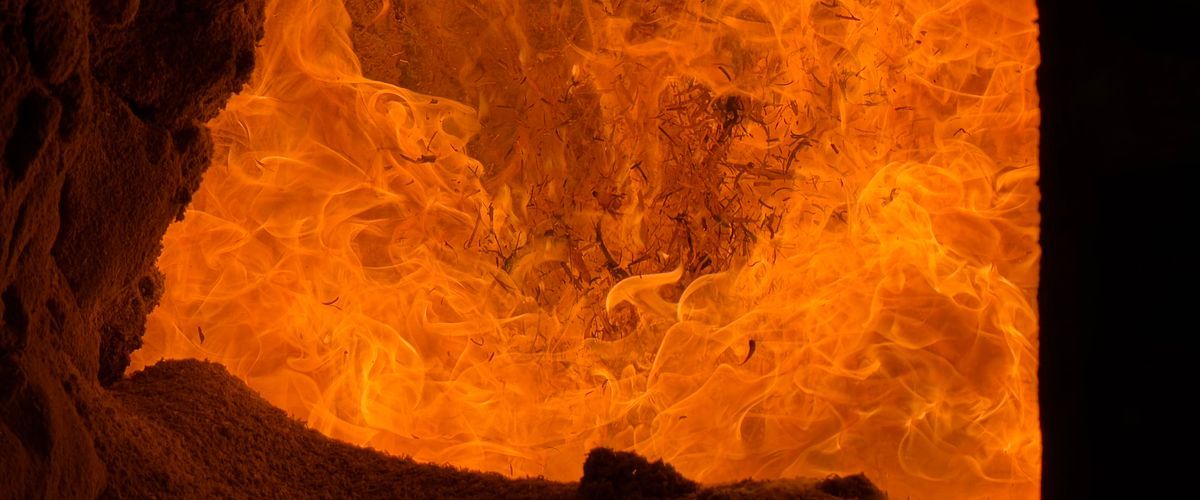
Refractory bricks for cement kilns vary by zone. The burning zone uses magnesia-spinel or magnesia-chrome bricks (rated 1,600–1,800°C+). Transition zones use silicon-mullite bricks. Preheating and cooling zones use high-alumina or alkali-resistant bricks. Matching the brick grade to each zone's temperature, chemical environment, and mechanical load is what determines campaign life — and the cost of the next unplanned shutdown.
Ready for the commercial page? Move from this support guide to the cement kiln landing page for scenario-led selection, then review high alumina fire brick grades for transition and cooler duties.
How to use the ranges. Temperatures, lining thicknesses, campaign life and failure shares are planning ranges or illustrative examples, not universal guarantees. Confirm the exact kiln diameter, shell condition, fuel and clinker chemistry with the OEM or refractory supplier, and date every plant dataset before using it in a specification.
Four jobs. One brick. All at once.
Every cement kiln has the same problem. The inside needs to hit 1,400°C. The steel shell fails at a fraction of that. The refractory brick lining is what makes those two facts compatible.
It does four things simultaneously:
- Thermal barrier. The shell must stay below 350°C while the hot face sees 1,400°C. Above 350°C the shell distorts — and a distorted shell buckles brick rings ahead of schedule.
- Chemical resistance. Alkali sulfates, clinker liquid phase, and CO gas attack the brick surface continuously. The lining absorbs that attack so the shell does not.
- Mechanical arch. A rotating 5 m kiln generates significant centrifugal and compressive load. Each brick ring is a structural arch. It has to hold geometry under load and through thermal cycling.
- Clinker coating anchor. In the burning zone, a thin layer of solidified clinker forms on the hot face and acts as a secondary thermal shield. The brick's job is partly to hold that coating in place. A stable coating extends lining life by 30–50%.
Miss any one of these and the campaign ends early. In most plants, "early" is measured in unplanned shutdown days and lost clinker tonnes — not in brick unit prices.
material temp
service life
mechanical stress
stable coating
Five zones. Treating them as one is the most expensive mistake in kiln lining.
Every cement rotary kiln divides into five zones, each with a different temperature profile, chemical environment, and mechanical load. A brick that performs perfectly in one zone will fail in another. This is the most common and most preventable specification error we see.
1. Preheating zone (inlet end)
Temperature: 400–900°C. The dominant threat is alkali attack — sulfate and chloride compounds condense on the brick surface and react with alumina. High-alumina bricks (≥75% Al₂O₃) with good alkali resistance work here. Anti-stripping alumina bricks are used where thermal cycling is severe at kiln start-up and shutdown.
2. Lower transition zone
Temperature: 900–1,100°C. Chemical attack intensifies. Silicon-mullite bricks — which combine silicon carbide's abrasion resistance with mullite's thermal stability — are now the standard in this zone for most modern kilns. They outlast high-alumina alternatives by a meaningful margin. (The technical name for what happens to under-specified bricks here is "accelerated material exchange." The kiln crew has a different name for it.)
3. Upper transition zone
Temperature: 1,100–1,300°C. Combined chemical, thermal, and mechanical stress. Silicon-mullite remains the preferred choice. Some specifications use spinel bricks where clinker build-up creates additional mechanical loading.
4. Burning / sintering zone
Temperature: 1,300–1,450°C, with flame temperatures reaching 2,000°C. This is the critical zone. Highest wear, highest chemical attack, highest mechanical stress. Magnesia-spinel or magnesia-chrome bricks are required. Nothing else survives reliably. The burning zone drives the entire campaign schedule: when it fails, the kiln stops.
5. Cooling zone (outlet end)
Temperature: 1,000–1,200°C with abrasive clinker falling directly on the hot face. Magnesia-spinel works well here. Plants with high-abrasion clinker sometimes use high-alumina grades in the cooler sections where abrasion — not chemistry — is the dominant failure mode.
Which brick for which zone — the standard map
Below is the zone-to-brick mapping for a dry-process cement rotary kiln. These are the grades Firebrics supplies and the grades that dominate current industry specifications globally.
| Zone | Temperature | Recommended Brick | Typical Life |
|---|---|---|---|
| Preheating | 400–900°C | High-alumina (≥75% Al₂O₃) / Alkali-resistant | 3–5 years |
| Lower transition | 900–1,100°C | Silicon-mullite brick | 24–36 months |
| Upper transition | 1,100–1,300°C | Silicon-mullite / Spinel | 18–30 months |
| Burning / sintering | 1,300–1,450°C | Magnesia-spinel / Magnesia-chrome | 12–24 months |
| Cooling | 1,000–1,200°C | Magnesia-spinel / High-alumina | 18–30 months |
Magnesia-spinel vs. magnesia-chrome — there's more to this than performance
The burning zone brick debate every cement plant procurement team eventually has to resolve. Both work. The decision now involves more than campaign life data.
Magnesia-chrome
Excellent chemical resistance to clinker liquid phase. Strong clinker coating adhesion. Historically dominant in the burning zone. The problem: spent magnesia-chrome bricks contain hexavalent chromium (Cr⁶⁺) — classified as hazardous waste in the EU and increasingly restricted under other jurisdictions. Disposal routes are narrowing. Disposal costs are rising.
Magnesia-spinel
Uses alumina-magnesia spinel as the secondary phase instead of chromite. Chemically inert in disposal — no special handling required. Thermal shock resistance is generally superior to magnesia-chrome, which matters when burning alternative fuels (tyres, biomass, refuse-derived fuel). Service life in the burning zone is within 10–15% of magnesia-chrome in most clinker chemistries.
| Property | Magnesia-Chrome | Magnesia-Spinel |
|---|---|---|
| Chemical resistance | Excellent | Very good |
| Thermal shock resistance | Good | Excellent |
| Clinker coating adhesion | Excellent | Good |
| Alternative fuel suitability | Moderate | High |
| Spent brick disposal | Hazardous (Cr⁶⁺) | Non-hazardous |
| Typical campaign life | 12–24 months | 11–22 months |
"Magnesia-chrome should be actively retiring from new cement kiln specifications. Not because it doesn't work — it does, and well. But a plant buying magnesia-chrome in 2026 is booking a hazardous disposal liability that doesn't appear on the brick quote. Magnesia-spinel delivers campaign life within 10–15% in most clinker chemistries, with zero chromium liability. That gap is not a brick cost trade-off. It's a risk transfer that the quote doesn't show."
A procurement team at a mid-size integrated cement plant chose a 75% Al₂O₃ high-alumina brick for their burning zone — roughly $8 per brick less than the recommended magnesia-spinel grade. The campaign ran 7 months instead of the expected 16. By the time the unplanned shutdown, re-lining labour, and lost production were costed, the brick budget saving had been overtaken roughly 14 times. The cheapest brick is not the cheapest campaign. (We mention this not to make anyone feel bad about past decisions — but because it is the single most preventable mistake we see, and it happens regularly.)
Five questions to answer before specifying anything
There is no universal best brick for a cement kiln. There is only the right brick for a specific combination of clinker chemistry, fuel mix, kiln condition, and target campaign.
- What is the clinker chemistry? High liquid-phase content demands stronger chemical resistance in the burning zone. Alkali content above 1% (Na₂O + K₂O) demands alkali-resistant grades in the transition and preheating zones. These are not generic constraints — they determine the grade.
- What fuels are you burning? Alternative fuels introduce more severe thermal cycling. Magnesia-spinel and silicon-mullite handle this better than grades optimised for steady-state coal combustion. If your alternative fuel substitution rate is above 20%, the brick specification needs to reflect that.
- What is the kiln's ovality? Shell ovality above 0.5% applies abnormal mechanical loads on brick rings. Ovality should be corrected — but until it is, specify grades with higher cold crushing strength for the deformed zone. A grade that survives at 0.3% ovality will not survive at 0.8%.
- What is your target campaign length? If you're targeting 18 months, the burning zone brick needs to be rated for that under your operating conditions. If you're specifying a cheaper grade to save per-tonne cost, cost in the shorter campaign honestly — and decide whether the maths still works.
- What are your disposal regulations? If you're in or exporting to a jurisdiction with Cr⁶⁺ restrictions, remove magnesia-chrome from the specification before the quote, not after the shutdown audit.
If you're not sure of the answers, tell us the application. Firebrics' product range covers all five zones with grades matched to both dry and wet process kilns — and the technical opinion is included in the conversation, not priced separately.
Four installation rules. None complicated. All critical.
The best-specified brick in the world fails early if it is installed incorrectly. These rules are not suggestions.
Inspect and correct the kiln shell first
Measure shell ovality and circularity before laying a single brick. Ovality above 0.5% applies differential loading that no brick grade can fully absorb. Correct the shell — or at minimum document the condition and select grades with appropriate mechanical properties for the deviation.
Keep joints tight and correctly oriented
Axial joints must run parallel to the kiln centreline. Radial joints must be perpendicular. Joint width: 1–2 mm with refractory mortar matched to the brick grade — never generic cement. All four corners of the hot face end of each brick must contact the shell lining. Gaps under thermal load become stress concentrators, and stress concentrators become cracks.
Lock each ring before moving to the next
Bricks are installed in rings, not continuous courses. Each ring must be locked — with a steel locking plate or key bricks at the crown — before rotating the kiln to lay the next ring. A ring that is not locked is a ring waiting to fall. This is not a metaphor.
Follow the heat-up schedule without shortcuts
Standard heat-up for magnesia bricks: 25–50°C/hr to 120°C, hold 8 hours to drive out free moisture, then 25–50°C/hr to 300°C, hold 4 hours, then continue at 50°C/hr to operating temperature. Rushing causes steam pressure spalling and cold-face cracking. A brick destroyed in heat-up is a brick paid for twice and a campaign started one step behind. (The technical term for the sound a failed heat-up makes is not printable here.)
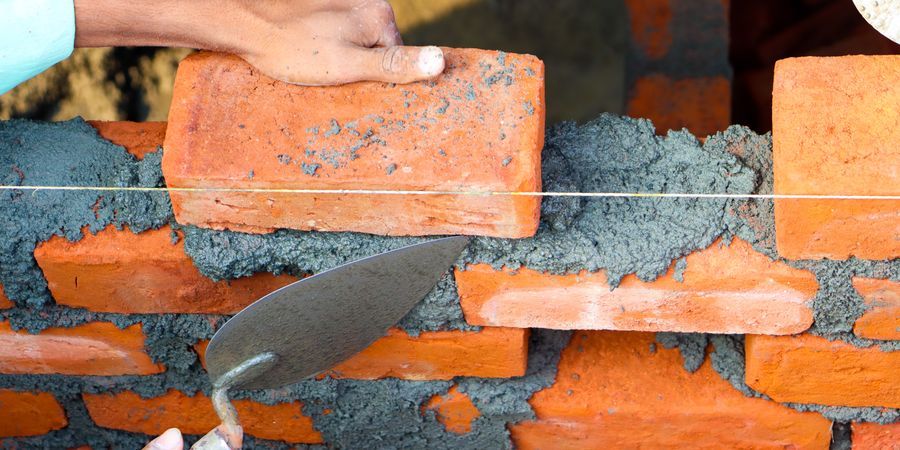
Most premature lining failures are preventable. Understanding which mechanism is dominant is where it starts.
Re-specifying the same brick without fixing the root cause produces the same result, on a shorter timeline.
- Mechanical stress (37% of failures). Shell ovality, thermal expansion mismatch, loose brick rings. Often caused by deferred shell maintenance, inadequate ring locking, or mixing brick grades in a single ring. Bricks of different grades expand at different rates. They find each other's joints.
- Chemical attack (36% of failures). Alkali sulfate compounds condense in cooler zones and react with alumina. High liquid-phase clinker dissolves the brick matrix in the burning zone. CO penetration under reducing conditions attacks magnesia. Each mechanism demands a different countermeasure.
- Thermal stress (27% of failures). Overheating from burner misalignment, rapid temperature cycling during process upsets, or rushed initial heat-up. A process upset that drives the shell above 350°C is also a brick problem: that is the threshold at which the ring loses its compressive pre-stress.
- Clinker coating instability. A stable coating in the burning zone extends lining life by 30–50%. Coating loss from temperature swings or clinker chemistry changes exposes the hot face to direct flame — and erosion then accelerates sharply. This is why alternative fuel substitution rates need careful management, and why magnesia-spinel's thermal shock advantage matters at high substitution rates.
- Wrong grade for the zone. High-alumina in the burning zone. Magnesia in a high-alkali preheating zone. These are not hypotheticals. A data sheet doesn't tell you where to use a brick. See how Firebrics approaches zone-matched specifications with application data from comparable kilns.
Straight answers
Questions we hear regularly from cement plant engineers and procurement teams, answered directly.
What type of refractory brick is used in the burning zone of a cement kiln?
How long do refractory bricks last in a cement kiln?
What causes refractory brick failure in cement kilns?
What is the difference between magnesia-chrome and magnesia-spinel bricks?
What is clinker coating and why does it protect the brick?
What thickness should the refractory lining be in a cement rotary kiln?
Can you mix different brick grades in the same kiln zone?
Specify the right brick before the campaign, not after.
Tell us your kiln diameter, zone lengths, clinker chemistry, and fuel mix. We'll match the correct Firebrics grade to each zone and give you a written quote with campaign life data from comparable applications. See our full product range and project cases.
We will not suggest a brick that doesn't fit your application. We have tried that once, and it turns out kiln engineers have excellent memories and very detailed spreadsheets.