How to Choose Insulating Fire Bricks
Jason Gong
Founder & Sales Director · Product Inquiry Contact
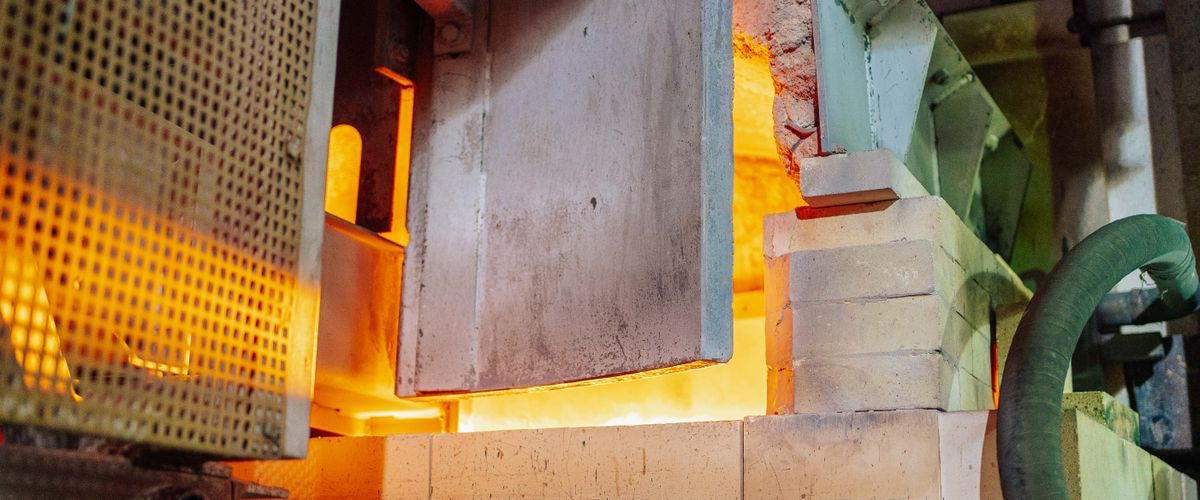
Insulating refractory bricks (IFB) are lightweight, porous ceramic bricks designed to minimise heat loss through furnace and kiln walls. Rated from 1,260°C (K23) to 1,760°C (K32), they conduct heat at 0.2–0.6 W/m·K — three to ten times less than dense refractory bricks. The result is lower fuel consumption, lower shell temperatures, and a lining that heats up faster and holds temperature more efficiently.
Need the commercial page after the overview? Move from this guide to the insulating fire brick product page or the ceramic kiln landing page if you are already comparing project-ready grades.
Dense bricks hold punishment. Insulating bricks hold heat.
A furnace wall has two jobs. The inner face survives the process — high temperatures, chemical attack, mechanical wear. The outer structure stays cool enough to be safe and efficient.
Dense refractory bricks handle the first job. Insulating refractory bricks handle the second. They are porous by design — manufactured with burnout additives (sawdust, polystyrene beads, expanded vermiculite) that burn away during firing and leave behind a network of tiny air pockets. Air is an excellent insulator. The result is a brick with thermal conductivity as low as 0.2 W/m·K, compared to 0.9–1.1 W/m·K for dense fireclay.
Insulating bricks reduce heat flow through a furnace lining, but the grade and position matter. A low-density brick chosen for the wrong hot-face load can fail even when its temperature rating looks adequate. The selection conversation should therefore start with zone, atmosphere, mechanical load, and backup-layer design.
conductivity
1,760°C rated
reduction
range
Three numbers. Get them right and everything else follows.
1. Thermal conductivity — the one that actually matters for energy
Measured in W/m·K. Lower is better for insulation. K23 IFB conducts heat at around 0.22–0.28 W/m·K at 1,000°C. K26 at around 0.28–0.35 W/m·K. Dense fireclay sits at 0.9–1.1 W/m·K. Silicon carbide dense bricks can reach 6.0 W/m·K.
In practical terms: the same 114 mm brick course loses three to four times more heat in dense fireclay than in K26. Over a 12-month campaign in a medium-sized ceramic kiln, that is a meaningful difference in the gas bill. *(We have run those calculations. The number tends to make people put the phone down briefly.)*
2. Maximum service temperature — the grade selector
This is what the grade number encodes. K23 = 2,300°F = 1,260°C. K26 = 2,600°F = 1,430°C. Pick a grade whose maximum service temperature is at least 100°C above the actual temperature the brick face will reach — not the furnace operating temperature, but the specific temperature at the face of the IFB after accounting for the hot-face layer in front of it.
Specifying by furnace interior temperature alone is how bricks end up in the wrong grade. A furnace operating at 1,200°C with a 230 mm dense fireclay hot face might present only 750°C at the IFB face. K23 works fine. Without a thermal calculation, the obvious wrong choice is K30, which costs substantially more for no benefit.
3. Cold crushing strength — how much weight it can carry
IFBs are mechanically weaker than dense bricks — that's the tradeoff for porosity. K23 and K26 grades: typically 1.5–3.5 MPa CCS. K30 and above: 3.5–6.0 MPa. Dense fireclay: 30–60 MPa. For backup layers under modest load, IFB strength is adequate. For load-bearing applications — furnace floors, ladle bottoms, arch supports — dense bricks are required. Using IFB in high-load zones causes premature structural failure. This one is not subtle when it happens.
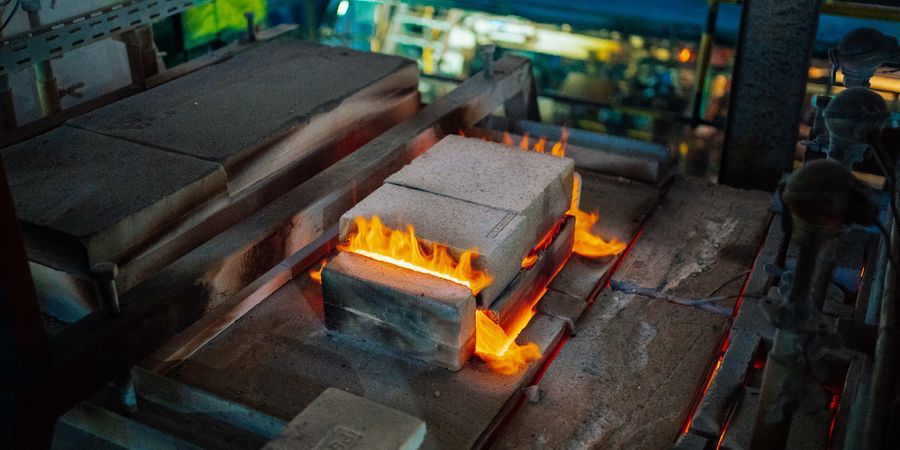
K23, K26, K28, K30, K32 — the grade system explained
The "K" number encodes the maximum service temperature in hundreds of degrees Fahrenheit. Simple once you know it. The grade also correlates with alumina content: higher grades contain more Al₂O₃, which raises the temperature ceiling and increases density slightly.
| Grade | Max Temp (°C) | Max Temp (°F) | Al₂O₃ (%) | Density (g/cm³) | Conductivity (W/m·K) | Typical use |
|---|---|---|---|---|---|---|
| K23 | 1,260°C | 2,300°F | 30–40% | 0.50–0.65 | 0.20–0.26 | Ceramic kilns, backup lining, low-temp furnaces |
| K26 | 1,430°C | 2,600°F | 40–50% | 0.65–0.80 | 0.25–0.35 | Most common grade — heat treatment, ceramic, glass annealing |
| K28 | 1,540°C | 2,800°F | 50–60% | 0.80–1.00 | 0.30–0.45 | Hot-face IFB in shuttle kilns, higher-temperature backup |
| K30 | 1,650°C | 3,000°F | 60–70% | 1.00–1.15 | 0.40–0.55 | Backup behind hot zones up to 1,600°C operating temp |
| K32 | 1,760°C | 3,200°F | 70–80% | 1.10–1.30 | 0.50–0.65 | Specialist high-alumina IFB for extreme-temperature backup |
Note: The "JM" designation (JM23, JM26, etc.) used by many suppliers refers to the same grades. The naming convention differs by region; the temperature ratings are equivalent. Chinese standard GBT 3995 uses a similar classification with slight density and conductivity variations by manufacturer.
IFB vs dense refractory bricks: they are not competing products
This comparison comes up in nearly every procurement conversation. The framing is usually wrong. Dense and insulating bricks are not alternatives to each other — they serve different roles in the same wall.
| Property | Dense Refractory (fireclay) | Insulating IFB (K26) |
|---|---|---|
| Density | 2.0–2.4 g/cm³ | 0.65–0.80 g/cm³ |
| Thermal conductivity | 0.9–1.1 W/m·K | 0.25–0.35 W/m·K |
| Cold crushing strength | 30–60 MPa | 1.5–3.0 MPa |
| Apparent porosity | 15–22% | 55–75% |
| Slag resistance | Good (low AP) | Poor (high AP — slag penetrates) |
| Heat-up speed | Slow (high thermal mass) | Fast (low thermal mass) |
| Cost per unit | Lower | Higher (but saves fuel) |
Specifying dense bricks in a backup layer is the single most expensive mistake we see in furnace lining design — and it is routine. A ceramics plant in Central Europe came to us after switching their backup layer from K26 IFB to dense fireclay during a material shortage. Their local supplier offered dense bricks as "a temporary solution." Nine months later, fuel costs had run 22% over budget and steel shell temperatures were 55°C above baseline. The IFB had cost the equivalent of €11 per unit. The dense bricks cost €8. The fuel overspend over the campaign: €34,000. The "cheaper" backup lining cost them €34,000 more to operate. We do not think that is a close call.
Hot face vs backup layer — two positions, two completely different briefs
The position in the wall determines everything about which brick grade is appropriate. Get this wrong and no amount of correct grade selection will save the lining.
Hot face — the layer facing the furnace interior
The hot face takes the direct heat, the chemical attack, and the mechanical load. Requirements: high density, low porosity, chemical compatibility with the process environment. Dense refractory bricks — fireclay, high alumina, magnesia-carbon — belong here.
The exception: ceramic kilns, heat treatment furnaces, and glass annealing lehrs operating without molten slag or metal contact can use high-grade IFB (K28, K30) directly on the hot face. The surface is clean, the chemical environment is mild, and the low thermal mass means the kiln reaches temperature faster — important for shuttle and batch kilns that cycle frequently.
Backup layer — between the hot face and the steel shell
The backup layer never contacts the process. Its job is to stop heat from conducting to the shell. Requirements: low thermal conductivity, light weight. This is exactly where insulating fire bricks earn their cost premium. K23 and K26 are the workhorse grades for backup layers behind dense fireclay hot faces. K28 and K30 back up zones where the hot-face is already high-grade alumina and the thermal gradient through the wall is steeper.
Rule of thumb: The temperature at the IFB face — not the furnace interior — determines the minimum grade. A thermal calculation of the full wall section takes 20 minutes and avoids the most common misspecification error. If your supplier quotes without asking what temperature the IFB face will see, ask them to run the numbers.
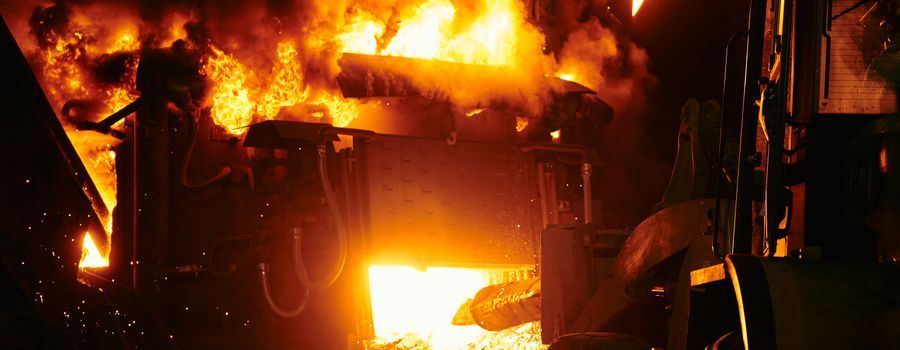
Where insulating fire bricks are used — by industry
Ceramic and pottery kilns
The most common IFB application. Shuttle kilns and tunnel kilns use K26 or K28 IFB on the hot face and K23 in backup layers. The low thermal mass means faster heat-up times — which translates directly to more production cycles per day and lower fuel per firing. IFB is the reason modern ceramic kilns fire 20% faster than equivalent kilns from the 1980s.
Heat treatment furnaces
Annealing, normalising, hardening, and stress-relief furnaces operate at 600–1,100°C with clean atmospheres. No slag, no molten metal. K26 and K28 IFB can be used directly on the hot face. Lower thermal mass means faster cycle times and lower gas consumption per cycle — the ROI calculation is straightforward.
Glass annealing lehrs
Glass cooling requires precise temperature control over a long tunnel. The lehr walls must insulate well enough to maintain the temperature gradient. IFB backup layers are standard here. The low conductivity of K26 allows the lehr to maintain uniform temperature without excessive energy input.
Steel and non-ferrous metallurgy — backup layer only
Reheating furnaces and soaking pits use high alumina dense bricks on the hot face and IFB as backup. The aggressive atmosphere and slag contact rules out IFB for the hot face. But the backup layer benefit — lower shell temperatures, lower fuel consumption — applies equally. IFB backup behind the hot face of a continuous reheating furnace is standard practice.
Industrial boilers and incinerators
Operating temperatures are typically lower (800–1,100°C) and the chemical environment is relatively mild. K23 and K26 IFB are cost-effective in backup positions and, in some zones, on the hot face. Consult us for specific zone requirements — incinerator chemistry varies significantly by waste type.
How to choose the right grade. Four questions, one decision.
- What temperature will the IFB face actually see? — Run a heat flow calculation for the full wall section. Don't assume it equals the furnace interior temperature. If the hot-face layer is 230 mm of dense fireclay, the IFB face in a 1,200°C furnace might see only 700–800°C. K23 or K26 is sufficient.
- Will the brick contact slag, molten metal, or corrosive gases? — If yes on any of these, IFB is only for the backup layer. Dense brick goes on the hot face, full stop.
- Is mechanical load a factor? — Floors, ladle bottoms, and arch supports require dense bricks. IFB CCS (1.5–6.0 MPa) is not adequate for high-load structural applications.
- Does the kiln cycle frequently? — If the furnace heats up and cools down repeatedly (shuttle kilns, batch kilns), thermal shock resistance and low thermal mass matter. K26–K28 IFB handles thermal cycling well and recovers temperature faster than dense alternatives.
If you can answer these four questions, the correct grade is usually obvious. If you can't, get a thermal calculation done before ordering. Getting it wrong costs more than the calculation.
Installation and heat-up. The part where most linings fail before they fail.
Inspect and prepare the shell. Clean the steel shell — remove scale, old mortar residue, and surface rust. Verify the shell geometry. IFB tolerates less mechanical stress than dense brick; an irregular shell surface creates point loads that crack lightweight bricks.
Install the hot-face layer first. Dense brick on the hot face, laid in a staggered pattern with 1–2 mm joints. Use mortar matched to the brick grade and operating chemistry. Fill joints completely. Partial joint filling creates weak points and allows hot gas penetration.
Install the IFB backup layer. Use mortar or dry-pack depending on the design. IFB joints can be slightly wider (2–3 mm) than dense brick joints because IFB dimensional tolerances are somewhat looser. Ensure tight contact between the IFB backup and the hot-face layer — gaps create air pockets that cause localised overheating at the shell.
Dry at room temperature for 24–48 hours. Before heat-up, allow refractory mortar to air-cure. This removes free moisture without thermal shock.
Follow the heat-up schedule. No exceptions. Heat at 25–50°C per hour to 120°C. Hold for 4–8 hours to drive off chemically bound moisture. Continue at 25–50°C per hour to 300°C. Hold for 4 hours. Then proceed to operating temperature at the normal rate. Rushing this schedule builds steam pressure inside the lining. The lining then makes a decision about where to release that pressure. That decision rarely favours the operator.
Why they fail. Usually one of four causes.
- Wrong grade for the actual face temperature. K23 in a position that sees 1,350°C at the brick face softens and collapses. The operating temperature of the furnace is not the temperature the IFB sees — run the calculation.
- Slag or liquid metal contact. IFB is porous. Liquid slag penetrates quickly and destroys the brick structure from within. If the process involves molten material, IFB belongs in the backup layer only.
- Rushing the heat-up schedule. Steam pressure from retained moisture causes internal fractures that are not visible at the surface. The lining appears intact. Three months later, sections begin to spall and fall away. The heat-up schedule is not a formality.
- Mechanical impact. IFB is soft. It doesn't tolerate tools, charging equipment, or product contact. If the application involves physical loading on the brick surface, use dense bricks — or accept short campaigns.
Straight answers
Questions we hear regularly from kiln operators and procurement teams, answered directly.
What is an insulating fire brick?
What is the difference between an insulating fire brick and a refractory brick?
What grades of insulating fire brick are available?
Can insulating fire bricks be used on the hot face?
How much energy can insulating bricks save?
What temperature can K26 insulating fire bricks handle?
How thick should an insulating brick backup layer be?
Know your grade? We'll quote it. Not sure? We'll do the thermal calculation.
Compare K23 through K32 insulating fire bricks by hot-face temperature, backup position, load, and thermal-cycle requirements. Send the lining design for a project-specific grade review.
We'll have a technical opinion about your application. That's a feature, not a warning.