Refractory Creep vs RUL: What Long-Duration Load Data Adds
Jason Gong
Founder & Sales Director · 10+ Years in Refractory
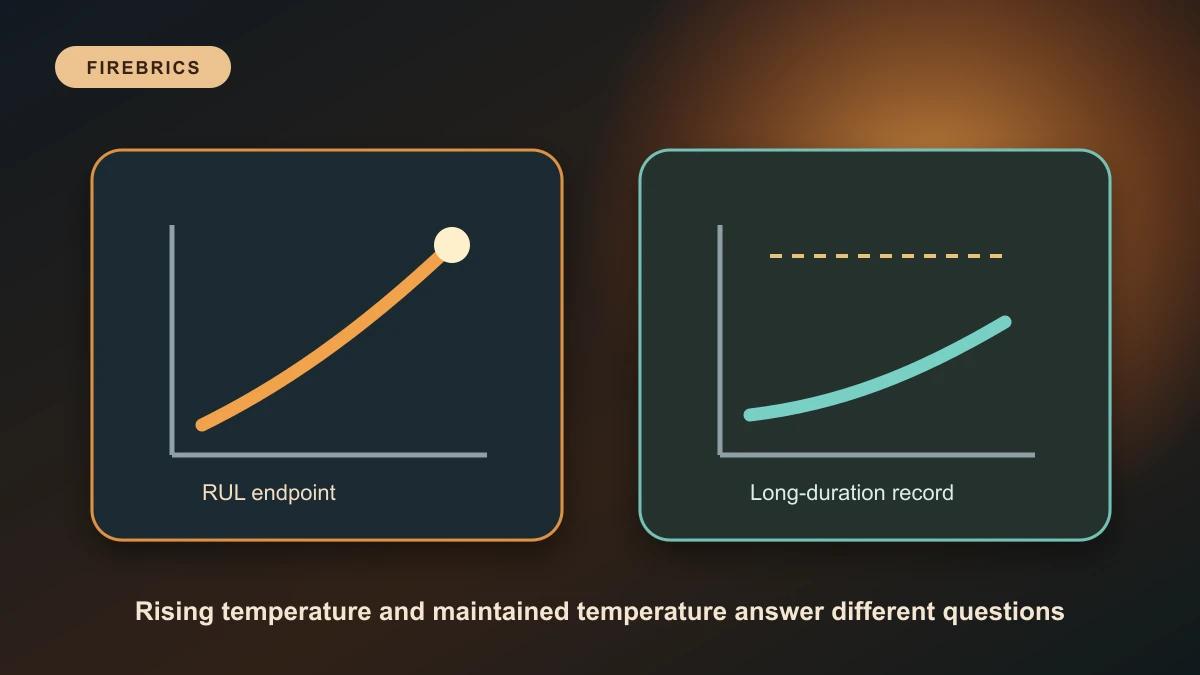
Refractoriness under load (RUL) and refractory creep answer different questions. RUL reports a deformation endpoint reached while a loaded specimen follows a specified rising-temperature program. Creep evidence records how deformation changes with time during a maintained-temperature segment under sustained load. An RUL endpoint therefore does not supply the strain-time record needed to judge duration-dependent deformation. Request the exact method and cited edition, material and specimen identity, stress, temperature program, atmosphere, duration, reference basis, trace, endpoint, and deviations before comparing reports. Keep RUL and creep as separate evidence lines; neither result alone establishes a grade ranking, design load, service temperature, or campaign life.
Separate the rising-temperature endpoint from the maintained-temperature trace
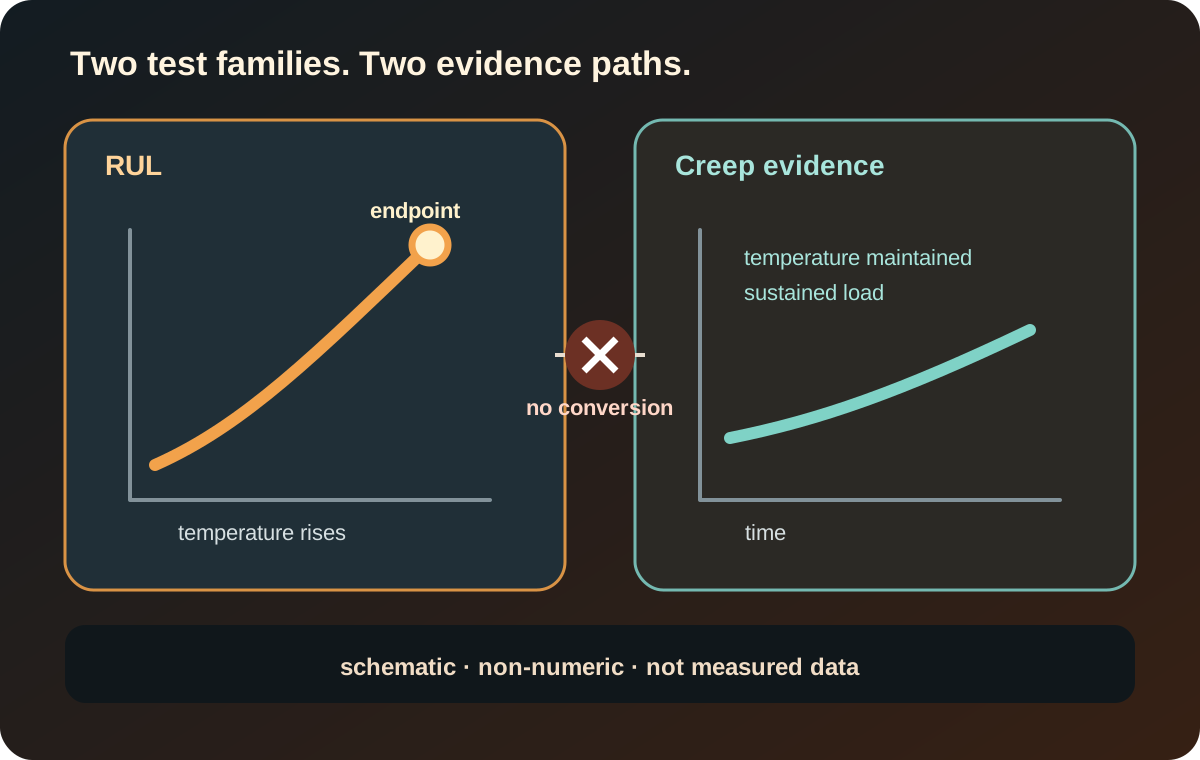
In an RUL test description, a specimen is subjected to a specified compressive load while temperature rises according to a stated program. The result identifies temperature at a defined deformation or subsidence endpoint. The temperature belongs to that endpoint and to the reported load, heating program, atmosphere, specimen, and method basis.
Creep evidence asks a different question: while temperature is maintained and a load is sustained, how does deformation change over the reported time interval? The useful output is not merely a temperature label. It is deformation or strain in relation to time, tied to the maintained-temperature segment and its declared conditions.
These paths should remain separate even when the same laboratory report or service page mentions both.
Identify what the RUL endpoint leaves unshown
An RUL endpoint can answer a valid loaded-deformation question during rising temperature. It does not show what happens across a maintained-temperature hold because that duration-dependent record is outside the information contained in one endpoint temperature.
Long-duration load data adds the missing time dimension. A continuous record can show deformation from the chosen reference through the maintained-temperature period. Interpretation requires the relevant interval, sustained-load basis, and any interruption or departure from the stated program.
This added evidence does not turn RUL into creep, and it does not create a general relationship between an RUL temperature and a creep rate or lifetime. The defensible question is narrower: does the submitted evidence include deformation versus time under the maintained temperature, sustained load, and duration relevant to the requested comparison?
Match temperature, stress and time before comparing reports
Temperature, stress, and time form one comparison basis. If one differs or is missing, two reports have not demonstrated the same basis. Add the specimen, atmosphere, and cited method because they define more of the context in which the result was produced.
Use this matrix before reading the result column:
| Comparison dimension | Report A | Report B | Status | Clarification to request |
|---|---|---|---|---|
| Test family: RUL or creep | Match / different / missing | Which evidence question does each result answer? | ||
| Temperature program | Match / different / missing | Rising program or maintained-temperature segment? | ||
| Applied stress or load basis | Match / different / missing | How was the stated load expressed and applied? | ||
| Time basis | Match / different / missing | What interval or hold duration belongs to the result? | ||
| Material, batch, and specimen | Match / different / missing | Are identities and specimen bases comparable? | ||
| Specimen orientation | Match / different / missing | Is orientation recorded on both reports? | ||
| Atmosphere | Match / different / missing | Is the declared atmosphere the same? | ||
| Method and cited edition | Match / different / missing | What exact designation appears on each report? | ||
| Deformation record or endpoint | Match / different / missing | Is this a trace, an endpoint, or both? | ||
| Deviations or interruptions | Match / different / missing | What departed from the stated program? |
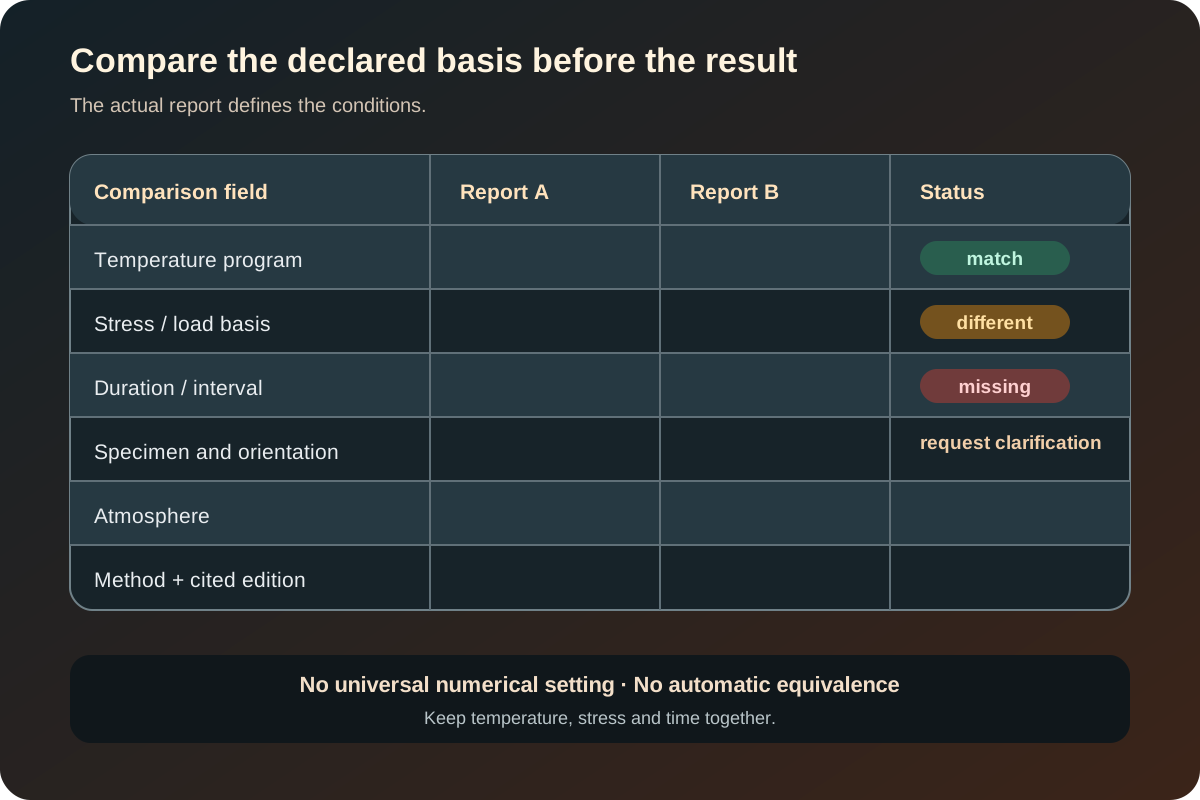
A different entry is not automatically a failed result. It means the buyer lacks a demonstrated common basis for a direct ranking. A missing entry should become a clarification request. Do not fill the gap with an assumed temperature, stress, duration, or test edition.
Ask for a trace you can actually read
A useful strain-time trace needs enough labels to make its scope visible. Ask for all of the following:
- Axes: a time axis and a deformation or strain axis, with the reported units.
- Zero or reference point: the origin or reference used for the displayed change.
- Maintained-temperature start: a clear marker showing where the maintained-temperature segment begins.
- Duration: the start and end of the interval represented by the reported result.
- Load basis: the stated stress or load condition attached to the trace.
- Interruptions or deviations: any pause, temperature departure, load change, data gap, or other declared deviation.
Also ask whether the displayed record includes heat-up, the maintained-temperature segment, or both. A line that spans both periods can be useful, but the boundary between them must be identifiable before the maintained-temperature response can be discussed.

The visual shape alone is not a result definition. Do not import a generic three-stage metal-creep model, derive a formula, or extrapolate service life from an unlabeled curve. Read only what the reported axes, interval, conditions, and method basis support.
Keep specimen, atmosphere and method identity attached
A result can be separated from its meaning when it is copied from a laboratory report into a spreadsheet. Preserve the context as one record:
- exact method designation and edition cited by the report;
- material, product, batch, and specimen identity;
- specimen description and orientation;
- applied stress or load basis;
- temperature program, including the maintained-temperature segment where applicable;
- atmosphere;
- hold duration and the interval used for the reported result;
- zero or reference basis;
- deformation endpoint or complete strain-time record;
- declared interruptions, deviations, and limitations.
This is a buyer comparison checklist, not a reproduction of a controlled test procedure. Public laboratory pages may describe particular settings used for their services. Those values are examples of that service basis; they do not establish one universal stress, temperature, heating rate, specimen size, duration, or deformation endpoint for every report.
The method edition also needs to come from the actual report or the applicable controlled specification. A public page that names a test family does not verify which edition currently governs a purchase requirement.
Mark matching, different and missing fields
Turn the retained fields into a worksheet with three states: match, different, and missing. Use match only when the records state a compatible basis. Use different when the reports declare unlike conditions or methods. Use missing when the record does not answer the field.
Review the worksheet in this order:
- Confirm whether each item is RUL evidence, creep evidence, or a report containing separate results for both.
- Compare method and cited edition, material, specimen, and orientation.
- Compare stress, temperature program, atmosphere, and duration as a combined condition set.
- Locate the reference basis, maintained-temperature start, trace or endpoint, and deviations.
- Send every unresolved field to the supplier and responsible technical reviewer.
Keep RUL and creep on separate lines. A report may support both lines when it clearly presents both test families, but one line must not be calculated from the other. In particular, an RUL endpoint temperature does not become a creep rate, allowable design load, or lifetime estimate.
This worksheet controls the comparison task; it does not decide whether a difference is acceptable. Acceptance belongs to the applicable specification, purchase documents, and responsible project review.
Stop before design, grade and life claims
RUL and creep evidence can improve a technical comparison without answering every application question. Neither test alone establishes:
- a universal maximum service temperature;
- an allowable structural or lining design load;
- a best-to-worst grade ranking;
- a product prescription for a furnace zone;
- a campaign-life or failure-time prediction;
- Firebrics testing capability or product-specific performance.
Those conclusions require their own project evidence and responsible technical review. The boundary matters because “under load” can sound like a design-load statement, and “long duration” can sound like a life forecast. In this article, they describe the laboratory evidence requested, not an operating guarantee.
When the question moves to application or grade context for a glass furnace, use the glass-furnace refractory context as the existing application owner. Keep this report-comparison worksheet attached as one input rather than using it to prescribe a material.
Send a bounded supplier clarification request
Convert the missing cells into a request that the supplier and technical reviewer can answer. The following wording is ready to copy:
Please identify whether each submitted result is refractoriness-under-load evidence or creep-under-load evidence. For each report, provide the exact method and cited edition; material, batch, specimen, and orientation; applied stress or load basis; temperature program; atmosphere; duration; zero or reference basis; deformation endpoint or strain-time record; maintained-temperature start; and any interruptions or deviations. Please mark fields that are unavailable. Keep RUL and creep as separate evidence lines and do not convert an RUL endpoint into a creep rate, design load, grade selection, service temperature, or lifetime prediction. The responsible project reviewer will assess any different or missing basis separately.
Add the application and component, the specification clause or buyer question that prompted the request, shapes, quantities, and required delivery context. These details let the commercial inquiry and technical review begin from the same documented record.
The high-alumina brick inquiry is the existing commercial route for a documented request. Linking to it does not establish that a grade is suitable, that a particular test is available, or that any product has a stated RUL or creep result.
References & Further Reading
- The Edward Orton Jr. Ceramic Foundation refractory testing page — supports continuous linear-change recording during heat-up and a held period under load. Its listed laboratory settings are examples of that service, not universal requirements or proof of a current standard edition.
- TZUS thermomechanical test-family listing — supports treating RUL and creep in compression as separate test families. It does not provide a complete procedure or material service limit.
- Lucideon high-temperature performance test listing — lists creep and RUL as separate thermal-property test families; it does not establish Firebrics capability or product performance.
- Lucideon refractoriness-under-load method summary — supports the loaded, rising-temperature, deformation-endpoint description and the distinction from maintained-temperature creep. Historical method references on the page are not used here as current-edition proof.
Request a Quote
Send the application and component, material and specimen identity, exact method and cited edition, RUL or creep question, stress, temperature program, atmosphere, duration, trace or endpoint fields, missing-field clarification, shapes, and quantities through the Firebrics quote form. This creates a documented handoff for supplier and responsible technical review; it does not create an automatic grade selection, RUL-to-creep conversion, design criterion, service-temperature promise, lifetime forecast, testing-capability claim, or product-performance guarantee.