Fire Brick for Furnaces: Types, Grades & Zone-by-Zone Selection
Jason Gong
Founder & Sales Director · Product Inquiry Contact
Fire brick for furnaces is selected by three inputs per zone: operating temperature, chemical environment (slag chemistry), and thermal cycling frequency. Most industrial furnaces use fireclay brick for moderate zones (1,200–1,480°C), high-alumina brick for hot zones (1,480–1,760°C), and insulating IFB for backup layers. One grade does not suit all zones in the same furnace.
Three inputs that determine fire brick selection for furnaces
Every industrial furnace has multiple zones. Each zone has a different temperature, a different chemical environment, and a different relationship with thermal cycling. The fire brick in each zone needs to be specified against those three conditions — not against the furnace name or a single number from the datasheet.
- Operating temperature — the maximum sustained temperature at the hot face of that zone. Use the maximum expected operating temperature plus 10% as the minimum brick rating. Not the theoretical maximum the furnace could reach in an abnormal event — the normal operating maximum.
- Chemical environment — what contacts the brick face? Basic slag (high CaO) attacks fireclay brick. Acidic slag (high SiO₂) attacks magnesia. Neutral or mildly basic environments are handled by alumina brick. Knowing the slag basicity index (CaO/SiO₂) is often more important than knowing the temperature.
- Thermal cycling frequency — furnaces that cycle from cold to operating temperature frequently (batch kilns, heat treatment) prioritise thermal shock resistance → fireclay. Furnaces that run continuously for months (cement kilns, glass furnaces) prioritise creep resistance and slag resistance → alumina.
The three main fire brick families for furnaces
Fireclay brick — the workhorse
Fireclay brick (23–45% Al₂O₃) covers most furnace zones below 1,480°C. Four ASTM C27 duty grades: low-duty (871°C), medium-duty (1,480°C), high-duty (1,565°C), and super-duty (1,650°C). Excellent thermal shock resistance — the best of the three families. Lower cost. The default choice for heat treatment furnaces, residential and commercial fireplaces, pizza ovens, and most kiln zones below the hot face. See our refractory brick types overview for material comparisons.
High-alumina brick — for hot zones
High-alumina brick (45–90%+ Al₂O₃) handles temperatures from 1,580°C (Grade III) to 1,760°C+ (Grade I). Better slag resistance, better load-bearing capacity under heat (RUL), and lower thermal shock resistance than fireclay. The correct choice for cement kiln burning zones, glass furnace walls, steel ladle linings, and high-temperature rotary kilns. See our high alumina brick product guide for grade specifications.
Insulating firebrick (IFB) — backup and energy savings
IFB (K23–K32, 1,260–1,760°C ratings) is porous and lightweight — used as backup insulation behind the dense hot-face brick. Its job is to keep heat in the furnace, not to survive the hot face. Thermal conductivity 0.25–0.55 W/m·K vs 1–2 W/m·K for dense fireclay. Reduces energy consumption through furnace walls by 30–50% vs a single-layer dense brick lining. See our insulating refractory bricks guide.
Zone-by-zone selection: what to specify where
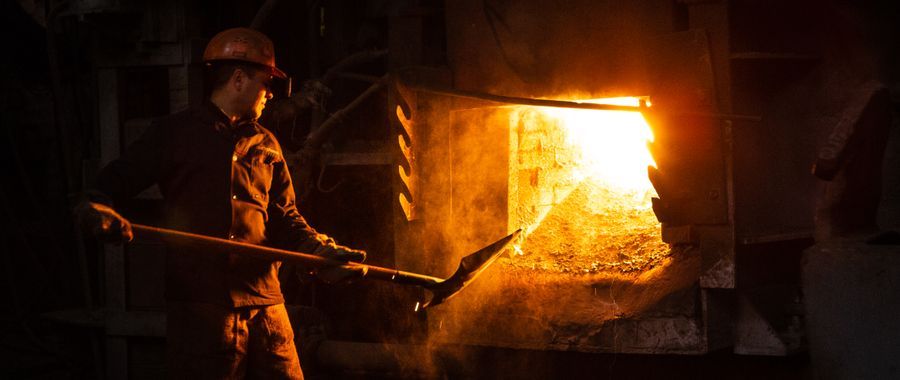
| Zone temperature | Correct brick type | Grade / rating | Notes |
|---|---|---|---|
| <900°C | Fireclay (low-medium duty) | PCE 15–28, to 1,480°C | Fireplaces, ovens, low-temp kiln zones, furnace preheat sections |
| 900–1,200°C | Fireclay (medium-high duty) | PCE 28–31, to 1,565°C | Industrial kiln moderate zones, heat treatment furnaces |
| 1,200–1,480°C | Fireclay (high-super duty) or Grade III alumina | PCE 31–33 / 45–60% Al₂O₃ | Rotary kiln cool/warm zone, transition zones; use alumina if slag present |
| 1,480–1,650°C | Grade II–III high alumina | 60–75% Al₂O₃ | Cement kiln burning zone, high-temp rotary kilns, steel ladle safety lining |
| 1,650–1,760°C | Grade I high alumina | 75–90% Al₂O₃ | Cement kiln hot spots, glass furnace wall, high-temp petrochemical reformers |
| >1,760°C | Corundum or specialist refractory | 90%+ Al₂O₃ | Special glass furnaces, extreme industrial applications |
| Backup layer (any temp) | Insulating IFB | K23–K32 (match to zone temp) | Behind hot-face brick in all zones; reduces heat loss and energy cost |
"Zone-appropriate specification saves 25–40% of refractory cost on a multi-zone furnace compared to specifying the hottest zone's grade throughout. A rotary kiln with a 1,500°C burning zone and a 900°C preheater zone does not need Grade II alumina in the preheater. High-duty fireclay at one-third the price does the same job there."
Fire brick selection by furnace type
Cement rotary kiln
Zone-by-zone from inlet to outlet: high-duty fireclay (preheater, 900–1,100°C) → super-duty fireclay or Grade III alumina (transition zone, 1,200–1,350°C) → Grade II alumina (burning zone, 1,350–1,500°C) → Grade I alumina or Grade II (burning zone hot face) → fireclay (cooler/outlet). Backup: IFB K26–K28 throughout. See our cement kiln refractory guide.
Glass melting furnace
Crown: silica brick (to 1,680°C). Side walls and breast walls: Grade I or II alumina. Regenerator checker work: Grade III alumina or silica. Backup: IFB K30–K32. The glass furnace has some of the highest temperature requirements of any industrial application. See our glass furnace refractory guide for zone-specific details.
Heat treatment furnace (steel, aluminium)
Operating temperature 750–1,100°C in clean atmosphere (no slag). Hot face: medium-duty or high-duty fireclay. Backup: K23–K26 IFB. Fireclay's excellent thermal shock resistance is the primary advantage here — heat treatment furnaces cycle frequently. High-alumina brick provides no performance benefit at these temperatures and costs significantly more.
Industrial kilns (lime, mineral calcination)
Operating temperature 1,000–1,500°C depending on material. Hot face: Grade III alumina (45–60%) for most lime kilns. High-duty fireclay for lower-temperature zones. Grade II alumina where temperatures exceed 1,400°C consistently. Backup: K26–K28 IFB.
Petrochemical and hydrogen reformer furnaces
High-temperature zones (1,000–1,400°C) in neutral to mildly reducing atmospheres. Grade III or Grade II alumina for hot face. Fireclay for cooler sections. IFB backup throughout. Thermal shock resistance is important — these furnaces cycle during planned shutdowns. Grade II alumina at 70% Al₂O₃ is a common specification.
Common fire brick selection mistakes for furnaces
- One grade for all zones — wastes money in cool zones, risks failure in hot zones or underperforms where slag resistance matters.
- Specifying temperature rating without checking RUL — a brick rated to 1,650°C may have a refractoriness under load (RUL) of only 1,400°C. Under mechanical load, it softens at 1,400°C even though its nominal temperature rating says 1,650°C. Always check RUL for load-bearing zones. For report labels, compare refractoriness under load and PCE test evidence.
- Ignoring slag chemistry — fireclay brick in a furnace with strongly basic slag (CaO/SiO₂ > 2) will be chemically attacked regardless of temperature rating. Match brick chemistry to slag chemistry.
- No backup insulation — installing only a single layer of dense fire brick without IFB backup wastes energy continuously. The energy savings from adding a 65 mm IFB layer behind the hot face typically pay back in under two years of operation.
- Matching mortar to brick grade — or rather, not doing this. Grade II alumina brick with fireclay mortar creates weak joints at every course. Match mortar Al₂O₃ content within ±10% of the brick grade.
Need fire brick for your furnace?
Tell us your furnace type, zone temperatures, and slag chemistry. Our technical team will recommend the correct grade for each zone and provide a quote.
Request a QuoteFurther reading
- All refractory brick types compared — Firebrics
- Fireclay and refractory brick types overview
- High alumina bricks: grades and properties
- Insulating refractory bricks: K-grade guide
- ASTM C27 — Fireclay and High-Alumina Refractory Brick Classification