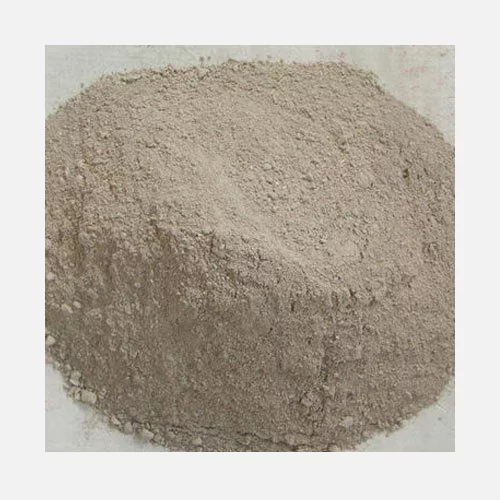
Insulation Mortar
Lightweight, air-setting mortar for laying insulation bricks, filling expansion joints, and sealing kiln linings. Three grades spanning 1200°C to 1650°C, each formulated to match the thermal conductivity of the adjacent insulation brick and prevent heat bridges at joints.
Available Grades & Specifications
Three grades matched to the insulation brick being laid. The mortar grade number corresponds to maximum service temperature (×100°C). Always select mortar with a service temperature equal to or higher than the adjacent brick.
IM-12 Insulation Mortar — 1200°C
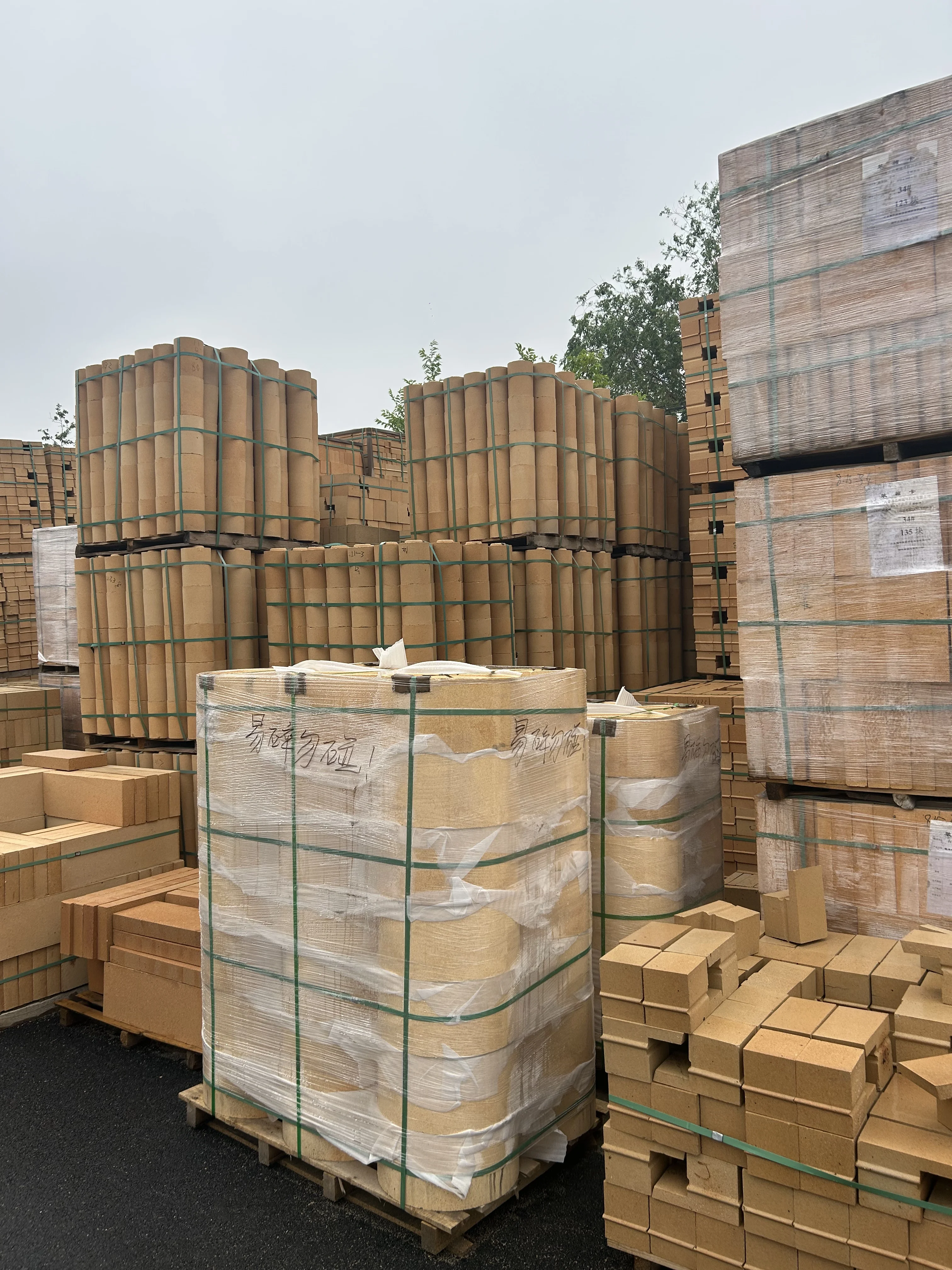
The IM-12 grade is designed for laying JM-23 (K-23) insulation bricks in moderate-temperature kilns and furnaces. With a maximum service temperature of 1200°C and the lowest thermal conductivity in the range (λ ≤ 0.12 W/m·K), IM-12 keeps joint heat losses minimal in ceramic tunnel kilns, pottery furnaces, and laboratory ovens.
- Max service temperature 1200°C, matched to JM-23 bricks
- λ ≤ 0.12 W/m·K — best-in-range thermal insulation
- Air-setting; no kiln firing required to develop bond strength
- For ceramic kilns, pottery furnaces, annealing ovens
IM-20 Insulation Mortar — 1450°C
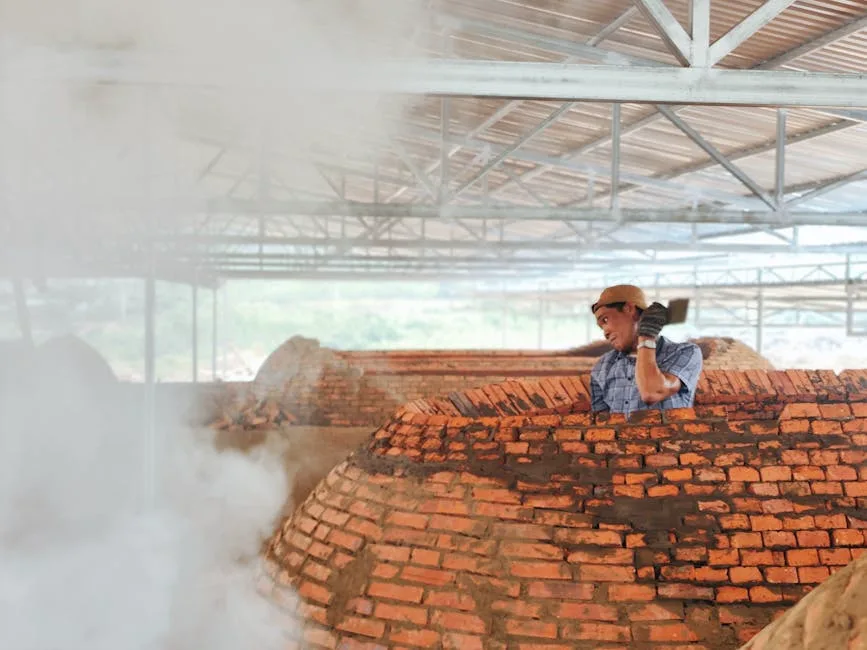
Mid-range insulation mortar matched to JM-26 (K-26) bricks. The IM-20 grade handles peak temperatures up to 1450°C and is the most commonly specified grade for glass regenerator crowns, cement kiln hot spots, and continuous reheat furnace linings where energy-saving is a priority but hot-face temperatures exceed the IM-12 range.
- Max service temperature 1450°C, matched to JM-26 bricks
- λ ≤ 0.20 W/m·K — balanced performance and temperature range
- High green strength for rapid bricklaying without wait time
- For glass regenerators, cement kiln zones, reheat furnaces
IM-30 Insulation Mortar — 1650°C
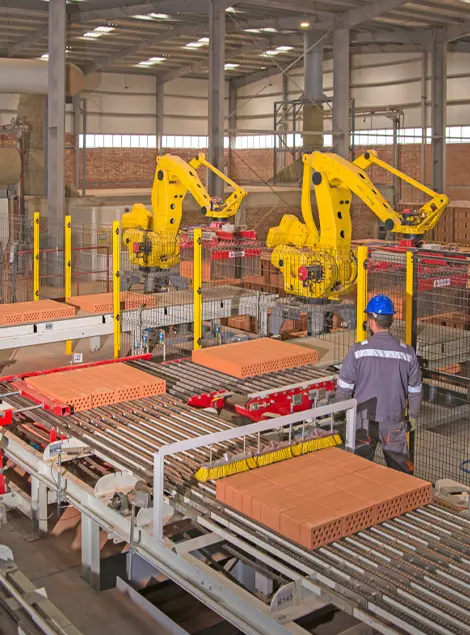
The highest-grade insulation mortar for service up to 1650°C, designed to accompany JM-28 and JM-30 (K-28/K-30) bricks in extreme-temperature applications. Preferred for steel ladle preheaters, ultra-high-temperature tunnel kilns, and specialty melting furnaces where the hot-face lining must remain fully insulating even at peak firing cycles.
- Max service temperature 1650°C, matched to JM-28 and JM-30 bricks
- λ ≤ 0.30 W/m·K — maintains low conductivity at extreme temperatures
- High alumina content (Al₂O₃ ≥ 45%) for structural integrity at peak temp
- For ladle preheaters, specialty melting kilns, high-fire ceramics
Technical Specifications
| Grade | Max Service Temp | λ (W/m·K) | Bulk Density | Bonded Brick | Setting |
|---|---|---|---|---|---|
| IM-12 | 1200°C | ≤ 0.12 | 0.55–0.75 g/cm³ | JM-23 (K-23) | Air-setting |
| IM-20 | 1450°C | ≤ 0.20 | 0.75–0.95 g/cm³ | JM-26 (K-26) | Air-setting |
| IM-30 | 1650°C | ≤ 0.30 | 1.00–1.20 g/cm³ | JM-28 / JM-30 | Air-setting |
λ measured at 350°C mean temperature per ASTM C182. Supplied pre-mixed in 25 kg bags. Recommended joint thickness: 1–3 mm.
Industry Applications
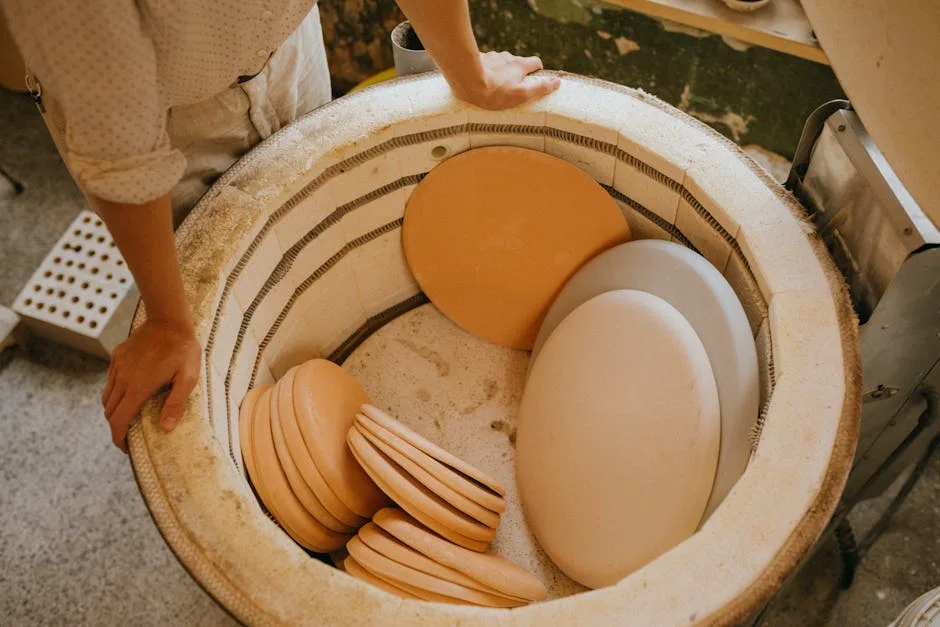
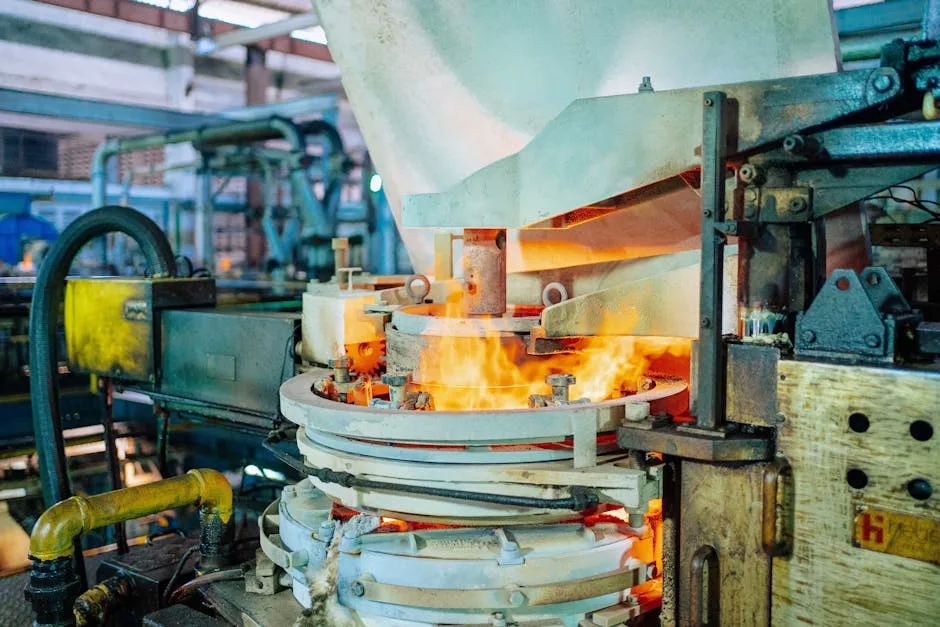
Insulation mortar is used wherever insulation bricks are laid — reducing heat loss, increasing energy efficiency, and extending the lining service life in high-temperature furnaces and kilns.
Frequently Asked Questions
Yes — using a mortar with a lower service temperature than the brick creates a weak joint that can fail before the brick reaches its limit. As a rule, select insulation mortar with a service temperature equal to or one grade above the adjacent brick. For JM-26 bricks (1430°C), IM-20 is the minimum; IM-30 can also be used. Never use a standard dense-brick mortar with insulation bricks.
Keep joints as thin as possible — ideally 1–3 mm. Thicker joints increase thermal resistance at the joint plane and reduce overall lining strength. Insulation mortar should be applied as a thin slurry coat (brush-on) or thin-bed trowel application, not as a thick gap-filling layer. For gaps wider than 5 mm, cut the brick to fit rather than filling with extra mortar.
Insulation mortar is moisture-sensitive before it sets. Store sealed bags in a dry, sheltered location and protect freshly laid brickwork from rain for at least 48 hours. Do not use mortar that has been exposed to moisture or has partially set in the bag — this weakens the final joint strength. Shelf life is 12 months in original sealed packaging stored at 5–35°C.
Related Products
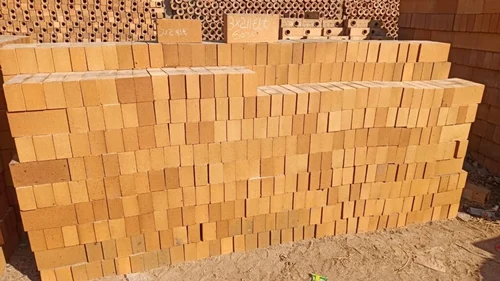
Insulation Bricks
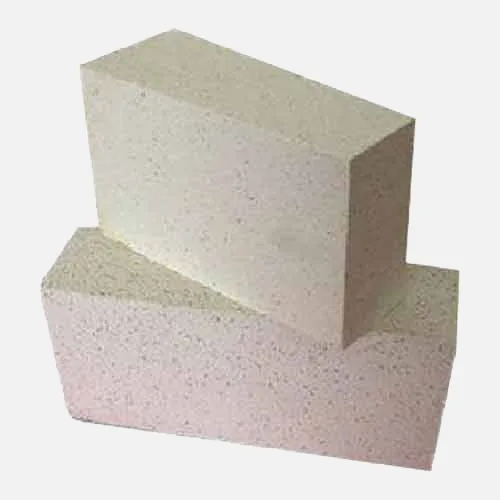
JM-23 to JM-30 lightweight bricks for low-mass energy-saving linings.
High Alumina Brick
Hot-face dense brick often combined with an insulation backup lining.
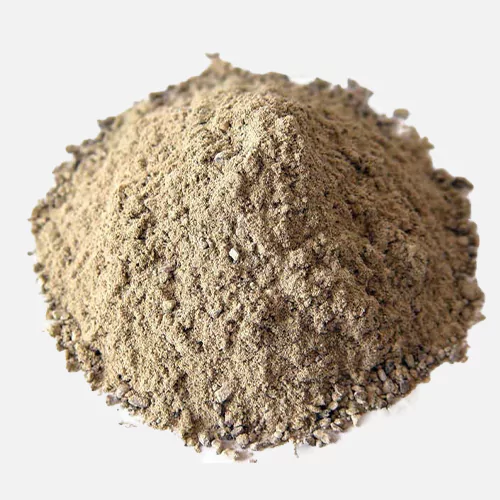
Conventional Castable
Cast transitions and anchor zones adjacent to insulation brick linings.
Order Insulation Mortar
Tell us the brick grade, lining area, and joint thickness — we'll calculate the mortar quantity and deliver to your site. Mortar and bricks can be shipped together to simplify procurement.