Silica Fire Brick: Properties, Uses & Thermal-Cycle Risks
Jason Gong
Founder & Sales Director · 10+ Years in Refractory
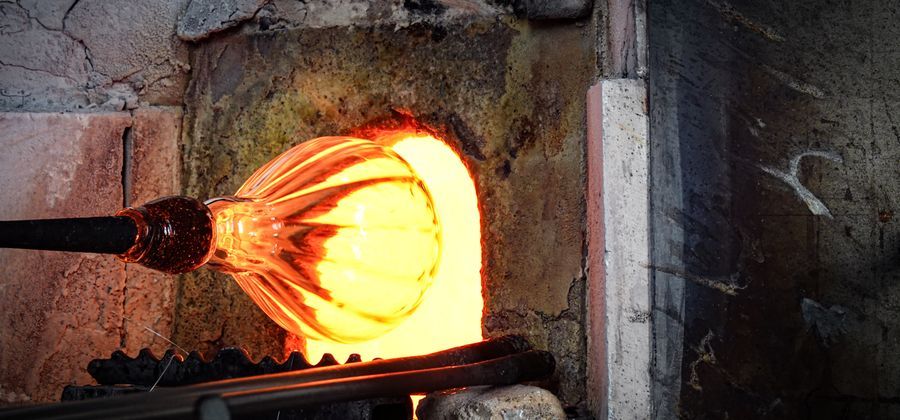
Silica fire brick is a specialized acidic refractory whose performance depends on its converted mineral phases, residual quartz, chemical exposure, load and complete heat-up/cooldown history. Coke ovens and some glass-furnace crown systems are established applications, but that does not create a universal “keep above 600°C” rule. The furnace designer and silica-brick supplier must approve the operating envelope and thermal schedule for the actual grade and structure.
What silica fire brick is
Silica brick is manufactured from silica-rich raw material with mineralizers and a controlled firing process intended to convert much of the quartz into other silica polymorphs. It is classed as an acidic refractory, but a chemistry label alone cannot establish resistance to every vapor, condensate, slag or batch dust.
This material is deliberately specialized. Its advantages at high temperature and under sustained load have supported long-standing coke-oven and glass-furnace applications. Its phase-related dimensional behavior also makes design, manufacture, heating and cooling inseparable from material selection.
The glass-furnace industry page owns the commercial application decision. This article explains the technical evidence needed before silica brick is specified or operated.
Composition and mineral conversion
A procurement specification should define more than total SiO₂. Request the current standard or project limits for:
- silica content and relevant impurities;
- apparent porosity, bulk density and cold crushing strength;
- true density or mineral-conversion indicator;
- residual quartz and the tridymite/cristobalite distribution;
- refractoriness-under-load or creep data at the applicable stress;
- dimensional tolerances and thermal-expansion information;
- atmosphere, vapor and condensate compatibility.
Mineralizers and firing practice influence conversion during manufacture. Exact raw-material ratios, firing temperatures and phase targets are supplier- and grade-specific; they should come from the approved manufacturing specification rather than a generic recipe.
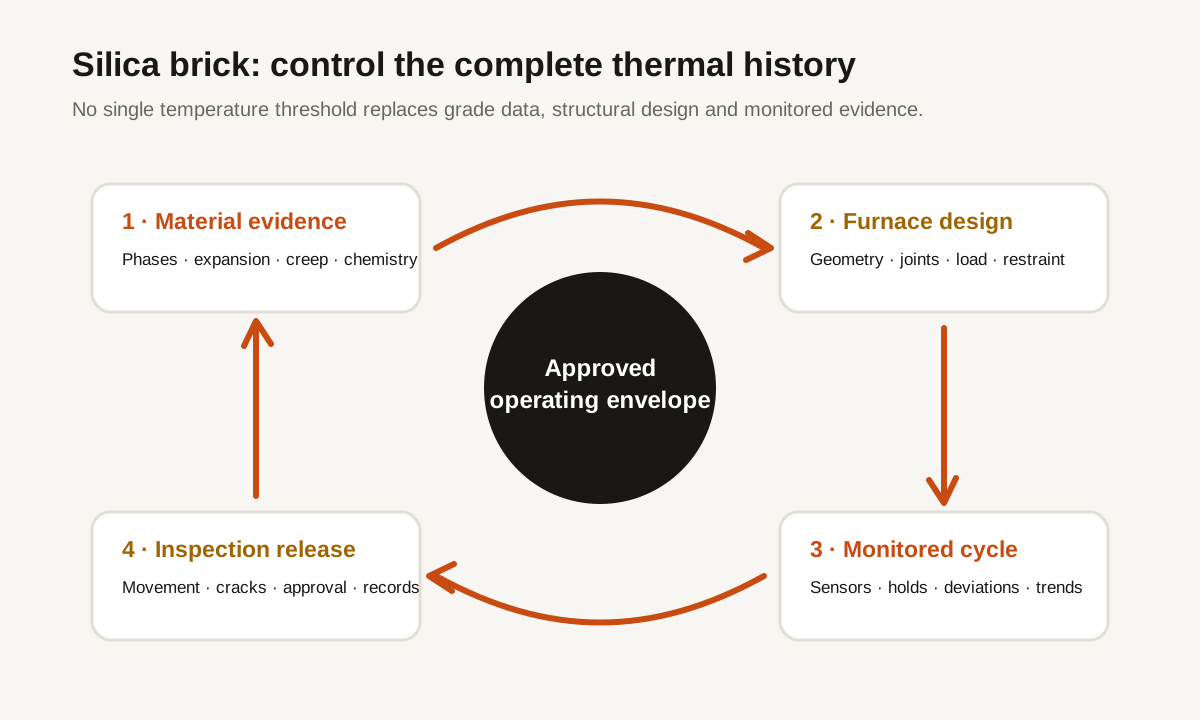
Replace the “600°C rule” with a thermal-cycle review
Silica polymorphs undergo reversible and reconstructive changes across different temperature regions. The magnitude and consequence depend on phase content, microstructure, stress, heating rate, temperature uniformity, restraint and prior service. An old NIST study of silica refractories documents the importance of thermal expansion and transformation behavior; modern design still needs grade-specific supplier data.
| Stage | Decision question | Required evidence |
|---|---|---|
| Cold start | Which phase-related expansion regions and gradients govern the ramp? | Grade expansion curve, furnace geometry and sensor plan |
| Heat-up | How are wall, crown, joints and steelwork allowed to move? | Designer schedule, joint map and restraint calculation |
| Operation | Are temperature, atmosphere and load within the approved envelope? | Zone trends, pressure/chemistry records and inspection results |
| Interruption | What hold, stabilization or restart rule applies? | Approved deviation procedure and supplier limits |
| Cooldown | How will gradients and transformations be controlled? | Project-specific cooldown plan and monitoring record |
| Return to service | What inspection releases the structure? | Crack/movement survey and responsible approval |
The article therefore does not prescribe one lower-limit temperature, number of days or ramp rate. Those values must be tied to the actual brick mineralogy, furnace design, condition and operating procedure.
Properties to compare
| Property | Why it matters | Do not substitute |
|---|---|---|
| Chemical composition | Screens acidic/basic compatibility and impurity limits | A generic 93–97% marketing range |
| Phase conversion or true density | Indicates manufactured mineral state | Brick colour or supplier name |
| Thermal expansion | Sets joints, restraint and thermal schedule | A single temperature threshold |
| RUL or creep | Checks deformation under relevant hot load | Cold crushing strength |
| Porosity and density | Influence infiltration, mass and heat transfer | One catalog value from another grade |
| Dimensional tolerances | Control tight jointing and structural geometry | Nominal brick dimensions alone |
| Chemical exposure data | Tests vapor, condensate, dust or slag compatibility | “Acidic refractory” as a complete answer |
Established applications and their boundaries
Coke ovens
Silica brick has a specialized role in coke-oven heating walls and related structures because the design values high-temperature dimensional and load behavior. A 2022 Nippon Steel technical report discusses silica brick for coke ovens through raw-material, phase-conversion, property and service considerations—evidence that the purchase decision is application-specific, not a universal temperature rule.
The oven designer must map brick grade, shapes, wall geometry, joints and thermal procedure. Campaign length depends on design, manufacturing quality, heating uniformity, operation, maintenance, damage history and repairs.
Glass-furnace crowns
Silica brick can be evaluated for selected crown and superstructure duties where the glass composition, batch carryover, vapor environment, hot-load requirement and operating strategy support it. Modern glass furnaces can also use alternative refractory systems by zone. Use a furnace-specific corrosion and structural review rather than treating silica brick as the default for every crown.
Other high-temperature structures
Some hot-blast-stove and legacy furnace designs have used silica brick in defined zones. Historical use is not approval for a new project. Current fuel, atmosphere, cycling, load and repair strategy may lead to a different material.
When silica brick is a poor fit
- Basic or otherwise incompatible chemistry: confirm reactions with slag, vapor, condensate and dust from actual process data.
- Frequent cold cycling: evaluate phase-related movement, gradients and restraint with the grade supplier and designer.
- Impact or abrasion: compare the mechanical duty with hot- and cold-property evidence, not only silica content.
- Uncontrolled emergency heating or cooling: an improvised schedule can create damaging gradients and movement.
- Unknown existing mineral state: a repair or restart plan needs material identification and condition evidence.
- Owner-page conflict: for general-purpose fireclay or alumina selection, use the relevant product or application owner instead of forcing a silica solution.
Silica brick versus fireclay brick
| Factor | Silica brick | Fireclay brick |
|---|---|---|
| Material role | Specialized silica-rich acidic refractory | Broader aluminosilicate refractory family |
| Critical evidence | Phase conversion, expansion, hot-load and chemistry | Duty classification, load, cycling and chemistry |
| Thermal-cycle decision | Grade- and structure-specific procedure is central | Still project-specific; do not assume unlimited cycling |
| Established examples | Selected coke-oven and glass-furnace structures | Many fireplaces, kilns and industrial furnace zones |
| Poor selection method | A universal 600°C rule | A generic duty label or temperature number |
| Final authority | Furnace designer plus silica-brick supplier | Applicable code/design plus brick and mortar suppliers |
Firebrics currently presents fireclay, high-alumina and insulating refractory brick as its core product range. This draft does not claim direct silica-brick manufacture or an automatic supplier referral. Treat silica selection as a separate technical and commercial verification step.
Need to compare a silica specification with alternatives?
Further reading
- Nippon Steel Technical Report — Silica Brick for Coke Ovens
- NIST — Thermal Expansion of Silica Refractories
- HarbisonWalker International — Container Glass Refractories
- What Are Refractory Bricks?
- Glass Furnace Refractory Selection Guide