Hot Modulus of Rupture: How to Compare Refractory Bending-Strength Data
Jason Gong
Founder & Sales Director · 10+ Years in Refractory
Hot modulus of rupture (HMOR) is an elevated-temperature bending-strength result. Compare two HMOR values only when their method and condition basis is compatible: specimen dimensions and orientation, support span, center-load setup, test temperature, dwell, atmosphere, prior preparation, loading basis, units, and result summary. A larger number from a different basis is not a controlled ranking. HMOR does not provide an allowable structural load, a universal acceptance limit, or a service-life prediction.
First confirm that the result is HMOR
ASTM C583-15(2026) covers the high-temperature modulus of rupture of refractory brick and monolithic refractories using a simple beam with center-point loading. That identity matters because several different properties can be described as “strength.”
Cold crushing strength is a room-temperature compression result. Cold modulus of rupture is a room-temperature flexural result. HMOR is a flexural result obtained at elevated temperature. One value cannot be substituted for another merely because each is reported in MPa.
Lucideon’s public modulus-of-rupture page describes an ambient test on a prismatic specimen in three-point bending. It helps explain the bending concept, but it does not establish an HMOR procedure. The separate cold crushing strength report guide owns the room-temperature compression comparison.
Before comparing numbers, copy the exact method designation and edition from each report. The saved search result for C583-15(2021) now leads to a Historical edition; the current public ASTM page is C583-15(2026). A historical report is not automatically invalid, but its edition should remain visible rather than being silently relabelled.
Record the specimen and bending geometry
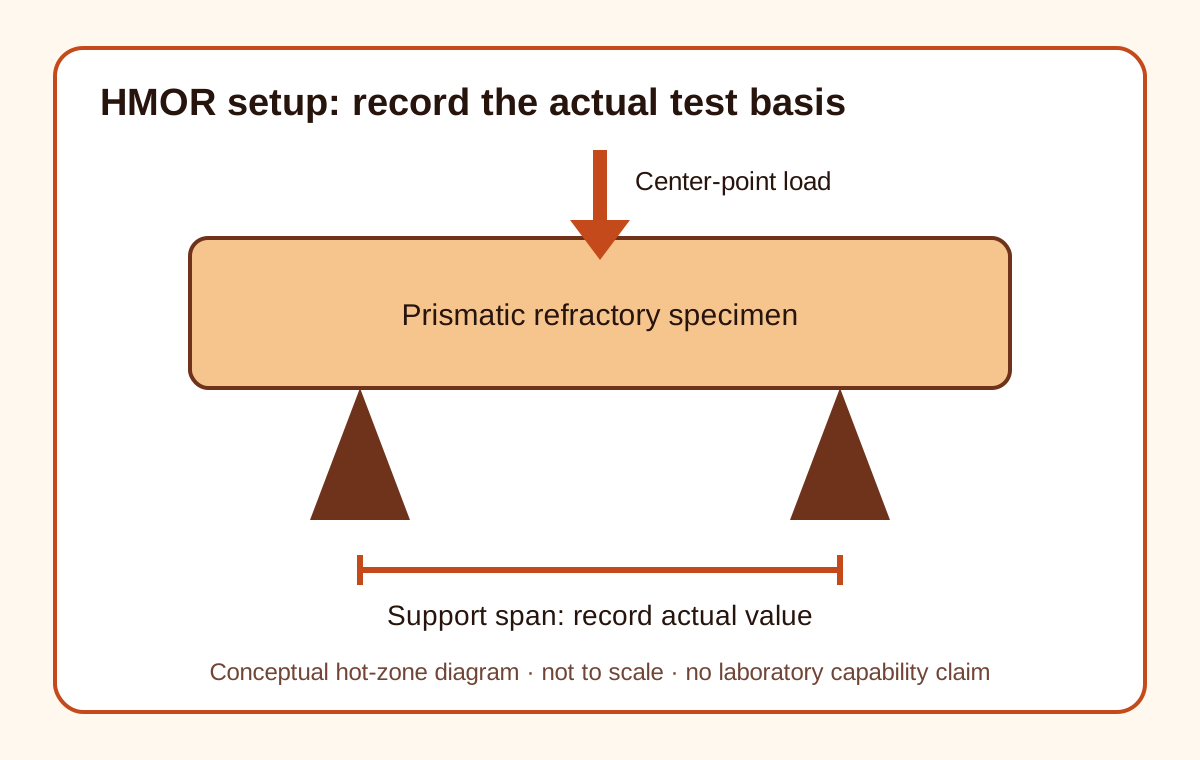
In a three-point arrangement, a prismatic specimen rests on two supports and receives a load near the center of the support span. The reported stress depends on the specimen and fixture basis, so the words “three-point bend” alone do not close the comparison.
Request the specimen width, depth and length; the cut or formed orientation; the loaded face; and the distance between the supports. Also record the loading or stress-control basis and any declared deviation. An ATS equipment description shows that contact geometry and spacing can be specified for a fixture. It is useful apparatus context, not a universal span requirement.
Do not fill a missing span from another laboratory’s page. The current ASTM public abstract available for this review does not expose the full numerical procedure. If a report omits geometry required for the purchasing decision, mark it missing and ask for the applicable controlled record.
Keep temperature and dwell attached to the value
An HMOR number without its test temperature is incomplete for a temperature-conditioned comparison. Record both the target temperature and how the report says the specimen was brought to and held at that condition.
Orton’s current service page describes a 12-hour hold for its listed C583 service, and its dated 2022 explanation also discusses that soak. This is a laboratory service example. It is not a rule that every HMOR report uses, or should use, a 12-hour dwell.
For Report A and Report B, write down the actual heating and dwell information stated in each source. If one gives only “tested hot” and the other gives a temperature and hold, the reports do not yet disclose the same condition basis.
Check atmosphere and prior preparation
The current ASTM C583 public scope addresses testing in an oxidizing atmosphere and notes that other atmospheres require modifications. A result from another atmosphere may be useful, but it should not be presented as though the atmosphere were unchanged.
Ask whether the specimen was tested in air or under another declared atmosphere. Record the gas description and any stated method modification. This article does not supply a conversion between atmospheres.
Preparation also belongs beside the result. Preserve the material identity and whether the specimen was supplied as fired dense brick, chemically bonded brick, a formed monolithic specimen, or another documented condition. Ask for prior firing or heat-treatment history where it affects the report basis. This is a buyer comparison field derived from the preparation categories visible in the public scope; it is not a claim that this review accessed every reporting clause in the controlled standard.
Read strength-versus-temperature data without inventing a trend
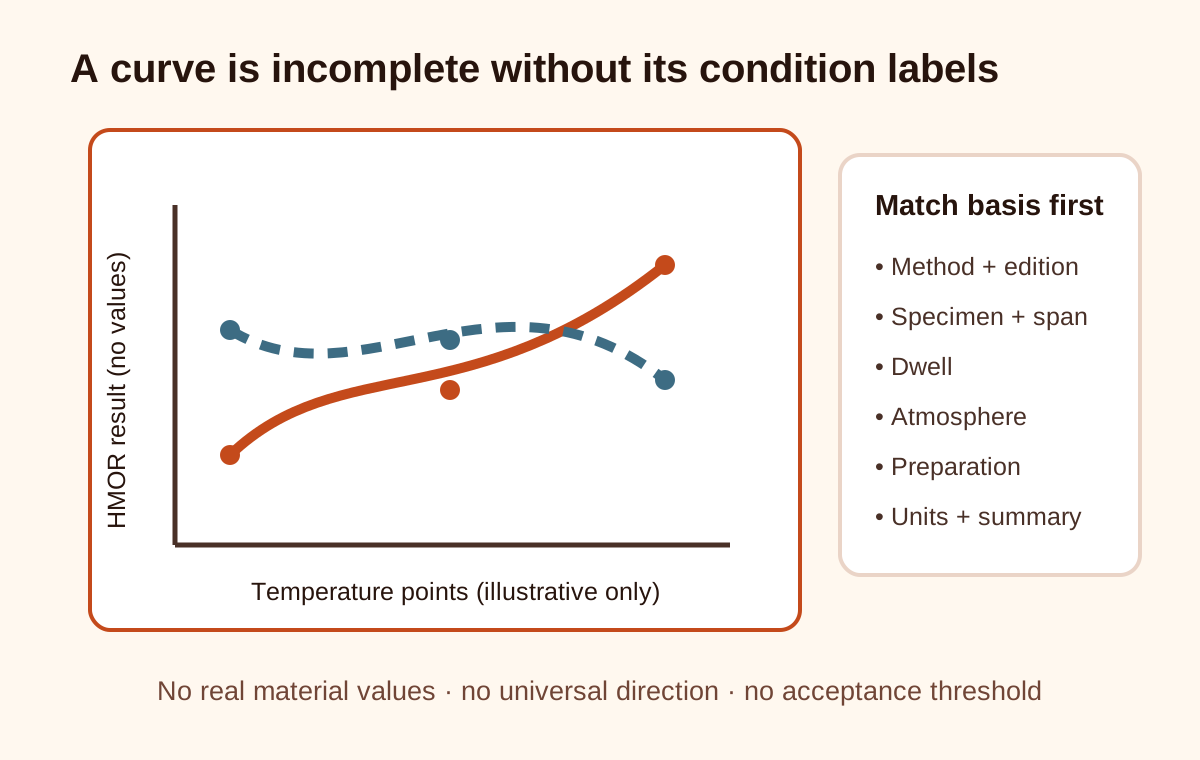
A series of HMOR points can show how one tested material behaved under the conditions stated for that series. It does not establish a universal curve for a refractory family.
- Confirm that every point is HMOR rather than cold MOR or compression.
- Match the method and edition basis.
- Match specimen geometry, orientation and support span.
- Match atmosphere, preparation, heating and dwell conditions.
- Check units, specimen count, individual values and the reported summary.
- Compare only the points that share a defensible basis; label the rest different or unresolved.
Do not infer that HMOR must rise or fall over a particular interval. Do not interpolate an acceptance value that the report, applicable specification and technical reviewer have not established. A plotted series is property evidence under stated conditions, not a roof-sizing calculation or a service-life forecast.
Use a side-by-side report worksheet
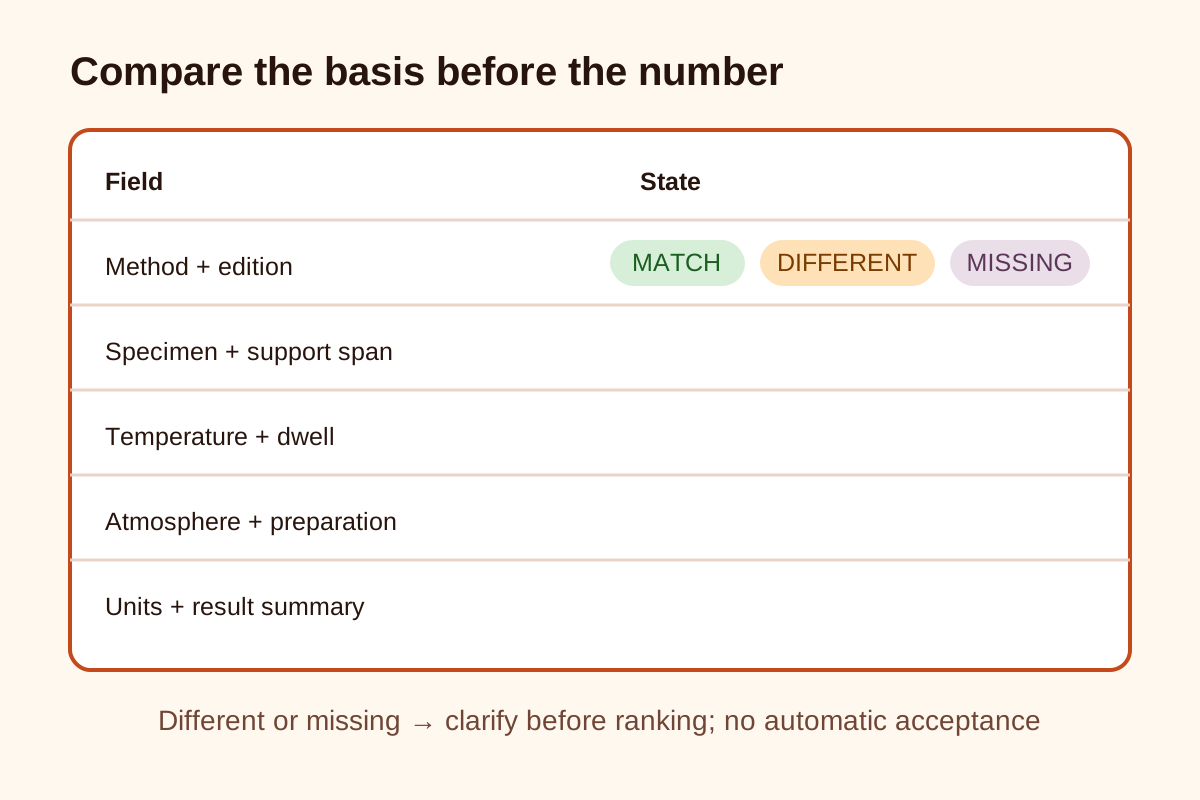
| Comparison field | Report A | Report B | Decision |
|---|---|---|---|
| Method and edition | Match / different / missing | ||
| Material and specimen identity | Match / different / missing | ||
| Specimen dimensions and orientation | Match / different / missing | ||
| Loaded face and support span | Match / different / missing | ||
| Center-load and loading basis | Match / different / missing | ||
| Test temperature | Match / different / missing | ||
| Heating and dwell history | Match / different / missing | ||
| Atmosphere and method modification | Match / different / missing | ||
| Prior firing or preparation | Match / different / missing | ||
| Units, specimen count and summary | Match / different / missing | ||
| Project acceptance rule | Agreed / unresolved |
“Different” does not mean a report has no value. It means the values do not yet support the same controlled comparison. “Missing” should remain missing until evidence resolves it.
Use the refractory brick sample approval checklist when the decision moves from report compatibility to sample identity, traceability, approval records, or lot acceptance.
The acceptance rule comes from the applicable specification, purchasing documents and responsible technical review. HMOR data alone does not create a universal pass/fail threshold. Furnace-zone and component selection remain separate; use the reheating-furnace lining guide when the decision concerns component duty rather than report comparability.
Build a bounded HMOR evidence request
For an RFQ or technical clarification, send:
- the application and exact component under review;
- the required method and edition, if specified;
- specimen identity, dimensions, orientation, loaded face and support span;
- test temperature, heating and dwell information;
- atmosphere and any method modification;
- prior firing, preparation or heat-treatment information;
- loading basis, units, specimen count, individual results and summary;
- the project specification or agreed acceptance rule; and
- requirements outside HMOR, including design loads and other service properties.
The high-alumina brick page is a commercial inquiry route for a documented refractory requirement. The link is not evidence that Firebrics performs HMOR testing, offers a particular HMOR value, or can approve a structural design.
References & Further Reading:
- ASTM C583-15(2026) — current public scope for elevated-temperature simple-beam, center-point loading and oxidizing-atmosphere boundaries; the controlled full standard was not accessed.
- ASTM C133-24 — public scope used to distinguish room-temperature compression and flexure from elevated-temperature HMOR.
- Orton refractory testing and Orton’s dated HMOR explanation — laboratory context for specimen and dwell questions; the listed 12-hour hold is not a universal rule.
- Lucideon ambient MOR method — ambient prismatic three-point bending context, not an HMOR protocol.
- ATS HMOR equipment — elevated-temperature three-point fixture context; equipment marketing is not material acceptance evidence.
No furnace inspection, laboratory test or Firebrics capability audit was performed for this article. Public summaries do not replace the controlled test standard, project specification or responsible engineering review.