Cold Crushing Strength of Refractory Brick: How to Compare Test Reports
Jason Gong
Founder & Sales Director · 10+ Years in Refractory
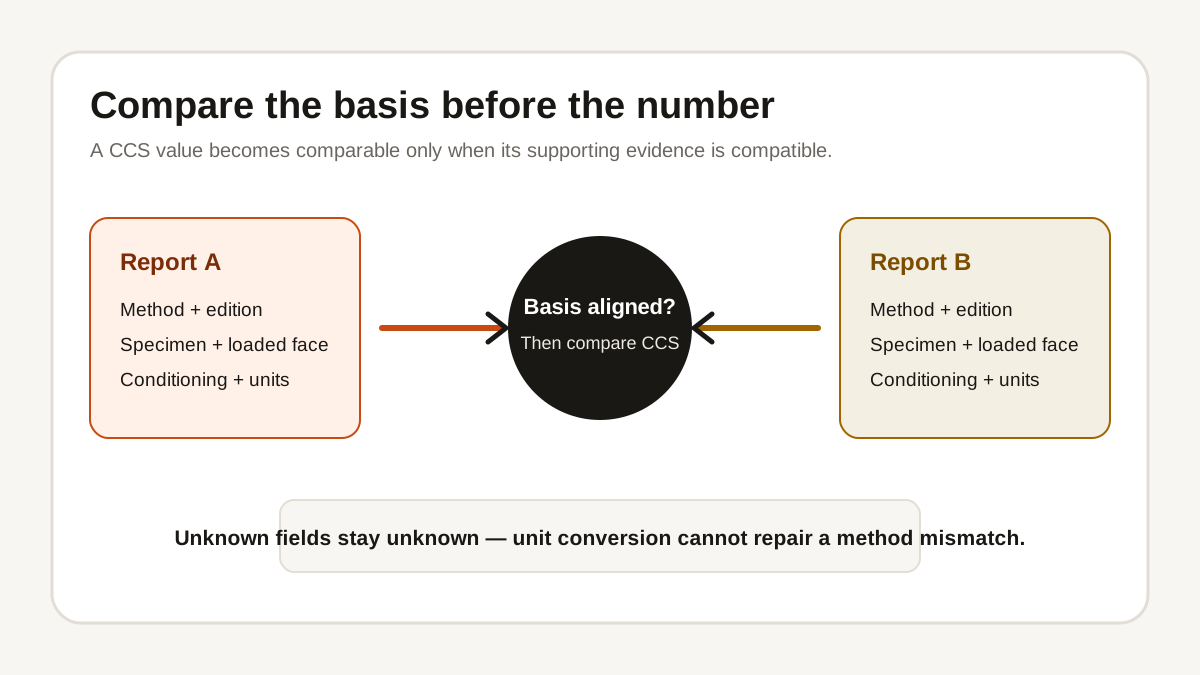
Cold crushing strength (CCS) is the maximum compressive load per unit area that a refractory specimen withstands at room temperature under a stated test method. Compare CCS reports only after checking method, product scope, specimen geometry, loaded face, orientation, conditioning, specimen count, and units. CCS alone does not establish hot strength, thermal-shock resistance, abrasion resistance, or service life.
What the CCS number means
The basic calculation is CCS = maximum load at failure / loaded cross-sectional area.
Lucideon describes the test for shaped insulating refractory products as a steadily increasing compressive load applied at room temperature until the specimen can no longer support an increase. The result is calculated from the maximum load at failure and the mean cross-sectional area over which the load is applied.
That definition explains why a result should be reported as stress, such as MPa or N/mm², rather than as a load alone. A failure load without the loaded area cannot be compared across different specimen sizes. Converting units does not repair a mismatch in method, specimen, orientation, or preparation.
A unit-check example
Suppose a report records a maximum load of 40,000 N and a mean loaded area of 2,000 mm². The calculated strength is 20 N/mm², which is 20 MPa. This demonstrates the arithmetic only. It is not a target, grade recommendation, or acceptance limit.
Identify the method before comparing values
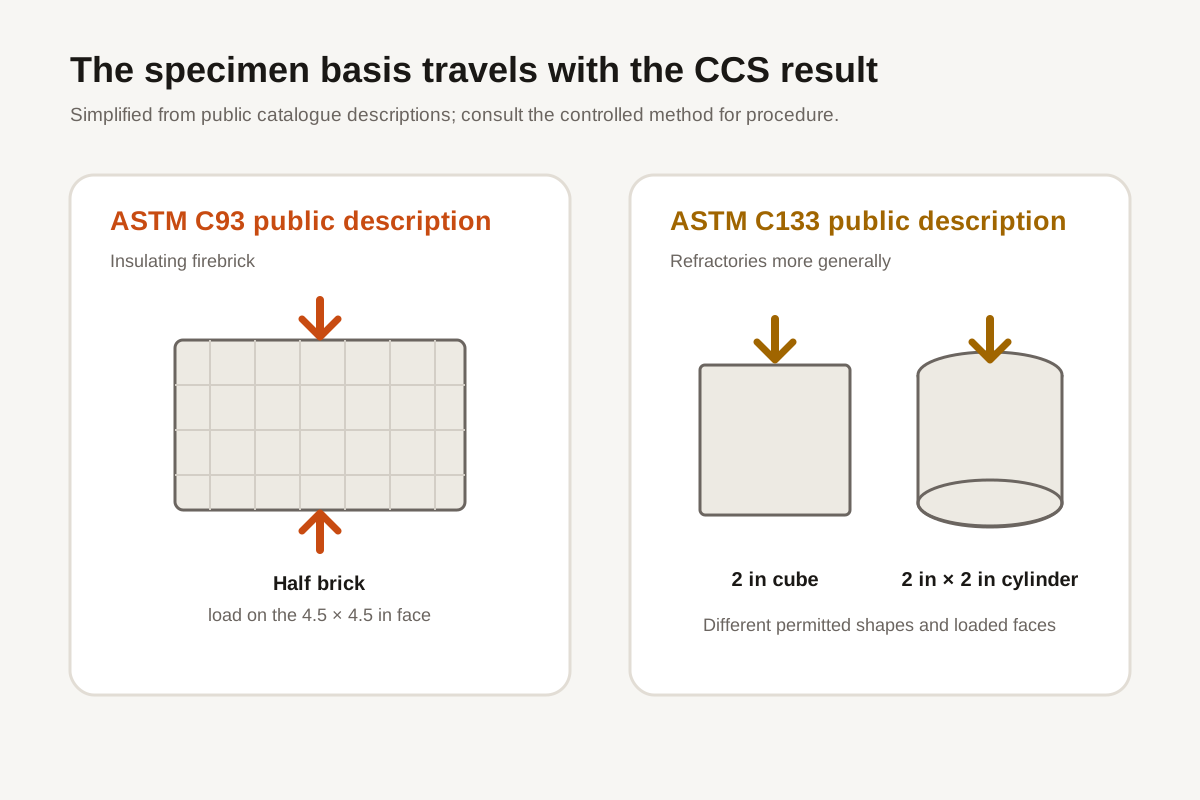
“CCS tested” is not a complete method statement. Orton’s public refractory-testing catalogue lists separate procedures for insulating firebrick and refractories more generally. Its ASTM C93 description applies the crushing load to the 4.5 × 4.5 inch face of half insulating firebricks. Its ASTM C133 description uses either a 2 inch cube loaded on a 2 × 2 inch face or a 2 inch diameter by 2 inch high cylinder loaded on its circular face.
Lucideon separately identifies BS EN ISO 8895:2006 for shaped insulating refractory products. These public descriptions show why the method designation and product scope belong beside the result. They do not replace the controlled standard, laboratory instructions, or the edition required by a project specification.
When reports cite different methods, do not treat their CCS values as interchangeable until the responsible technical reviewer confirms that the scopes and specimen procedures are compatible with the decision.
Check specimen size, face, and orientation
Record the specimen geometry, measured loaded area, loaded face, and orientation relative to the manufactured product when the agreed method requires it. Ask:
- Was the specimen a half brick, cube, cylinder, or another permitted shape?
- Which dimensions were used for the loaded area?
- Which face received the load?
- Was it cut from a larger shape, and is orientation recorded?
- Were both reports prepared on the same basis?
A half insulating brick and a machined cube from a dense shape can both produce a result labelled CCS, but the shared label does not make the results a controlled comparison.
Record conditioning and loading details
“Tested at room temperature” does not disclose preparation, drying, surface condition, loading procedure, or deviations. Request the full report or the relevant method fields when a certificate supplies only a value. Preserve:
- method designation and edition used by the report;
- material or product type covered;
- specimen count, geometry, dimensions, loaded face, and orientation;
- conditioning or preparation stated by the laboratory;
- load application details and declared deviations;
- individual results plus the reported average, range, or other summary;
- units and any agreed purchase-acceptance rule.
This is a buyer evidence checklist, not a claim that every laboratory uses identical fields or statistics.
Do not substitute CCS for another property
CCS is a room-temperature compression result. Orton lists elevated-temperature modulus of rupture under ASTM C583 as a three-point bending test at temperature. It lists ASTM C1171 thermal-shock testing as repeated heating and air-cooling followed by strength and ultrasonic measurements. Those descriptions use different loads, temperatures, endpoints, and failure mechanisms.
A higher CCS result therefore does not by itself prove better hot-load performance, thermal-shock resistance, chemical resistance, abrasion resistance, or longer lining life. For broader application selection, the existing refractory bricks for steel-industry guide remains the application owner; this article owns the narrower report-comparison decision.
Separate a value from an acceptance rule
A technical-data-sheet value, a laboratory result, and a purchase-acceptance rule are different records.
- A data-sheet value describes the supplier’s stated property basis.
- A test report records tested specimens and declared conditions.
- An acceptance rule states how buyer and supplier judge an order, including method, sampling, statistic, tolerance, and response to a nonconforming result.
Do not invent a universal CCS cutoff. A defensible limit must come from the applicable specification, selected grade, design basis, service review, and agreed purchase documents. The high-alumina brick product page is the commercial next step for a documented requirement; this article does not claim that Firebrics offers a particular CCS, performs a specific test, or guarantees suitability.
The refractory brick sample approval checklist covers lot traceability and approval records when the decision moves from reading a property report to defining a sample or lot-acceptance process.
Use a one-page report-comparison worksheet
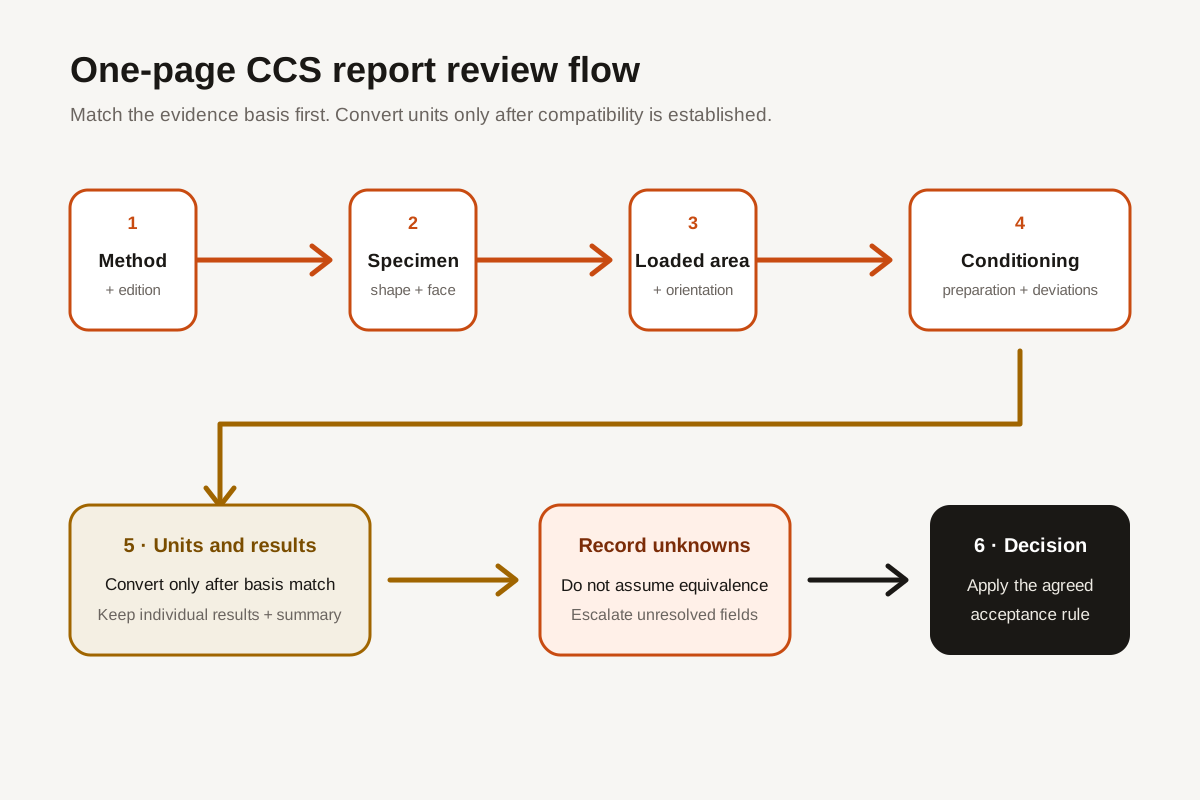
| Field | Report A | Report B | Comparable? |
|---|---|---|---|
| Method and edition | |||
| Dense or insulating scope | |||
| Specimen geometry and dimensions | |||
| Loaded face and orientation | |||
| Conditioning and preparation | |||
| Loading procedure or deviation | |||
| Specimen count | |||
| Individual results and summary | |||
| Units and conversion basis | |||
| Agreed acceptance rule |
Mark an unresolved field unknown rather than assuming equivalence. If the laboratory, supplier, specification, or technical reviewer cannot resolve it, record the limitation and avoid ranking products from CCS alone.
What to include in an RFQ or technical query
Send the intended application, responsible engineering owner, required method and edition if specified, dense or insulating scope, specimen and orientation requirements, reporting units, statistical fields, acceptance rule, and the other service properties that remain separate from CCS.
This gives the supplier and reviewer a defined comparison task and keeps room-temperature compression in its proper role: one documented input among the evidence needed for selection and purchase acceptance.
References & Further Reading:
- Lucideon cold crushing strength method summary — public summary of BS EN ISO 8895:2006.
- Orton refractory testing catalogue — public catalogue descriptions for ASTM C93, ASTM C133, ASTM C583, and ASTM C1171.
Public summaries do not replace controlled standards or establish current edition requirements. This page does not claim a Firebrics test capability, product CCS, universal threshold, grade ranking, fitment, or service life.