Before a Bulk Fire Brick Order: Approve the Sample, COA, Dimensions and Packaging
Jason Gong
Founder & Sales Director · 10+ Years in Refractory
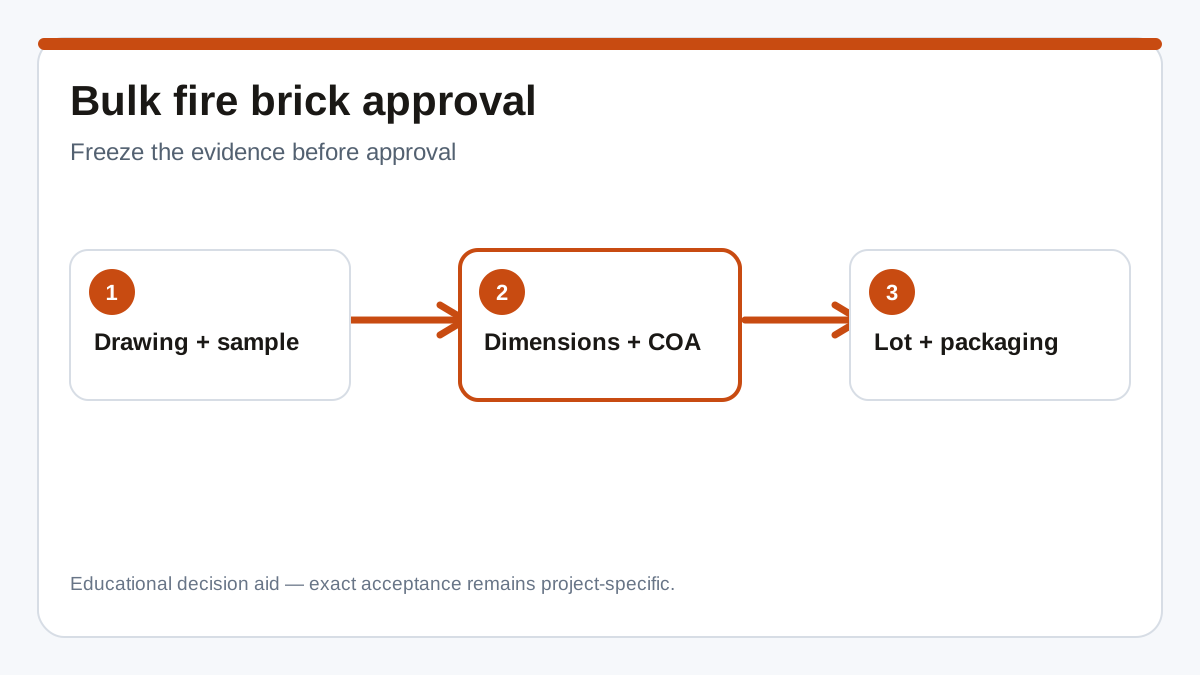
A refractory brick sample should be approved only against a written purchase specification. Freeze the drawing revision, material designation, inspection method, acceptance fields, sample identity and packaging standard before production. Then require the production lot and certificate of analysis to remain traceable to that approved basis. One attractive sample or one average test result does not prove that a bulk lot is acceptable.
Decision rule: approve the basis for production, not a loose brick in isolation. Any change to material, shape, tolerance, test method, factory, batch identification or packaging needs documented review before the order is released.
Freeze the approval basis before requesting a sample
Start with the current drawing, purchase specification and service description. Record the brick shape and drawing revision, nominal dimensions, buyer-defined tolerances, material family, agreed property list, test methods, sampling plan, quantity, labeling and packing requirements. If the buyer uses a plant standard, attach the exact revision rather than paraphrasing it in email.
The sample request should state what the sample can prove. It can help verify geometry, workmanship, markings, packaging concept and selected laboratory results. It cannot by itself establish full-lot uniformity, installation quality or service life.
For a custom shape, send a dimensioned drawing and identify critical faces, keys, tapers, holes, grooves, ground faces and any dimensions that affect the lining layout. The custom refractory shapes page is the commercial owner for drawing-based production; this article owns the approval evidence, not the shape design.
Give every sample a controlled identity
Assign a sample ID that appears on the brick, inspection record, photographs, laboratory report and courier package. Record manufacturing location, material code, batch or trial number, forming and firing dates when available, drawing revision and quantity supplied.
Photograph all faces with a scale and label. Note chips, cracks, lamination, distortion, surface treatment and markings without assigning a cause prematurely. If a sample arrives damaged, separate transport damage from manufacturing acceptance and decide whether a replacement is required.
Keep an approved retained sample only when storage conditions and retention period are defined. A retained brick is a visual and dimensional reference; it does not replace the written specification or current test records.
Inspect dimensions with the agreed method
ASTM C134 covers field-suitable procedures for size, dimensional measurement, bulk density, warpage and squareness of rectangular refractory brick. ASTM C909 addresses a modular series of refractory brick dimensions. These standards are useful only when the purchase specification identifies the applicable edition, product shape and acceptance rule.
| Inspection item | Record | Do not infer |
|---|---|---|
| Overall dimensions | Locations, instrument, readings and tolerance | A single reading represents the lot |
| Warpage and squareness | Method, datum and result | Visual straightness is a measurement |
| Critical shape features | Drawing callout and measured result | Nominal catalogue shape fits the lining |
| Stack or assembly check | Defined sample count and orientation | A good dry fit proves installation performance |
| Edge and surface condition | Photos and buyer acceptance language | Cosmetic appearance predicts service life |
Do not publish a supplier’s normal process capability as the buyer’s tolerance. The agreed drawing and purchase specification control the decision. If measurement uncertainty is material to the limit, record the gauge, calibration status and review rule.
Define what the certificate of analysis must contain
“COA required” is incomplete. List the properties, units, test methods, reporting basis and acceptance limits that apply to the ordered material. Separate chemical composition from physical properties and identify whether a result is measured for the production batch, calculated, declared from a product specification or supplied as periodic qualification evidence.
ASTM maintains separate refractory methods for properties such as apparent porosity, absorption, bulk density, dimensional behavior and other material characteristics. Do not mix values from different methods or use a data-sheet typical value as a lot acceptance limit unless the purchase contract expressly says so.
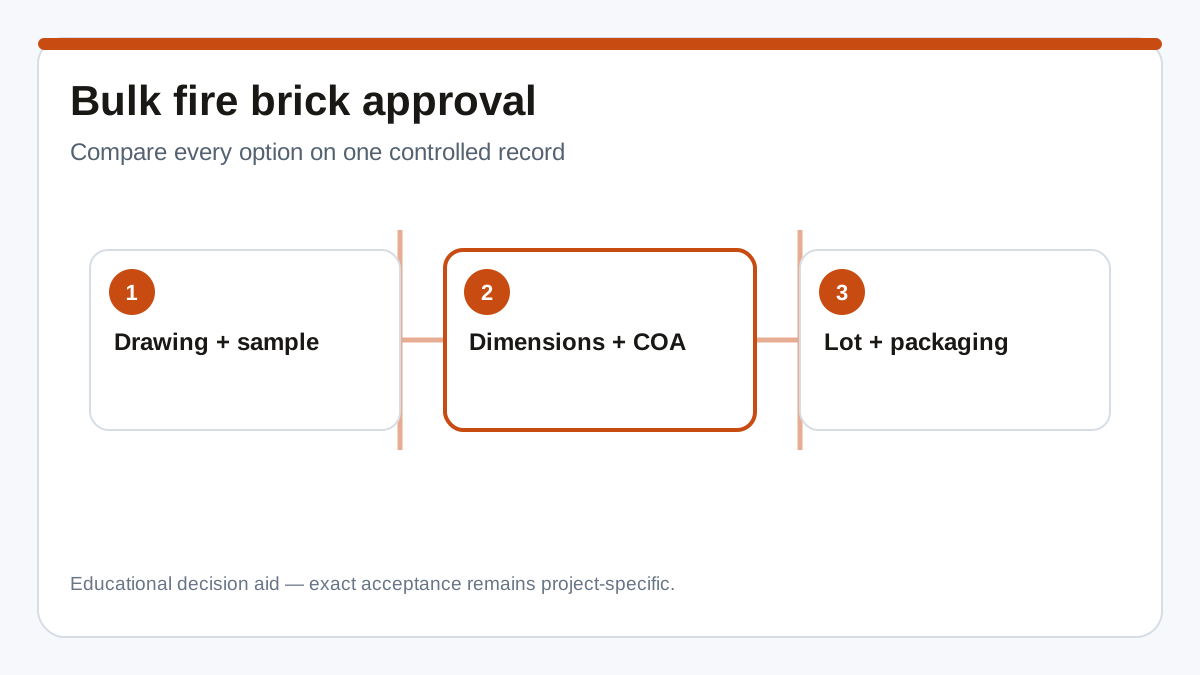
Require the COA to identify the buyer order, product code, batch or lot, manufacturing site, quantity represented, test date, methods, results, units, specification limits, deviations and authorized issuer. An average cannot hide an out-of-spec individual result when the agreed sampling plan requires individual reporting.
Connect the approved sample to the production lot
Before mass production, record which controls must remain unchanged and which changes require notice. At minimum, review material formulation or product code, raw-material source controls where contracted, forming route, firing route, factory, drawing revision and quality plan.
The bulk-lot inspection plan should define lot formation, sampling location and count, destructive and non-destructive tests, disposition of nonconforming units, retained samples and who may authorize a concession. Do not backfill these decisions after production is complete.
For standard fire-brick selection background, use the refractory brick guide. The production-lot approval remains tied to the exact purchase specification and application review.
Approve packaging as part of product protection
Packaging is not a decorative shipping choice. Record pallet or crate type, unit count and stacking pattern, separators, edge protection, moisture protection, gross and net weight, lifting and forklift provisions, fumigation or wood-packaging documentation where applicable, labels and container loading plan.
Marking should connect each shipping unit to the order, product, shape, lot and quantity without exposing information the buyer considers confidential. Agree how mixed shapes or lots are separated and how shortages, breakage or wet packaging will be recorded at receipt.
Build one release record before shipment
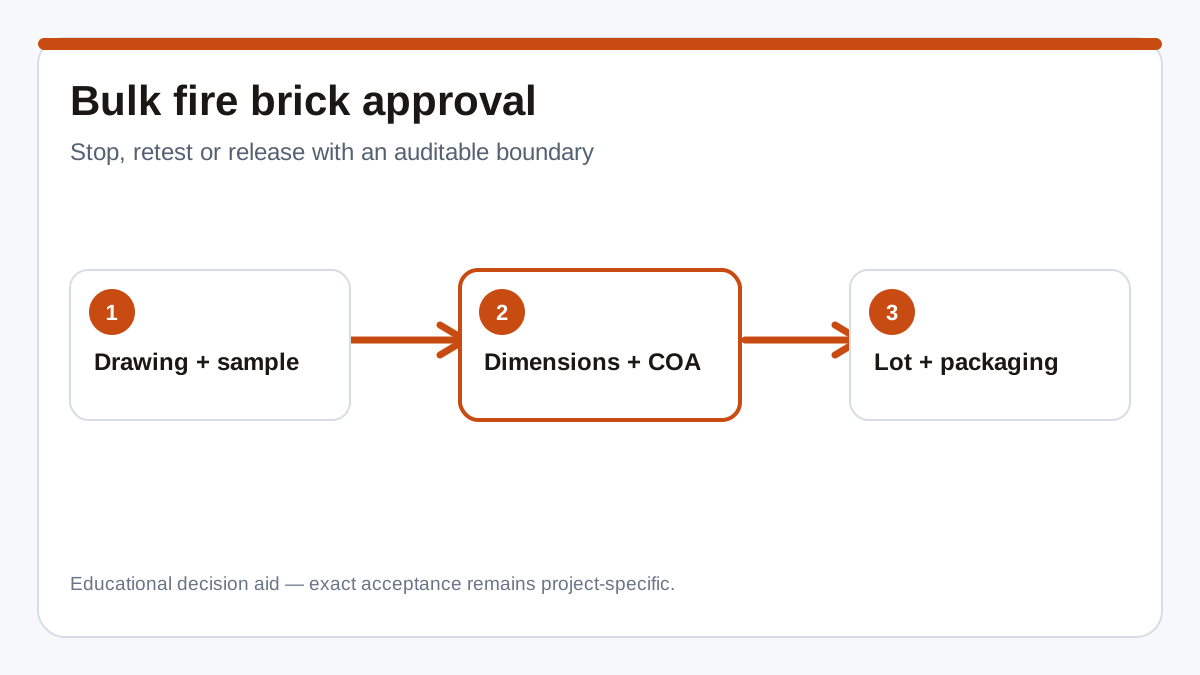
The final release record should contain the approved drawing/specification revision, approved sample ID, inspection results, COA, lot list, deviations and concessions, packaging photographs, shipping marks, packing list and named approvals. If a required field is missing, classify the lot as hold, retest, rework or reject according to the purchase plan; do not silently convert missing evidence into acceptance.
Use the same checklist when comparing suppliers. It exposes where two offers use different test methods, reporting bases, lot definitions or packaging scopes. Firebrics can review the evidence package and prepare a quote, while buyer engineering and quality owners retain approval responsibility.
References & Further Reading:
- ASTM C134 — Size, Dimensional Measurements, and Bulk Density of Refractory Brick
- ASTM refractory standards index
- ASTM C909 — Dimensions of a Modular Series of Refractory Brick and Shapes