Rotary Kiln Refractory Guide:
Zone Selection by Process
Jason Gong
Founder & Sales Director · Product Inquiry Contact
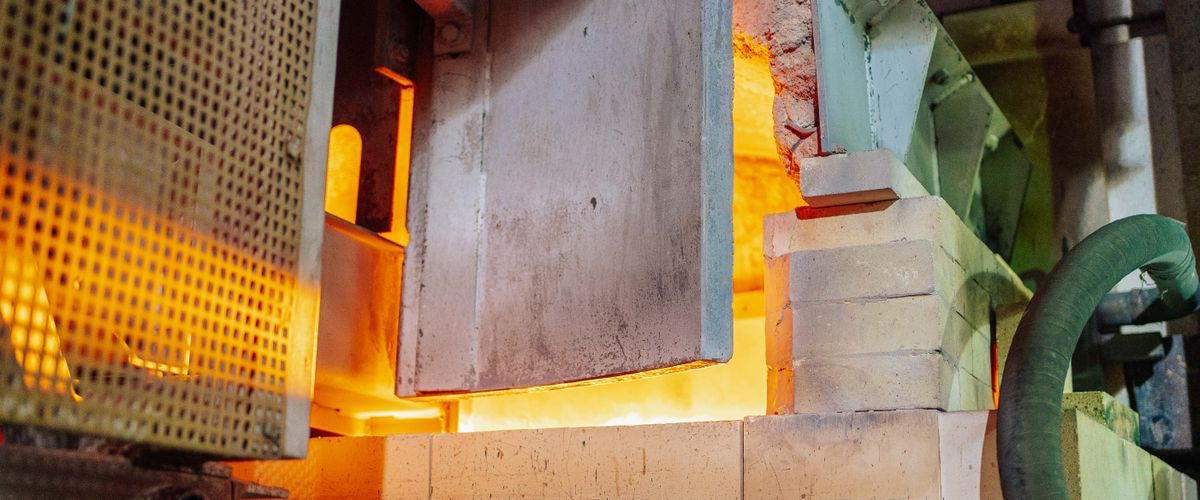
Refractory bricks for rotary kilns are selected by zone and by what the kiln processes. Cement burning zones (1,300–1,450°C) require magnesia-spinel or magnesia-chrome bricks. Lime kilns run cooler and use high-alumina grades in most zones, with basic bricks only in the hottest section. Transition zones across industries typically use silicon-mullite bricks. Matching grade to zone, temperature, and feed chemistry is what determines campaign life — and the cost of the next unplanned stop.
Need a zone-matched commercial page next? Start with the cement kiln landing page for process-led routing, then compare the wider refractory product range or go straight to the quote form.
Four jobs. One brick. All at once.
A rotary kiln is a long, rotating steel cylinder. The inside needs to run at anywhere from 900°C to 1,450°C depending on the industry. The steel shell fails at a fraction of that. The refractory brick lining is what makes those two facts compatible — and it does this across four simultaneous demands, not one.
- Thermal barrier. The shell must stay below 350°C while the hot face sees extreme heat. Above 350°C the shell distorts, which changes brick ring geometry, which causes early lining failure. (The number 350 is not a soft guideline. It is a threshold.)
- Chemical resistance. Every rotary kiln processes something reactive. Cement clinker, lime, bauxite, mineral concentrates — all attack the brick surface chemically. The lining absorbs that attack so the steel shell does not have to.
- Mechanical arch. A rotating 4–6 m kiln generates real centrifugal and compressive load. Each brick ring is a structural arch under thermal, mechanical, and chemical stress simultaneously. It has to hold geometry while all three are happening at once.
- Thermal efficiency. A thicker or less conductive lining reduces shell heat loss and improves energy efficiency — directly affecting fuel cost per tonne of product. The grade choice is partly an energy bill decision, not only a brick life decision.
Miss any of these and the campaign ends early. In most plants, "early" is measured in unplanned shutdown days, not in brick unit prices.
alarm threshold
service life
service life
mechanical stress
Five zones. Five environments. One wrong brick wipes out the campaign.
Every rotary kiln — regardless of industry — divides into five zones. Each zone runs at a different temperature, faces different chemical attack, and experiences different mechanical load. The same brick cannot perform well across all five. Specifying as if it can is the most common and most preventable error in rotary kiln refractory procurement.
Zone 1: Preheating / Inlet zone
Temperature: 200–900°C (typically). The dominant threat is alkali attack from sulfate and chloride compounds condensing on the brick surface. High-alumina bricks (≥75% Al₂O₃) with anti-stripping properties work here. Alkali-resistant grades are preferred in kilns with high-sulfur feed or fuel.
Zone 2: Lower transition zone
Temperature: 900–1,100°C. Chemical attack intensifies, thermal cycling from process upsets becomes the second stress. Silicon-mullite bricks — combining silicon carbide's abrasion resistance with mullite's thermal stability — are now the standard in this zone for most new specifications. They typically last 30–50% longer than anti-stripping high-alumina alternatives at comparable cost per campaign. (If you are still specifying high-alumina for the lower transition, it is worth revisiting that line item.)
Zone 3: Upper transition zone
Temperature: 1,100–1,300°C. Combined chemical, thermal, and mechanical stress. Silicon-mullite remains the preferred choice. In kilns with unstable process conditions or high alternative fuel substitution, spinel bricks are added where thermal shock resistance becomes the dominant selection criterion.
Zone 4: Burning / sintering zone
Temperature: 1,300–1,450°C in cement kilns; 900–1,200°C in lime kilns; variable in mineral processing. This is the critical zone in every kiln type — highest wear, highest chemical attack, highest mechanical stress. The correct brick depends heavily on what you are processing. Getting this zone wrong typically means the campaign fails at month 7 instead of month 18.
Zone 5: Cooling / discharge zone
Temperature: 1,000–1,200°C (cement), lower in lime. The dominant failure mode shifts from chemical attack to mechanical abrasion from falling and sliding product. Magnesia-spinel handles both. High-abrasion kilns sometimes use high-alumina grades in the cooler sections where abrasion, not chemistry, is the primary enemy.
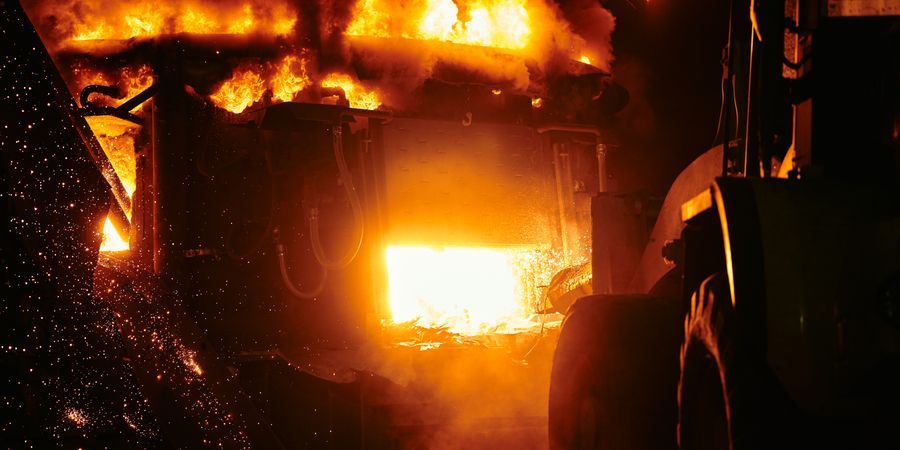
The Zone × Industry Matrix: cement, lime, and alumina kilns specify differently
Most guides treat "rotary kiln refractory" as a single topic. It is not. A cement rotary kiln and a lime rotary kiln share the same equipment category and similar zone structure — but their refractory specifications differ significantly at nearly every zone. Applying cement kiln data to a lime kiln is one of the most common and most expensive mismatches in industrial refractory procurement.
The table below is what no one publishes in one place. It shows the standard brick recommendation by both zone and industry. Our dedicated cement kiln guide covers cement-specific selection in detail. This matrix is the cross-industry view.
| Zone | Cement Kiln | Lime Kiln | Alumina / Bauxite Kiln | Mineral Processing |
|---|---|---|---|---|
| Preheating 200–900°C |
High-alumina (≥75% Al₂O₃), alkali-resistant | High-alumina, insulation backup | High-alumina, thermal shock resistant | High-alumina, alkali- or sulfide-resistant by feed type |
| Lower transition 900–1,100°C |
Silicon-mullite | High-alumina (≥75%) | Silicon-mullite or anti-stripping high-alumina | Silicon-mullite |
| Upper transition 1,100–1,300°C |
Silicon-mullite / Spinel | High-alumina or phosphate-bonded | Silicon-mullite | Silicon-mullite or spinel |
| Burning / sintering 1,300–1,450°C cement 900–1,200°C lime |
Magnesia-spinel / Magnesia-chrome | High-alumina (≥80%) or Magnesia-alumina | High-alumina or Corundum | Varies by chemistry — silicon-mullite to basic grades |
| Cooling 1,000–1,200°C (cement) |
Magnesia-spinel / High-alumina | High-alumina, abrasion-resistant | High-alumina | High-alumina, abrasion-resistant |
Three observations from this matrix that specifications often get wrong:
- Lime kilns do not need basic bricks throughout. The burning zone of a lime kiln runs at 900–1,200°C — hot, but not hot enough to justify magnesia-based grades in the transition and preheating zones. Using cement kiln specs for a lime kiln is spending twice the brick budget for the same campaign.
- Alumina and bauxite kilns run cooler but with abrasive feed. The dominant selection criterion in these kilns is abrasion resistance and thermal shock resistance under frequent cycling, not chemical resistance to clinker liquid phase. Silicon-mullite and corundum grades match this load profile well.
- Mineral processing kilns need chemistry-specific selection. A copper roasting kiln and a zinc clinker kiln face very different atmospheres. Generic "rotary kiln refractory" specifications without knowing the feed are not a starting point — they are a guess.
Burning zone: magnesia-spinel vs. magnesia-chrome
For cement rotary kilns specifically, the burning zone brick debate that every procurement team eventually resolves. Both grades work. But the decision now involves more than performance data.
Magnesia-chrome
Excellent chemical resistance to clinker liquid phase. Strong clinker coating adhesion — the thin layer of solidified clinker on the hot face that acts as a secondary thermal shield and, when stable, can extend lining life by 30–50%. Historically dominant in cement burning zones. The issue: spent magnesia-chrome bricks contain hexavalent chromium (Cr⁶⁺), classified as hazardous waste in the EU and increasingly restricted in other jurisdictions. Disposal routes are narrowing. Disposal costs are rising. New installations are increasingly difficult to justify in regulated markets.
Magnesia-spinel
Uses alumina-magnesia spinel as the secondary phase instead of chromite. Chemically inert in disposal — no special handling required. Thermal shock resistance is generally superior to magnesia-chrome, which matters when burning alternative fuels (tyres, biomass, refuse-derived fuel) that introduce more severe temperature cycling. Service life in the cement burning zone is typically within 10–15% of magnesia-chrome under comparable operating conditions.
"Magnesia-chrome should be actively retiring from new cement kiln specifications — not because it doesn't perform, but because it books a hazardous disposal liability that does not appear on the brick quote. Magnesia-spinel delivers campaign life within 10–15% in most clinker chemistries, with zero chromium liability and better thermal shock performance for alternative fuel use. That is not a close trade-off. It is a straightforward decision — unless your specific clinker chemistry is genuinely exceptional, which most are not."
Transition zones: why silicon-mullite replaced high-alumina in most specifications
The transition zones are where silicon-mullite bricks won the last decade's specification battles — and where some plants are still catching up.
High-alumina bricks (typically 65–75% Al₂O₃) were the standard for transition zones for decades. They are thermally stable, relatively affordable, and well understood. The problem is the lower transition zone: temperatures around 900–1,100°C, with alkali sulfate attack, thermal cycling during process upsets, and abrasive feed sliding through. High-alumina bricks in this environment erode through a combination of chemical infiltration and abrasion. In many cement and lime kilns, they need replacement every 12–18 months in this zone.
Silicon-mullite bricks combine silicon carbide's abrasion resistance with mullite's thermal stability. In the lower transition zone, this means they resist the erosion mechanism that limits high-alumina, while retaining the thermal cycling tolerance that the zone demands. Industry experience across cement, lime, and alumina kilns generally shows silicon-mullite lasting 30–50% longer in this zone at a price premium of roughly 40–60% over high-alumina — making the cost per campaign month lower, not higher. (The maths on this is not complicated. It is just rarely done before the specification is written.)
Silicon-mullite is not the answer for every zone. In the preheating zone, standard high-alumina is usually adequate and silicon-mullite adds cost without proportionate gain. In the burning zone of a cement kiln, neither silicon-mullite nor high-alumina survives — that zone requires basic refractory. The transition zone is silicon-mullite's territory, and within it, the case is consistent across industries.
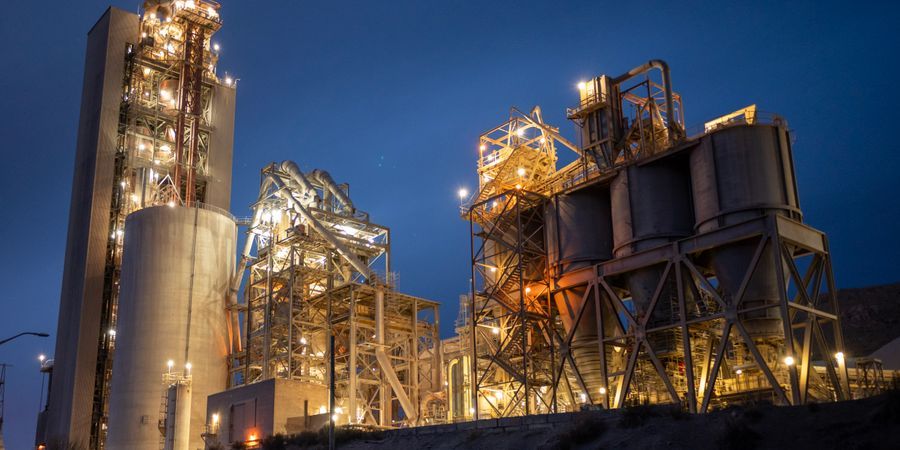
The Three Failure Clocks
Most lining failures are blamed on the brick. Most of the time, the brick is the last thing that went wrong.
Rotary kiln refractory linings degrade through three independent mechanisms. Each runs on its own timeline. Each has different causes and different countermeasures. They run simultaneously — and they interact. The framework we use is called the Three Failure Clocks, because that is what they are: three timers counting down toward the same shutdown, at different speeds, that most specifications track only one of.
Clock 1 — Mechanical Stress · 37% of failures
What is happening: Shell deformation, thermal expansion mismatch between adjacent bricks, and loose or improperly locked rings apply physical stress to the brick structure. Rings crack, shift, or fall. What accelerates it: Shell ovality above 0.5%, mixing brick grades within a single ring (different expansion rates at the joint), inadequate ring locking during installation, deferred shell maintenance. Countermeasure: Measure shell ovality before every relining. Correct it where possible. Select grades with appropriate cold crushing strength for the deformation profile. Lock every ring before rotating to the next.
Clock 2 — Chemical Attack · 36% of failures
What is happening: Alkali sulfates and chlorides condense on brick surfaces in cooler zones and react with alumina. Clinker liquid phase dissolves brick matrix in cement burning zones. CO gas under reducing conditions penetrates the brick and attacks magnesia. Each mechanism is different — and each demands a different brick property to resist it. What accelerates it: High-alkali feed or fuel, reducing atmosphere from poor combustion, feed chemistry changes not reflected in the brick specification. Countermeasure: Match brick chemistry to feed chemistry. Alkali attack demands alkali-resistant alumina grades in the preheating zone. Clinker liquid phase demands basic bricks in the cement burning zone. Do not use the same grade across chemically different zones.
Clock 3 — Thermal Stress · 27% of failures
What is happening: Overheating from burner misalignment, rapid temperature swings during process upsets, and — most commonly — a heat-up schedule that was shortened to save time. Thermal stress causes spalling, cold-face cracking, and ring geometry changes as bricks expand and contract unevenly. What accelerates it: Alternative fuel substitution above 20% without adjusting the brick specification; rushed initial heat-up; shell temperature events above 350°C that go unaddressed. Countermeasure: Follow the heat-up schedule. Not most of it — all of it. For magnesia bricks: 25–50°C/hr to 120°C, hold 8 hours, then 25–50°C/hr to 300°C, hold 4 hours, then continue at 50°C/hr to operating temperature. A brick destroyed in heat-up is a brick paid for twice and a campaign that starts one step behind.
The reason most re-lining cycles do not improve on the previous one is that the root cause was mechanical, but the response was to change the brick grade. Or the root cause was a feed chemistry change, but the response was to tighten the heat-up schedule. The Three Failure Clocks run independently. Fixing the wrong clock is efficient only in the sense that it uses up budget without changing the outcome.
Five questions to answer before specifying anything
There is no universal best brick for a rotary kiln. There is only the right brick for a specific combination of kiln type, zone, feed chemistry, fuel mix, and target campaign. These five questions determine the specification.
- What does the kiln process? Cement clinker, lime, bauxite, copper concentrate, and titanium dioxide all create different chemical environments. The burning zone brick for a lime kiln is fundamentally different from the burning zone brick for a cement kiln, even if both zones reach similar peak temperatures. This is the first question — not the last.
- What is the zone temperature profile? Not the nominal design temperature. The actual operating temperature as measured by shell scanner and brick thermocouple data. Kilns run differently from how they were designed when the fuel mix changes, when feed moisture varies, or when throughput increases. The brick specification should reflect actual operating conditions, not the nameplate.
- What is the alkali content of the feed and fuel? Alkali content above 1% (Na₂O + K₂O equivalent) in the kiln atmosphere significantly accelerates degradation of standard alumina grades in the preheating and transition zones. If the feed or fuel is high-alkali, this needs to be in the specification, not discovered at the first campaign inspection.
- What is the kiln's ovality condition? Shell ovality above 0.5% applies differential mechanical load that no brick grade fully compensates for. This is corrected at the shell — but until the shell is corrected, specify grades with higher cold crushing strength for the affected ring positions. We see ovality listed as "acceptable" on maintenance reports well above 0.5% on a regular basis. It is not.
- What are the applicable disposal regulations? If the kiln is in or exports to a Cr⁶⁺-regulated jurisdiction, remove magnesia-chrome from the specification at the sourcing stage. Discovering this at the post-campaign disposal audit is an expensive time to find out.
If you can answer all five, the specification writes itself. If you cannot, tell us what you know and we can work backward from the application. The Firebrics project case library includes comparable rotary kiln linings for cement, lime, and mineral processing applications — with zone-by-zone brick selection and campaign outcome data.
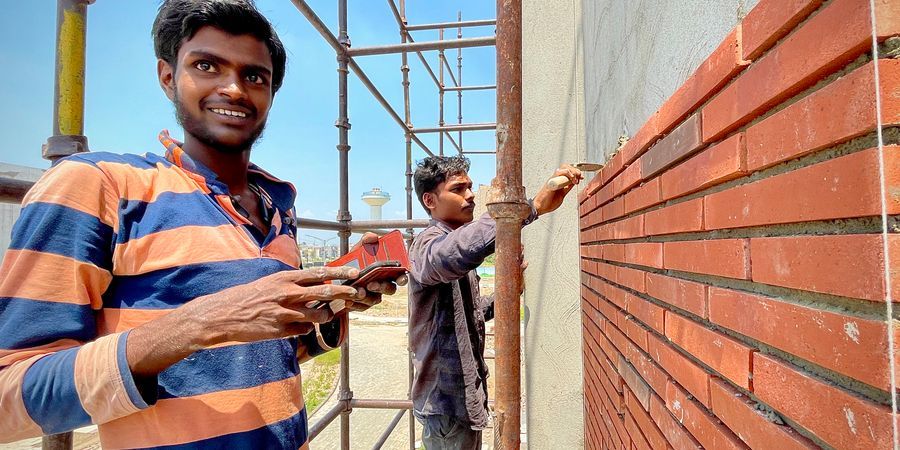
Four installation rules. None complicated. All non-negotiable.
A correctly specified brick installed incorrectly fails on the same timeline as the wrong brick installed correctly. Installation quality is not a variable to optimise after the fact.
Measure shell ovality before the first brick is placed
Ovality above 0.5% creates differential load on brick rings under operation. Measure the full shell profile, document the worst deviation, and either correct it or select grades with appropriate mechanical properties for the affected zones. Do not assume the shell condition from the previous campaign. Kilns deform between campaigns.
Keep joints tight and correctly oriented
Axial joints run parallel to the kiln centreline. Radial joints are perpendicular. Joint width: 1–2 mm with refractory mortar matched to the specific brick grade — not generic cement mortar, not construction mortar. Different brick chemistries have different mortar requirements. Using the wrong mortar chemistry at the joint is the same as leaving the joint unprotected.
Lock every ring before rotating to the next
Bricks are installed in rings, not continuous courses. Each ring must be locked — with a steel locking plate or key bricks at the crown — before the kiln rotates to expose the next ring position. A ring that is not locked is not a ring. It is a pile of bricks waiting for an excuse to fall.
Follow the heat-up schedule completely
Standard schedule for magnesia bricks: 25–50°C/hr to 120°C, hold 8 hours (drive out free moisture), then 25–50°C/hr to 300°C, hold 4 hours, then 50°C/hr to operating temperature. Shortening any step risks steam pressure spalling and cold-face cracking — two failure modes that present at start-up and are permanent. A brick destroyed in heat-up is the most expensive brick in the specification, and it doesn't show up that way in the maintenance log. (It shows up as "unexpected early failure," which is a different category with the same price.)
Straight answers
Questions from plant engineers and procurement teams, answered directly.
What type of refractory brick is used in the burning zone of a rotary kiln?
How long do refractory bricks last in a rotary kiln?
What is the difference between cement kiln and lime kiln refractory specifications?
What causes early failure of rotary kiln refractory linings?
Can magnesia-spinel replace magnesia-chrome in a rotary kiln?
What brick thickness is standard for a rotary kiln lining?
What is kiln shell temperature and why does it matter?
Specify the right brick before the campaign, not after.
Tell us your kiln type, inner diameter, zone lengths, feed chemistry, and fuel mix. We will match the correct Firebrics grade to each zone and give you a written quote with campaign life data from comparable applications. See our full product range and project cases.
Kiln engineers have excellent memories. We will not recommend a grade that doesn't fit your application — we would rather lose a quote than gain a claim.