Fire Bricks for Outdoor Fireplaces: Types, Specs & Installation Guide
Jason Gong
Founder & Sales Director · Product Inquiry Contact
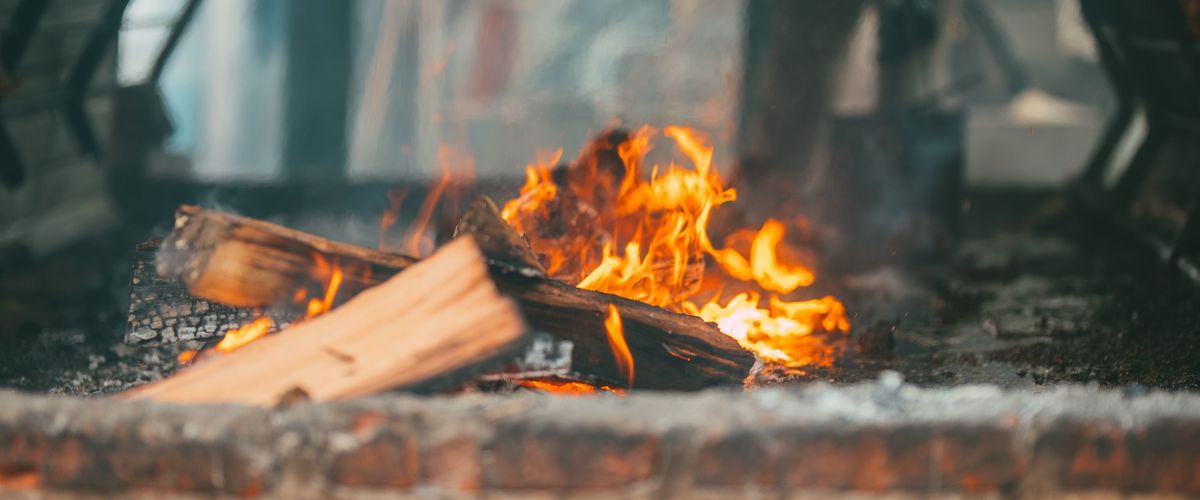
Fire bricks for outdoor fireplaces are medium-duty fireclay bricks rated to at least 1,480°C (2,700°F), sized 4.5 x 9 x 2.5 inches (full) or 4.5 x 9 x 1.25 inches (split), installed with refractory mortar — never standard Portland cement. Regular clay bricks fail within one to two seasons of thermal cycling. The difference in material cost between regular bricks and proper firebricks for an average outdoor firebox: approximately $150–$300.
A firebox built with the wrong bricks is not a firebox. It's a countdown timer.
Regular clay bricks look identical to firebricks. They come in similar sizes. They are roughly the same colour. And the first time you light a fire in a firebox lined with them, nothing obvious happens.
By the third fire, hairline cracks appear at the joints. By the end of the first winter — thermal cycling from 900°C down to near-freezing, repeated all season, with rain soaking into the bricks between uses — the cracks have become fractures. Sections of brick face spall off and fall into the firebox. The structure is failing.
We saw this recently. A masonry contractor had used standard clay-faced bricks for an outdoor fireplace because his supplier said they'd "handle the heat." They were the same bricks on the home's exterior facade — dense, handsome, $4 per unit. After the first winter, three courses of the firebox lining had cracked and one section had partially collapsed. The reline cost $800. The firebricks that would have prevented it cost $220 at the time of construction. *(The contractor told us this story. We did not ask him how the client took it.)*
The problem is thermal shock resistance. Firebricks are kiln-fired at extreme temperatures — 1,000–1,350°C — during manufacture. This removes the internal porosity that causes regular bricks to absorb moisture and crack under heat. Firebricks are specifically rated for repeated thermal cycling. Regular bricks are not.
temperature
fire brick rating
firebrick standard
joint thickness
What fire bricks actually are — and why they behave differently
Fire bricks are ceramic blocks manufactured from fireclay — a refractory clay composed primarily of alumina (Al₂O₃) and silica (SiO₂). The specific alumina content determines the temperature rating: more alumina means a higher temperature ceiling and better resistance to thermal shock.
During manufacture, the raw clay is shaped, dried, and fired in a kiln at temperatures of 1,000–1,350°C. This process, called sintering, fuses the mineral particles together into a dense, low-porosity structure. The result is a brick that expands and contracts under heat without cracking — because the material has already been through extremes that exceed what any outdoor fireplace will produce.
The critical distinction for outdoor applications: thermal cycling resistance. An outdoor fireplace heats up and cools down every time it's used. Rain falls on it between uses. The temperature swing between a roaring fire and a wet, cold morning can exceed 900°C. Firebricks are built for exactly this. Regular building bricks, which absorb moisture and have not been sintered to the same temperature, are not.
Three duty ratings. One right answer for outdoor fireplaces.
Firebricks are classified by duty rating, which corresponds to their maximum service temperature and alumina content. Three levels exist for residential and light commercial applications:
| Duty Rating | Max Temp (°F) | Max Temp (°C) | Al₂O₃ Content | Outdoor Fireplace Use |
|---|---|---|---|---|
| Low duty | 1,750°F | 955°C | 24–26% | Chimneys and smoke chambers only — not suitable for the firebox itself |
| Medium duty | 2,700°F | 1,480°C | 34–38% | Correct choice for outdoor firebox lining. Handles all wood-burning temperatures with margin to spare. |
| High duty | 2,850°F | 1,565°C | 40–45% | More than required. Higher cost. No performance benefit in a residential fireplace. |
Medium-duty firebrick is the right answer for outdoor fireplace firebox linings. A wood fire in an outdoor fireplace peaks at approximately 800–900°C. Medium-duty brick rated to 1,480°C provides a 580–680°C safety margin. That margin exists for a reason — it accounts for hot spots, restricted airflow, and seasoned hardwood fires that burn hotter than green wood.
Low-duty brick is adequate for chimneys and smoke chambers, where temperatures are significantly lower than the firebox. Specifying medium-duty throughout is also acceptable and avoids mixing brick types on-site.
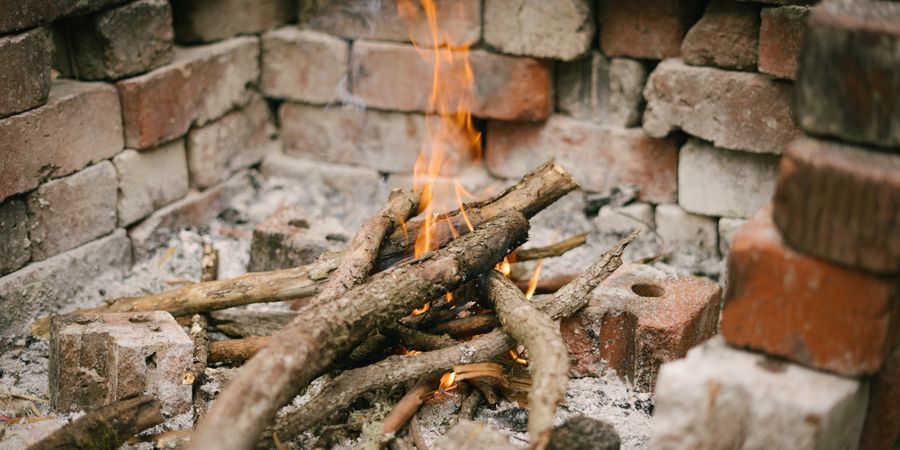
Standard sizes and how to calculate what you need
Firebricks come in two standard sizes for residential applications:
| Name | Dimensions (inches) | Dimensions (mm) | Face area | Use case |
|---|---|---|---|---|
| Full | 4.5 x 9 x 2.5" | 114 x 229 x 64 mm | 40.5 sq in | Firebox floor, back wall — where full thickness is needed |
| Split | 4.5 x 9 x 1.25" | 114 x 229 x 32 mm | 40.5 sq in | Side walls and lining replacement — lighter, easier to cut, same face coverage |
Split bricks (half thickness) are the most practical choice for relining an existing firebox. Full bricks are heavier and provide more thermal mass — useful for the firebox floor, where the brick absorbs heat from the burning logs directly.
Calculating quantity: Measure the floor area and all four wall surfaces (back wall, two side walls, and the firebox floor). Divide the total area by 40.5 square inches (one brick face). Add 10% for cutting waste. A typical outdoor fireplace with interior dimensions of 24 x 24 x 20 inches requires 75–100 full bricks or 150–200 split bricks depending on wall thickness.
Colour: Firebricks come in natural buff/cream, white, and various shades of red or brown. Colour is purely aesthetic — it does not affect temperature rating or performance. The clay mineral composition determines performance; the iron content determines colour.
Choosing the right brick for outdoor use. Four considerations.
- Duty rating: medium duty, minimum. As described above — for the firebox, this is not negotiable. Chimneys can use low duty.
- Full vs split thickness. For new construction, full bricks provide better thermal mass. For relining existing fireboxes, split bricks are easier to work with and cut. Both are correct; it's a practical choice, not a performance one.
- ASTM C1261 compliance. This is the standard for firebrick in residential fireplaces. Any reputable supplier will confirm compliance. Non-certified bricks of unknown specification are a risk — particularly important for outdoor fireplaces, where the structure is exposed to both rain and high heat.
- Source. Big-box hardware stores carry firebricks, but often only low-duty grades or products of uncertain specification at a premium price. Masonry supply yards typically stock medium-duty grade at lower cost. Factory-direct supply — which is what we do for larger quantities — is the most cost-effective option for contractors doing multiple builds. Contact us for bulk pricing.
Standard building bricks in a firebox are not a cost-saving measure — they are deferred spending. Medium-duty firebrick starts at under $5 per unit at a masonry supply yard. The material cost to line a standard outdoor fireplace firebox with correct fire bricks: approximately $150–$300. The cost to tear out a failed firebox lining and reline it properly — after one or two seasons of regular use have cracked it — is $400–$1,200 minimum. We have never once heard a contractor say "I wish I'd used regular bricks instead." We have heard the other version of that sentence more than we can count.
Refractory mortar. The joint matters as much as the brick.
This is where many otherwise correctly specified fireplaces fail. The mortar holding the fire bricks together must be rated for the same temperatures as the bricks. Standard Portland cement mortar fails at temperatures above 200°C and will crumble, crack, and fall away within the first few firings. *(The fire bricks will still be fine. The structure holding them together will not.)*
Use refractory mortar — also called fire cement, heat-resistant mortar, or refractory cement. It is available pre-mixed from masonry suppliers and most tile and refractory material suppliers. Key requirements:
- Temperature rating at or above 1,200°C — match it to the brick duty rating
- Air-setting or heat-setting type — pre-mixed air-setting is the easiest to work with for outdoor applications
- Joint thickness: 2–3 mm maximum. Thick joints crack under thermal expansion. Thin, full joints are the structural requirement. If you can see daylight through a joint, it needs filling.
Do not use standard brick mortar, concrete mix, or any Portland cement-based product in the firebox. This is not a conservative recommendation — it is the difference between a firebox that lasts a decade and one that fails by spring. Refractory cement exists specifically because standard cement cannot do this job.
Step-by-step installation
Prepare the shell. For a new build, ensure the structural masonry (the outer shell of the fireplace) is complete and fully cured before installing the firebox lining. For relining, remove all old, cracked bricks and mortar. Clean the surface. Do not reline over cracked or loose existing bricks.
Lay the firebox floor first. Start with the floor using full-thickness bricks, set in refractory mortar. Keep joints to 2–3 mm. Allow this course to set for at least 2 hours before building the walls.
Build the back wall. Lay bricks in a staggered (running bond) pattern. Apply refractory mortar to both the existing surface and the brick being placed. Press firmly and remove excess mortar immediately — it is much harder to remove once it sets. Check level and plumb every 2–3 courses.
Build the side walls. Same technique. Where the side walls meet the back wall, ensure the joint is fully mortared. Corner joints are the most common failure point — they need full mortar coverage, not just the edges.
Allow to cure before first use. Let the mortar air-cure for 48 hours at minimum. Do not cover with plastic — the mortar needs air to cure. In wet weather, cover loosely with a canvas tarp to prevent rain soaking, while still allowing airflow.
Season with small fires for 3–4 sessions. Light a small fire — newspaper and a handful of kindling — for 30 minutes. Let the firebox cool completely (24 hours minimum) before the next fire. Repeat 3–4 times before using the fireplace at full capacity. This drives residual moisture from the mortar without the thermal shock of a full fire.
Common mistakes — and what each one costs
- Using standard mortar. The mortar fails at 200°C. The structure comes apart within the first few firings. Cost to fix: reline the entire firebox — $400–$1,200.
- Thick mortar joints. Joints over 3 mm crack under thermal expansion. The brick movement is small; the expansion stress is not. Keep joints to 2–3 mm.
- Skipping the seasoning fires. Rapid full-heat firing in a newly mortared firebox causes steam pressure that cracks the mortar joints internally. The lining looks fine for one or two seasons, then sections of the back wall start to bulge and fall away.
- Not covering the firebox between uses. Water saturation followed by a full fire is the fastest way to damage fire bricks. A simple cover keeps rain out and extends lining life significantly in wet climates.
- Relining over existing cracked bricks. The new lining is only as stable as the surface it's bonded to. Remove all cracked or loose bricks before relining — don't just mortar over them.
Straight answers
Questions we hear from homeowners and contractors building outdoor fireplaces, answered directly.
Can I use regular bricks in an outdoor fireplace?
What type of fire brick is best for an outdoor fireplace?
How many fire bricks do I need for an outdoor fireplace?
What mortar should I use with fire bricks?
How do I know if my fire bricks need replacing?
Do fire bricks need to be seasoned before use?
Can fire bricks get wet?
Need fire bricks in volume? We supply contractors and exporters direct from the factory.
Compare fireclay and high alumina fire bricks by firebox temperature, dimensions, mortar system, and exposure. Custom sizes are available for project and distributor enquiries.
We'll quote you the right grade. We won't sell you a higher duty rating than you need.