Refractoriness Under Load vs PCE: Which Test Does Your Specification Need?
Jason Gong
Founder & Sales Director · 10+ Years in Refractory

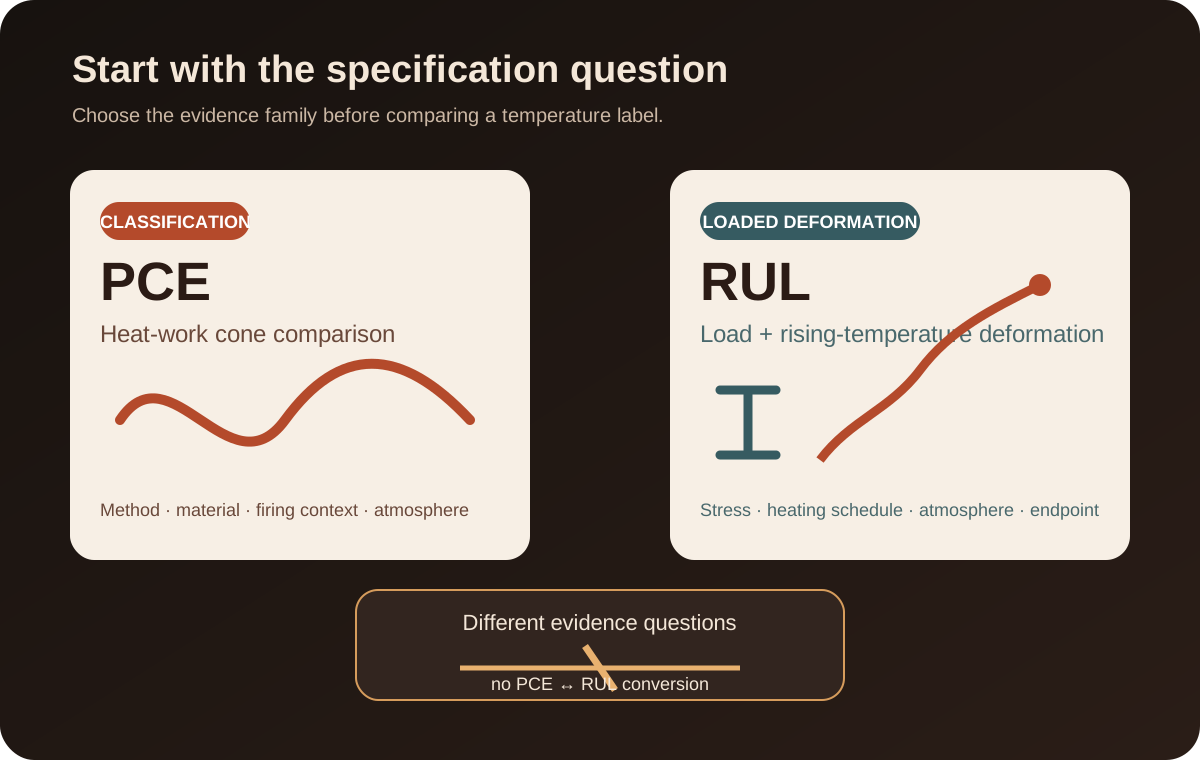
Choose PCE when the specification needs a heat-work classification based on comparing prepared test cones with standard pyrometric cones. Choose refractoriness under load (RUL) when it needs the temperature associated with a stated deformation endpoint while a specimen is under a specified compressive load and rising-temperature schedule. The two tests answer different evidence questions: a PCE designation cannot be converted into an RUL result, and neither result alone is a guaranteed service temperature. Compare supplier reports only after the method, cited edition, material or specimen, firing or heating basis, atmosphere, endpoint, and reported result are clear.
Choose the test family from the specification question
Start with the decision the specification must support.
- Classification question: Does the buyer need a PCE designation for a fireclay or high-alumina refractory on a stated cone-comparison basis? Request PCE evidence.
- Loaded-deformation question: Does the buyer need to know the temperature reported at a defined deformation or subsidence endpoint while a specimen is subjected to a stated compressive load and heating schedule? Request RUL evidence.
Do not begin with whichever report contains the larger temperature number. PCE and RUL use different test concepts, conditions, and result labels. A report can be valid for its own purpose without answering the other question.
Read PCE as a heat-work classification endpoint
ASTM C24-09(2022) classifies fireclay and high-alumina refractory materials by comparing prepared test cones with standard pyrometric cones under prescribed conditions. The public scope describes the cone deformation endpoint as a heat-work condition affected by time, temperature, and atmosphere.
That definition is narrower than “the temperature this brick can withstand.” A PCE designation records a classification result on the cited method and cone-comparison basis. It is not a loaded-deformation result, an allowable operating limit, or a promise that a lining will perform at a stated service temperature.
Keep the method’s material scope visible. The C24 public scope supports fireclay and high-alumina refractory classification; it should not be generalized to every refractory composition. If a supplier presents PCE evidence for another material family, ask which procedure and specification authorize that use rather than assuming C24 applies.
Read RUL as loaded deformation during rising temperature
RUL examines deformation under the combined effects of a specified compressive load, rising temperature, and time. Lucideon’s laboratory explanation describes a cylindrical specimen under a specified constant compressive load while temperature rises at a specified rate, with temperatures identified at specified proportional-deformation or subsidence endpoints.
The reported temperature therefore belongs to its endpoint and test conditions. Preserve the applied stress, heating schedule, atmosphere, specimen information, endpoint definition, and the temperature reported for that endpoint. A temperature without those fields is not a complete RUL comparison record.
This test does not provide a universal allowable design load. The laboratory load creates the stated test condition; it does not become the structural load permitted in a furnace design.
Match the material and method family before reading the result
Confirm that both the material and the method family fit the specification question. For PCE, record whether the material falls within the cited method’s scope and whether the report identifies the cone-comparison method and edition. For RUL, record the exact method and cited edition together with the specimen and loaded-heating basis.
Laboratory pages list PCE, RUL, and creep as separate test families. That separation is useful for identifying the question each report answers, but a laboratory service list is not proof that an ISO edition is current or that Firebrics performs the test. Quote the edition that appears on the actual supplier or laboratory report; do not silently replace it with an assumed current edition.
If two reports use different methods or editions, mark the basis different. Ask the supplier or responsible technical reviewer whether those differences are acceptable for the project. Do not normalize the results by relabelling both as “refractoriness temperature.”
Request the conditions behind each reported label
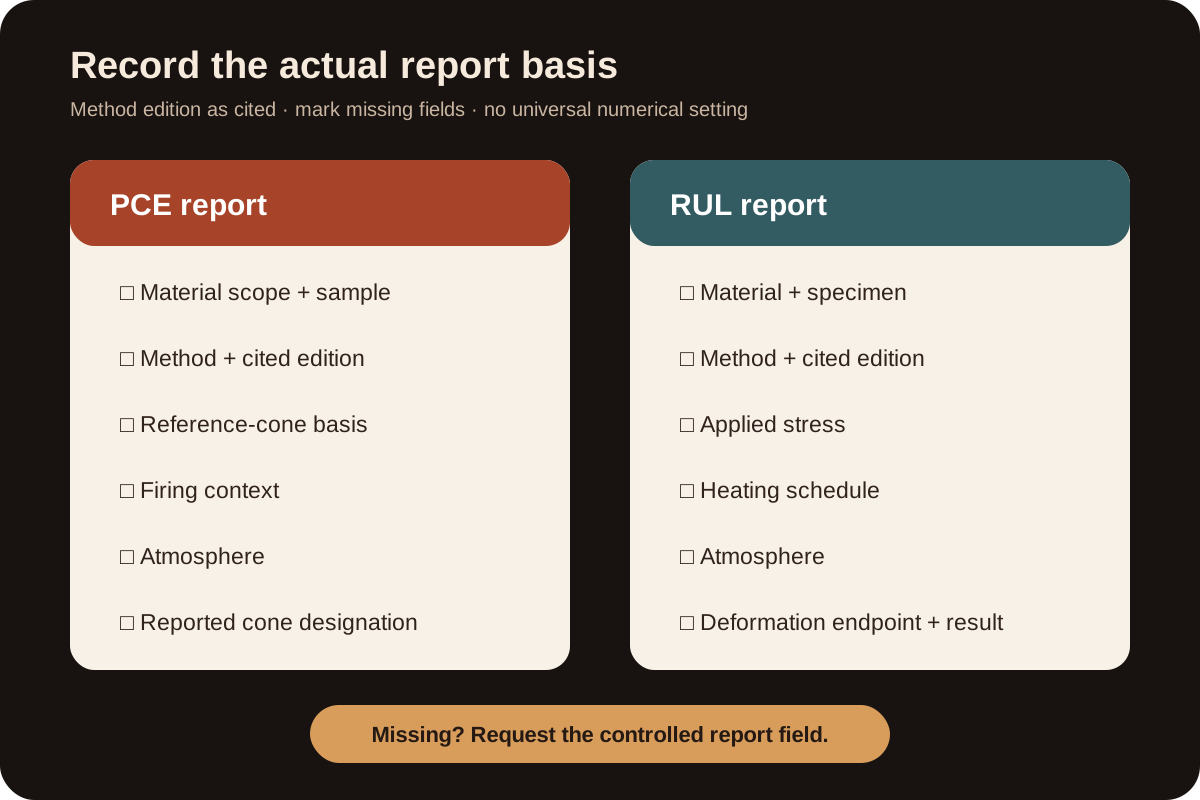
For a PCE report, request:
- applicable material scope and sample identity;
- exact method and cited edition;
- prepared test-cone and reference-cone comparison basis;
- firing context, including the stated time-temperature basis;
- atmosphere;
- reported cone designation and any declared deviation.
For an RUL report, request:
- material, batch, and specimen identity;
- exact method and cited edition;
- specimen description;
- applied compressive stress;
- heating schedule or rate;
- atmosphere;
- deformation or subsidence endpoint definition;
- temperature reported for that endpoint and any declared deviation.
These are buyer comparison fields, not a reproduction of every mandatory clause in a controlled standard. Use the actual report and applicable controlled specification for the complete procedure and reporting requirements. This article supplies no universal stress, heating rate, or deformation endpoint.
Compare PCE and RUL reports without converting them
Use match, different, or missing for each field. “Different” does not prove that a report is wrong; it shows that the reports do not share a demonstrated basis. “Missing” is a request for clarification, not permission to assume equivalence.
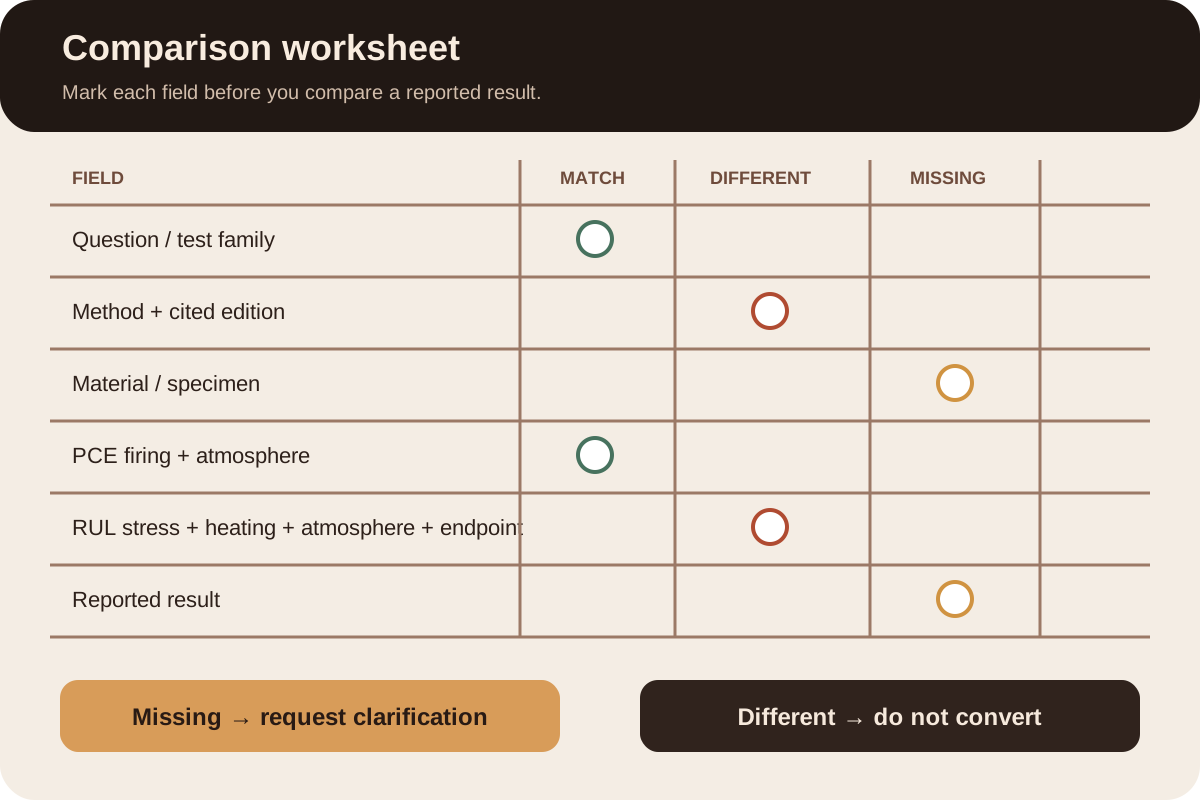
| Comparison field | Report A | Report B | Status | Clarification needed |
|---|---|---|---|---|
| Specification question | Match / different / missing | Classification or loaded deformation? | ||
| Test family | Match / different / missing | PCE or RUL? | ||
| Method and cited edition | Match / different / missing | |||
| Material scope and identity | Match / different / missing | |||
| Specimen or prepared-cone basis | Match / different / missing | |||
| PCE reference-cone basis | Match / different / missing | |||
| PCE firing context and atmosphere | Match / different / missing | |||
| PCE cone designation | Match / different / missing | |||
| RUL applied stress | Match / different / missing | |||
| RUL heating schedule or rate | Match / different / missing | |||
| RUL atmosphere | Match / different / missing | |||
| RUL deformation endpoint | Match / different / missing | |||
| RUL temperature at that endpoint | Match / different / missing | |||
| Deviations or limitations | Match / different / missing | |||
| Project review criterion | Agreed / unresolved |
Do not place a PCE cone designation and an RUL endpoint temperature in a “higher is better” ranking. When the specification asks for PCE, compare PCE reports on compatible PCE bases. When it asks for RUL, compare RUL reports on compatible RUL bases. If the project asks for both, retain two separate evidence lines.
Keep service limits, design thresholds and constant-temperature creep separate
Neither PCE nor RUL by itself supplies a universal maximum operating temperature, allowable design load, grade recommendation, service-life prediction, or project acceptance threshold. Those decisions require the applicable specification, component and duty review, full material evidence, purchase documents, and responsible technical approval.
Constant-temperature creep asks a separate duration-dependent deformation question at maintained temperature; it is outside this rising-temperature RUL comparison.
Use the fire-brick furnace selection guide when the question moves from test-label interpretation to furnace and grade context. That guide remains the application owner; this article does not prescribe a product grade or furnace-zone design.
Build a test-condition and RFQ clarification worksheet
Turn each missing field into a direct supplier request. The following wording can be copied into a technical query:
Please confirm whether the submitted result is PCE classification evidence or RUL loaded-deformation evidence. For PCE, provide the material scope, exact method and cited edition, prepared-cone/reference-cone basis, firing context, atmosphere, reported cone designation, and declared deviations. For RUL, provide the material and specimen identity, exact method and cited edition, applied stress, heating schedule or rate, atmosphere, deformation endpoint definition, temperature reported at that endpoint, and declared deviations. Please identify any missing fields and do not convert between PCE and RUL. Our project criterion will be reviewed separately.
Add the application and component, proposed material or grade identity, required shapes and quantities, and the specification clause that created the request. If the specification uses an ambiguous phrase such as “refractoriness temperature,” ask the responsible reviewer to state whether it means PCE classification, RUL loaded deformation, or separate evidence for both.
The high-alumina brick inquiry page is a commercial route for a documented request. Its existence does not prove a product PCE or RUL value, Firebrics testing capability, project suitability, or a service-temperature limit.
References & Further Reading:
- ASTM C24-09(2022) official scope — public scope for PCE classification of fireclay and high-alumina refractory materials; the controlled standard governs the complete procedure.
- Lucideon refractoriness-under-load method explanation — supports the rising-temperature, specified-load, and defined-deformation explanation used here; the page cites historical method editions and is not evidence of a current ISO edition.
- TZUS thermomechanical test-family listing — supports keeping PCE, RUL, and creep as separate test families; listed apparatus capabilities are not material service limits.